 ultimate-guide
Why Professional Grading Is Essential for Property Value
Table of Contents
- Why Professional Grading Is Essential for Property Value
- Signs of Poor Drainage Around House That Signal Grading Problems
- The Importance of Positive Drainage for Long-Term Property Health
- How Professional Grading Protects Your Foundation and Basement
- Residential Site Grading Cost: What Homeowners Should Expect
- Rough Grading vs. Finish Grading: Why Both Stages Matter
- How Grading Impacts Landscaping, Hardscaping, and Curb Appeal
- Conclusion
- Frequently Asked Questions
Last Updated: October 3, 2026
Why Professional Grading Is Essential for Property Value
Professional grading is the engineered shaping of the ground around a structure to direct water away from it, and it is one of the few site improvements that protects both the structure and the resale value of the property at the same time. At Delpres Services LLC, we have spent more than 20 years shaping sites across Metro Detroit. The FEMA guidance on protecting your home from water damage is blunt about why: water that sits against a foundation finds a way in. This guide breaks down the warning signs of bad drainage, what the two grading stages actually do, and how to budget for the work in Chesterfield and the surrounding communities.
Signs of Poor Drainage Around House That Signal Grading Problems
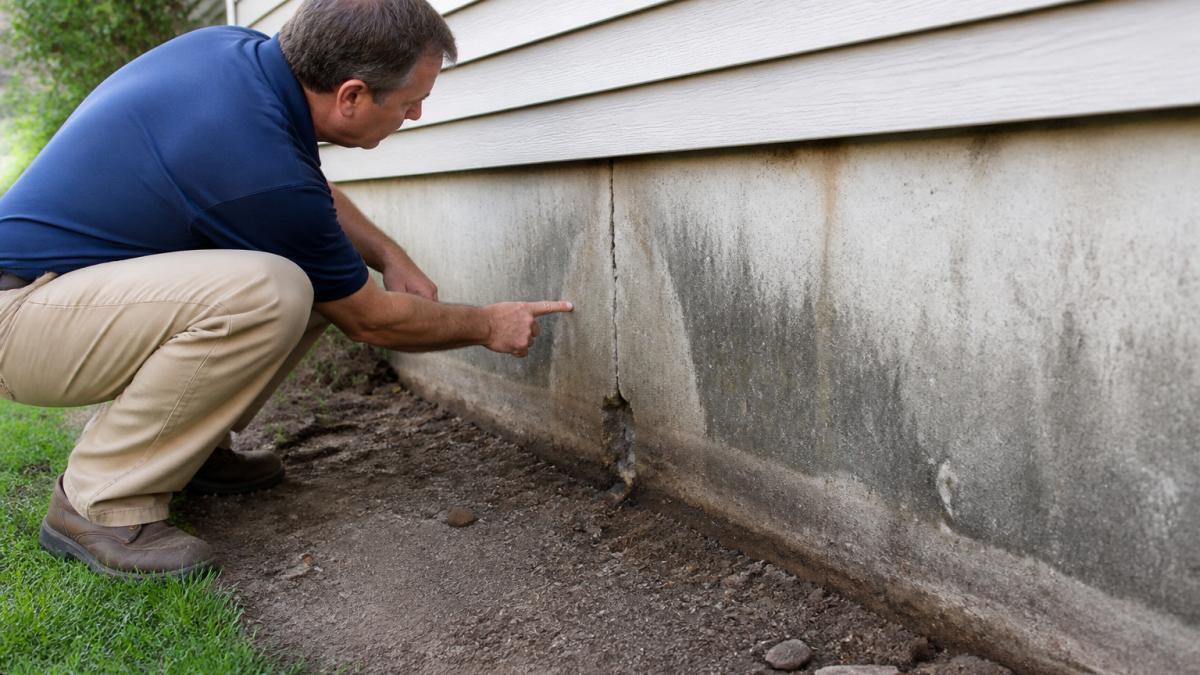
The clearest signs of poor drainage around house foundations are water pooling within a few feet of the wall after rain, soil that has settled into a visible trench along the foundation, and a basement or crawl space that smells damp even when it has not rained recently. Homeowners often mistake these for cosmetic issues. They are not.
Water Pooling and Soil Erosion Near the Foundation
Standing water within a few feet of the foundation is the single most reliable indicator that the grade has failed. Water should leave the property, not linger next to the wall. When soil erodes from around the foundation, it creates a low channel that funnels even more water toward the structure. That channel grows with every heavy rain.
Cracks, Efflorescence, and Interior Moisture
Efflorescence is the white, chalky mineral deposit left on concrete or masonry when water moves through the material and evaporates. It is a moisture marker, not a stain. Paired with stair-step cracks in block walls or a musty smell indoors, it points to water pressure building against the foundation from the outside. Left alone, that pressure eventually finds a path inside.
The Importance of Positive Drainage for Long-Term Property Health
Positive drainage is a grade that slopes away from the structure on all sides, so gravity moves water off the lot instead of letting it soak in at the wall. The EPA information on stormwater and site drainage frames this as the first line of defense for any property. Without it, every other drainage investment, from gutters to French drains, is working against a losing grade.
The consequences compound quietly. Saturated soil expands and contracts with freeze-thaw cycles, which is a real concern in Michigan. That movement stresses foundations, cracks driveways, and heaves sidewalks. By the time the damage is visible above ground, the soil below has usually been moving water into the wrong places for years.
How Professional Grading Protects Your Foundation and Basement
Correct grading protects a foundation by maintaining a consistent slope that keeps the soil around the wall drier than the soil farther out. That single condition prevents most of the hydrostatic pressure that pushes water through basement walls and floors. In practice, this means the difference between a dry basement and a sump pump that runs every storm.
The work is more precise than it looks. A grader has to account for the finished elevation of the house, the position of the sewer and water lines, the slope of neighboring lots, and where the water will actually go once it leaves the property. Getting the water off the wall is easy. Getting it to a legal, sensible discharge point without flooding a neighbor is the part that separates a proper job from a quick fix.
Residential Site Grading Cost: What Homeowners Should Expect
Residential site grading cost depends on the size of the lot, how much soil has to be moved, whether drainage corrections are needed, and site access. We do not quote prices without seeing the property, because a number pulled from a general range is usually wrong in both directions. The honest answer is that pricing is project-specific, and we provide it after a walkthrough.
What drives the number up or down:
- Cubic yards of soil cut, moved, or brought in
- Whether new drainage tile, catch basins, or a French drain is required
- Access for equipment, including whether a machine can reach the back yard
- Permit and inspection requirements for the jurisdiction
- Restoration of lawn, landscaping, or hardscape after grading
If you want a real figure for your property, book a consultation and we will walk the lot with you. That is the only way to price it responsibly.
Rough Grading vs. Finish Grading: Why Both Stages Matter
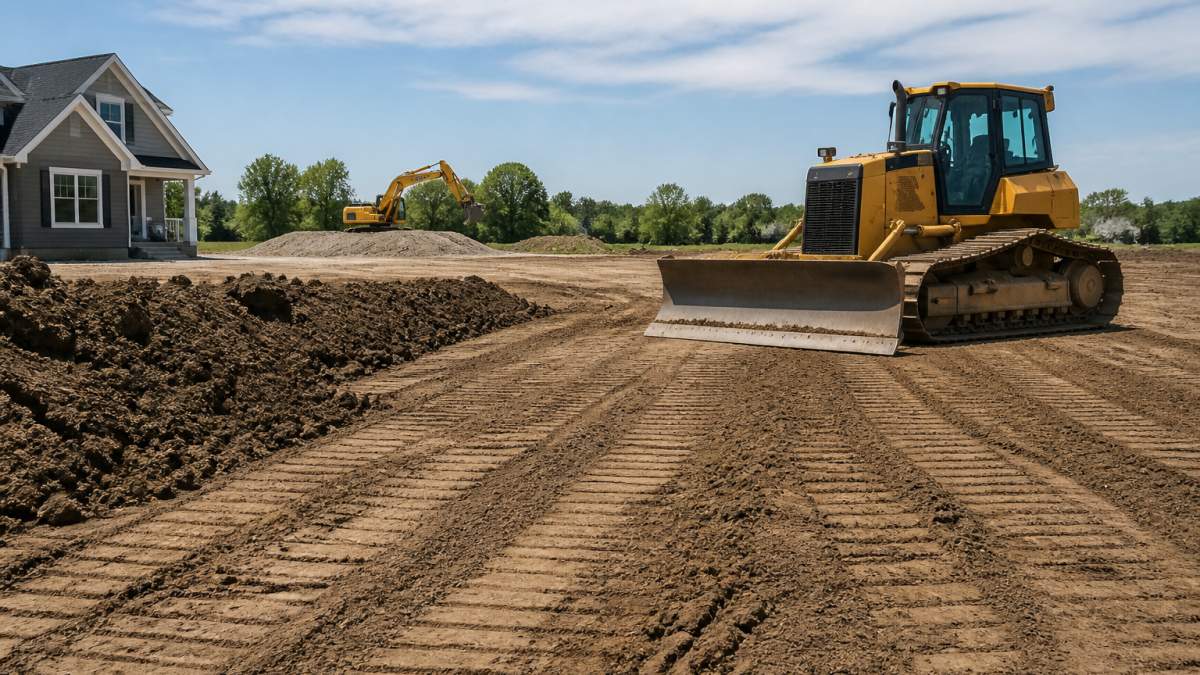
Rough grading establishes the overall shape and elevation of the site, while finish grading sets the final surface, slope, and seedbed. They are two distinct phases, and skipping either one undermines the other. Rough grading does the heavy earthmoving and gets water moving in the right direction. Finish grading refines that shape to within inches, so the final surface drains correctly and supports grass, pavement, or hardscape.
| Stage | What It Does | When It Happens | What Goes Wrong If Skipped |
|---|---|---|---|
| Rough grading | Sets overall elevation and drainage flow | Before utilities, footings, and paving | Water flows the wrong way; rework later |
| Finish grading | Sets final slope, surface, and seedbed | After structures and utilities are in | Puddling, settlement, poor drainage at edges |
A common mistake is treating finish grading as a cosmetic pass. It is not. It is where the drainage design either holds up or fails, and it has to be verified with a level, not a glance.
How Grading Impacts Landscaping, Hardscaping, and Curb Appeal
Grading determines whether landscaping and hardscaping survive. Plants drown in low spots. Paver patios and driveways settle and crack when the base beneath them was not graded to drain. Retaining walls fail when they are holding back saturated soil that has nowhere to go. Every one of those outcomes traces back to the grade.
For homeowners in Chesterfield planning a full exterior renovation, we treat grading as the foundation of the whole project, not a step at the end. When the grade is right, patios, walkways, decorative concrete, and plantings all perform better and last longer. When it is wrong, everything built on top of it inherits the problem. If you are searching for grading and drainage contractors near me, look for a team that handles the full scope, from excavation and underground utilities to concrete flatwork and asphalt paving, so the drainage is designed and built as one system.
Conclusion
Water always wins when the grade lets it. The homeowners who avoid costly foundation repairs are the ones who treat drainage as a structural priority rather than a landscaping afterthought, and who fix the slope before they build anything on top of it. Delpres Services LLC handles the full scope of site work, including excavation, underground utilities, storm and sanitary sewer installation, concrete flatwork, and grading and drainage solutions, so water is managed as one system instead of a patchwork of fixes. We have served Metro Detroit for more than 20 years, and we would be glad to walk your property and tell you honestly what it needs. Get started with Delpres Services LLC and protect your property value from the ground up.
Frequently Asked Questions
How does improper grading affect a home's foundation?
Improper grading allows water to pool against the foundation instead of draining away. Over time, that water pressure causes cracks, bowing walls, and basement seepage. In cold climates, trapped moisture freezes and expands, widening existing cracks. Professional grading creates a slope that moves water away from the structure, protecting the foundation and preserving the home's structural integrity and resale value.
Does professional grading help with basement flooding?
Yes. Most basement flooding starts with surface water that is not directed away from the house. When the ground slopes toward the foundation, water saturates the soil and finds entry points through cracks, joints, and window wells. Correcting the grade so water flows away from the structure is one of the most effective steps to prevent recurring basement flooding.
What is the difference between rough grading and finish grading?
Rough grading shapes the land to establish the overall drainage pattern and elevation before construction or landscaping begins. Finish grading refines the surface to its final slope, preparing it for sod, seed, pavers, or concrete. Both stages matter: rough grading sets the drainage strategy, while finish grading ensures water still flows correctly after all improvements are in place.
Is professional grading a good return on investment for Metro Detroit homeowners?
Yes. Professional grading prevents expensive foundation repairs, basement water damage, and landscape erosion, all of which reduce property value. A properly graded lot also supports better drainage for driveways, patios, and pool areas. For homeowners in Metro Detroit, where freeze-thaw cycles stress foundations, correcting grading problems early typically costs far less than repairing the damage they cause.