 ultimate-guide
What Does a Site Prep Company Do? 2026 Guide
Table of Contents
- What a Site Prep Company Actually Does
- Core Services: From Land Clearing to Underground Utilities
- The Site Development Process Steps, Explained
- Excavation Safety Standards OSHA Requires on Every Job
- What the Cost of Land Clearing and Grading Depends On
- Why Hire a Full-Service Site Prep Company in Chesterfield
- Frequently Asked Questions
Last Updated: September 23, 2026
What a Site Prep Company Actually Does
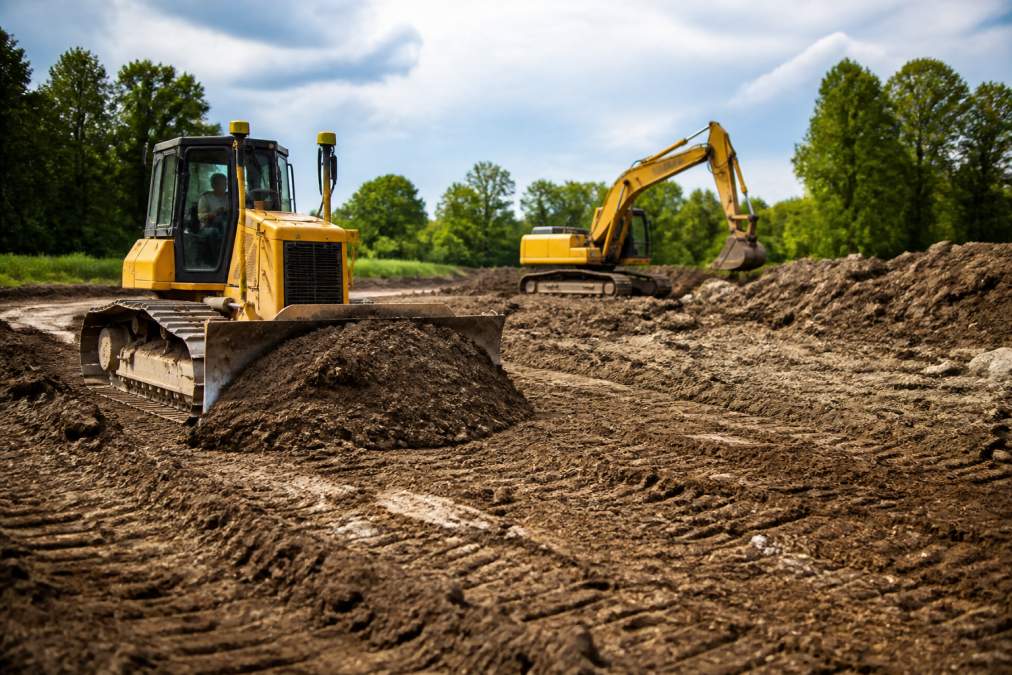
A site prep company prepares raw land for construction by clearing vegetation, moving earth, installing underground utilities, and grading surfaces to precise elevations before foundations or pavement go in. At Delpres Services LLC, we've handled this work across Metro Detroit for more than 20 years, and the pattern is always the same: the quality of site preparation determines how everything else holds up. Skip a step here and you pay for it in cracked slabs, flooded basements, and failed parking lots. This guide explains exactly what a site prep company does, from permits through final grade.
A site prep company is a construction contractor that transforms undeveloped or demolished land into a build-ready surface by handling clearing, excavation, grading, drainage, and utility installation as one coordinated scope of work.
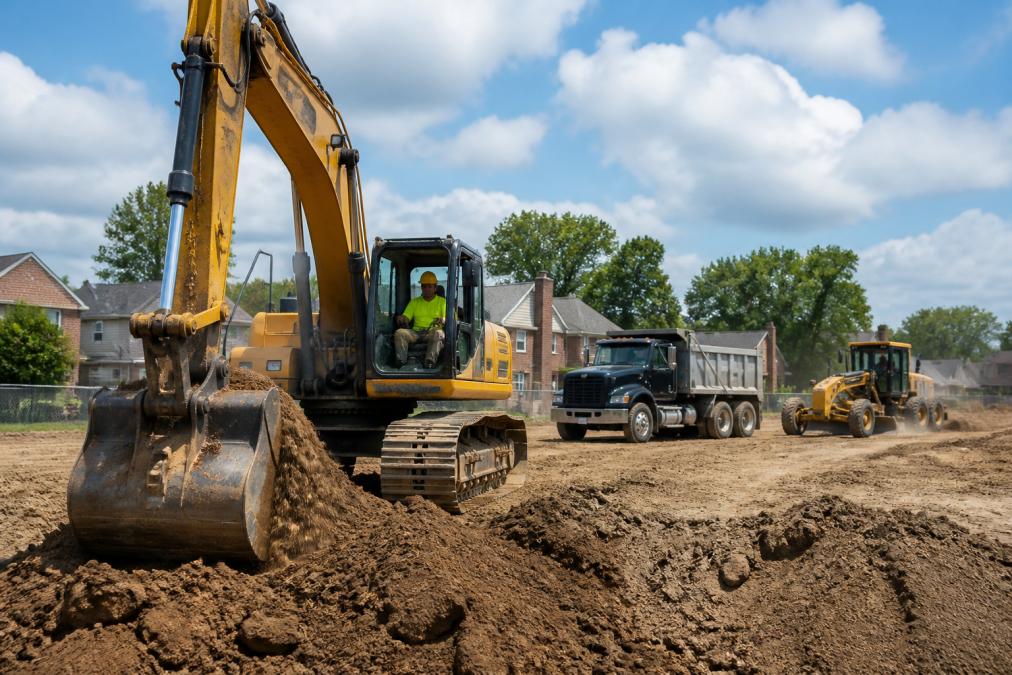
The difference between a good site prep contractor and a cheap one rarely shows up in week one. It shows up three years later when the driveway has settled two inches and the storm sewer backs up during a spring thaw. Chesterfield homeowners and commercial developers in Oakland County feel that difference fast, because local soils shift and freeze.
Below, we break down the core services, the step-by-step process, the OSHA rules that govern the work, and what actually drives cost.
Core Services: From Land Clearing to Underground Utilities
The scope of a site prep company's work runs from surface to subsurface. Most full-service contractors handle clearing, grubbing, demolition, grading, excavation, drainage, and utility installation under one contract, which matters because these tasks depend on each other. A grading plan built without knowing where the storm line runs is a plan that gets redone.
Clearing, Grubbing, and Demolition
Clearing removes trees, brush, and vegetation. Grubbing takes out the root systems and stumps below the surface. Demolition handles existing structures, driveways, and concrete that must come out before new work begins. All three produce debris that has to be sorted, hauled, and disposed of according to state and local rules.
Grading, Excavation, and Drainage Solutions
Grading shapes the land to a designed elevation so water flows away from structures instead of toward them. Excavation removes soil for foundations, footings, basements, and utility trenches. Drainage work, including storm sewer, catch basins, and French drains, ties the whole system together. Get the grade wrong by even a few inches and you create a permanent water problem.
| Service | What It Involves | Why It Matters |
|---|---|---|
| Clearing and grubbing | Removing vegetation, stumps, roots | Prevents future settling and organic decay |
| Demolition | Tearing out structures and pavement | Clears the footprint for new construction |
| Excavation | Removing soil for foundations and trenches | Creates accurate subgrade for structures |
| Grading | Shaping land to designed elevations | Directs water away from buildings |
| Drainage and utilities | Storm sewer, water main, sanitary lines | Handles runoff and connects services |
The Site Development Process Steps, Explained
The site development process steps follow a fixed sequence: survey and permitting, clearing and demolition, excavation, utility installation, grading, and final compaction and inspection. Skipping ahead, like grading before utilities are buried, means digging up finished work. The order exists for a reason.
From Permits to Final Grade: What Happens When
- Survey and engineering. A licensed surveyor stakes the property and engineers produce grading and utility plans.
- Permitting. The contractor pulls grading, erosion control, and utility permits from the local jurisdiction. In Oakland County, that means coordinating with township or city offices, and requirements vary by municipality.
- Erosion control. Silt fence and inlet protection go in before any soil moves, as required by state environmental rules.
- Clearing and demolition. Vegetation, structures, and old pavement come out.
- Excavation and utilities. Trenches are dug, pipe is laid, and lines are tested and inspected.
- Grading and compaction. Soil is shaped to final elevation and compacted in lifts to a tested density.
- Final inspection. The engineer and local inspector sign off before foundations or pavement begin.
That sequence is why consolidating the work with one contractor saves time. When the excavation crew and the grading crew answer to the same project manager, the handoffs stop being someone else's problem.
Excavation Safety Standards OSHA Requires on Every Job
Excavation safety standards OSHA enforces apply to every trench on every site, and they are not optional. The core rule: any trench 5 feet deep or deeper must have a protective system, such as sloping, shoring, or a trench box, unless it's cut entirely in stable rock. Trenches 4 feet or deeper also require a safe means of exit within 25 feet of workers.
Other requirements that govern daily work include:
- Inspections by a competent person before each shift and after any rain event
- Keeping spoils and equipment at least 2 feet back from the trench edge
- Testing for hazardous atmospheres in trenches 4 feet or deeper
- Locating underground utilities before digging, per 811 Call Before You Dig
The OSHA excavation standards exist because cave-ins kill workers, and they happen without warning. A cubic yard of soil weighs roughly as much as a small car. Contractors who cut corners on shoring are gambling with their crews' lives, and property owners who hire them inherit that liability.
What the Cost of Land Clearing and Grading Depends On
The cost of land clearing and grading depends on site conditions, not just acreage. Two one-acre lots can differ by thousands of dollars based on tree density, soil type, slope, and how much debris has to be hauled off-site. Because pricing is site-specific, the honest answer to "how much will this cost" is always: it depends on the plan and the ground.
The biggest cost drivers are:
- Tree and stump density. Heavily wooded lots take far longer to clear than open fields.
- Soil conditions. Clay-heavy or rocky soil is harder to excavate and may need replacement fill.
- Access. Tight lots or limited entry points slow equipment and add labor.
- Utility scope. Running water main, sanitary sewer, and storm lines is a major cost center.
- Disposal. Hauling debris and excess soil off-site adds trucking and tipping fees.
- Drainage requirements. Engineered drainage systems add design and installation cost.
A transparent contractor breaks these out line by line and puts them in writing. Vague lump-sum quotes with no scope detail are how budgets balloon halfway through a project. Delpres Services provides detailed, itemized proposals so you know what you're paying for before a single machine moves.
Michigan EGLE soil erosion and sedimentation control guidance
Why Hire a Full-Service Site Prep Company in Chesterfield
Hiring a full-service site prep company in Chesterfield means one accountable team handles permits, excavation, utilities, grading, and drainage instead of you coordinating four separate crews. That single point of responsibility is the difference between a project that finishes on schedule and one that stalls while you chase down who was supposed to order the pipe.
Here's what that coordination looks like in practice:
- One contract, one schedule. No finger-pointing between the excavation crew and the grading crew.
- Permit and compliance handling. The contractor manages local permit requirements so you don't have to learn them.
- Equipment and crew continuity. The same team stays on the job from first cut to final grade.
- Fewer change orders. Scope is defined up front, which keeps surprises down.
For homeowners in Chesterfield and across Metro Detroit planning a pool, a driveway, or a full backyard transformation, the same logic applies. An inground pool requires excavation, drainage, and concrete work that all have to be sequenced correctly.
Frequently Asked Questions
What is included in site preparation services?
Site preparation covers land clearing, grubbing, demolition of existing structures, excavation, grading, and soil compaction. It also includes installing underground utilities such as storm sewers, sanitary lines, and water mains. A full-service site prep company will handle permitting, erosion control, and drainage planning too. The exact scope depends on whether you are building a new home, paving a parking lot, or developing a commercial pad. Ask for a written scope before work begins so you know what is included.
How do I choose a site preparation contractor in Metro Detroit?
Look for a contractor with local experience, proper licensing, and proof of insurance. Ask how they handle permits in your city or township, since requirements vary across Metro Detroit. Request references from similar projects and check whether they self-perform excavation, concrete, and utilities or subcontract everything out. A company that manages the full site development process steps under one contract reduces finger-pointing when schedules shift. Get a detailed written estimate that lists what is included and what is not.
Do site prep companies handle underground utility installation?
Yes. Many site prep companies install storm and sanitary sewers, water mains, and conduit for electrical and gas lines. This work must follow local codes and excavation safety standards OSHA enforces, including trench protective systems for depths of 5 feet or more. Hiring one company for both earthwork and utilities keeps the schedule tighter and avoids gaps between trades. Confirm the contractor is licensed for utility work in your jurisdiction before signing.
What is the difference between grading and excavation?
Excavation removes soil to create space for foundations, utilities, or pools. Grading shapes the remaining surface to direct water away from structures and prepare it for concrete or asphalt. Both are part of the site development process steps and usually happen in sequence: excavate first, then rough grade, then finish grade. Skipping proper grading leads to pooling water, cracked driveways, and foundation issues. A site prep company handles both so the final elevation matches the approved plan.