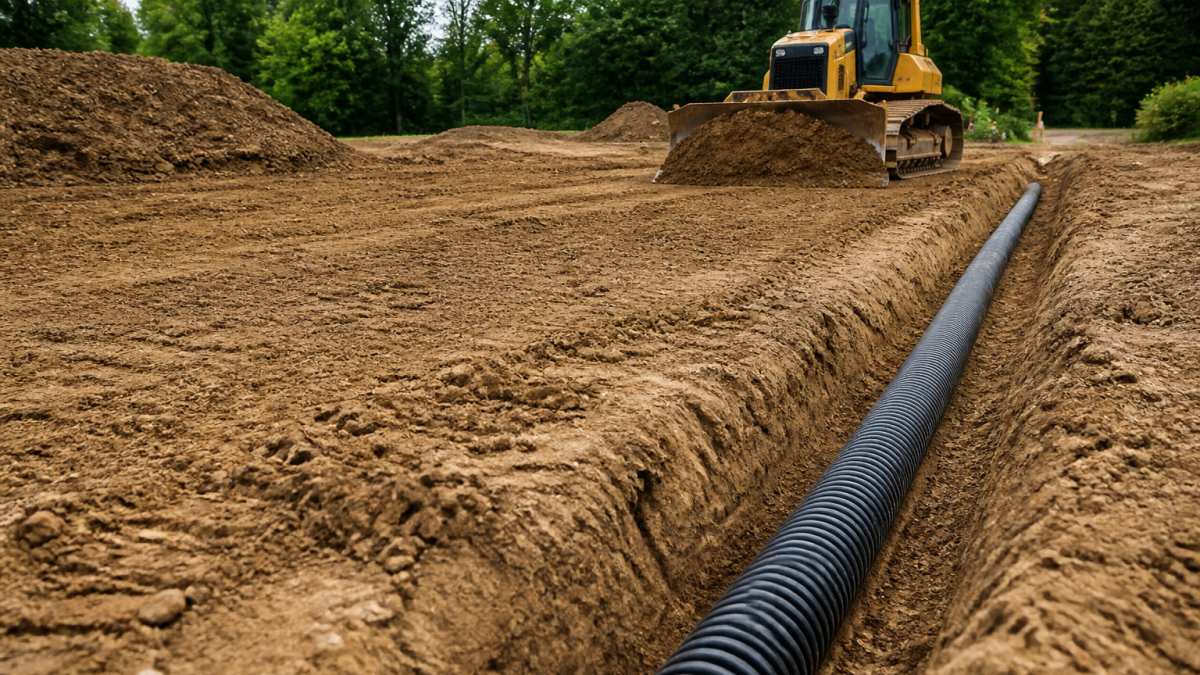
 ultimate-guide
Why Proper Site Grading and Drainage Matters
Table of Contents
- What Proper Site Grading and Drainage Actually Does
- Foundation Drainage Solutions That Protect Your Structure
- Stormwater Management Best Practices for Residential and Commercial Sites
- What Residential Site Grading Cost Actually Covers
- Common Grading Mistakes That Lead to Basement Flooding
- How Local Codes and Permits Shape Drainage Requirements
- Conclusion
- Frequently Asked Questions
Last Updated: October 1, 2026
What Proper Site Grading and Drainage Actually Does
Site grading is the deliberate shaping of a property's surface to control where water goes. Understanding what is the importance of proper site grading and drainage comes down to one principle: water must always move away from your structure, never toward it. At Delpres Services LLC, we've spent over 20 years watching what happens when that principle gets ignored in Chesterfield and across Metro Detroit.
The stakes are higher than most homeowners realize. Michigan's clay-heavy soils drain slowly, and the freeze-thaw cycle that defines our winters punishes any slope that isn't built to shed water consistently. A lot graded flat "because it looked level" will pond in spring and heave in January.
The Role of Slope and Soil Compaction
Two variables decide whether a graded lot performs: slope and compaction. Industry guidance generally calls for a minimum 6-inch drop over the first 10 feet away from a foundation, though local codes may require more.
Compaction matters just as much. Loose fill settles unevenly, creating low spots that collect water months after the crew leaves. Proper grading compacts soil in lifts, not in one pass.
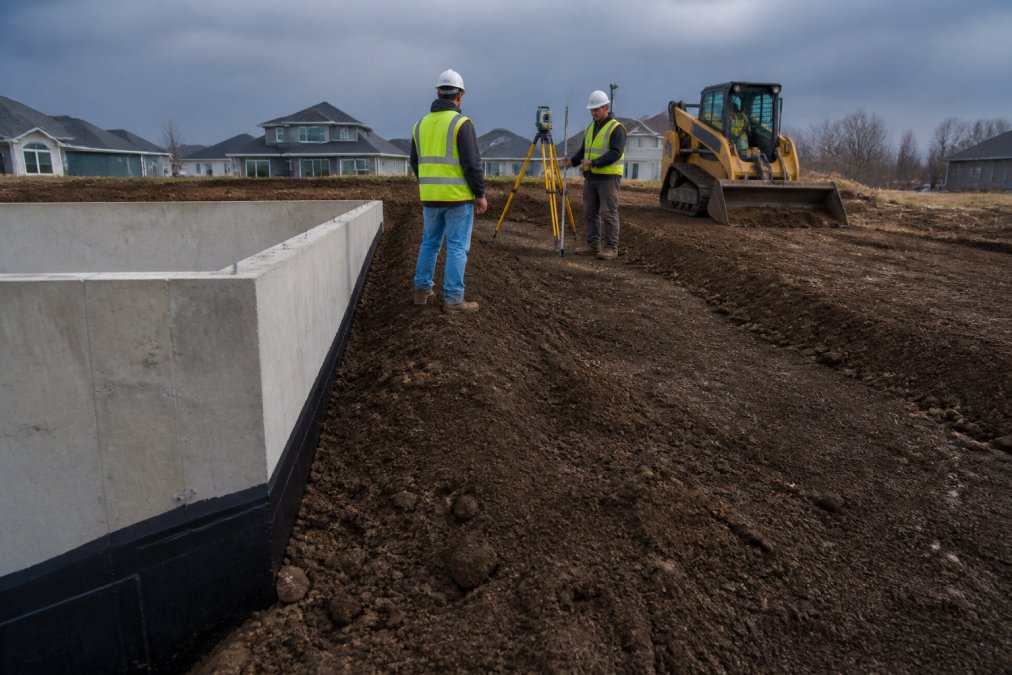
How Water Moves Across a Graded Site
Water follows the path of least resistance, which is why the finished grade, not the original grade, determines your drainage outcome. A swale that directs runoff to a storm sewer or daylighted outlet keeps thousands of gallons away from your foundation during a single heavy rain.
When that path is blocked, water finds another one. Usually through your basement wall.
Foundation Drainage Solutions That Protect Your Structure
Foundation drainage solutions are the underground systems that intercept water before it reaches your footings. Three types do most of the work on residential and commercial sites.
- Footing drains: Perforated pipe wrapped in gravel and filter fabric along the base of the footing, carrying groundwater to a sump or daylight outlet.
- French drains: A gravel-filled trench with perforated pipe, used to capture surface and shallow subsurface water in yards and along retaining walls.
- Sump systems: A pit and pump assembly that collects water beneath the slab and discharges it away from the house.
The mistake most homeowners make is treating these as interchangeable. They solve different problems at different depths, and a contractor who installs one when the site needs another is guessing with your foundation.
Stormwater Management Best Practices for Residential and Commercial Sites
Stormwater management best practices start with a simple rule: slow the water down and hold it on site before releasing it. Municipal storm systems across Metro Detroit are sized for controlled release, not for every property dumping runoff at once.
Detention, Retention, and Bioswales
Detention basins hold water temporarily and release it at a controlled rate. Retention systems keep water permanently, often letting it infiltrate. Bioswales are vegetated channels that filter and slow runoff as it moves.
Which one your site needs depends on soil type, water table depth, and what your municipality requires. Chesterfield Township and neighboring communities have their own standards, and the wrong system means a failed inspection and a redo.
| System | How It Works | Best For |
|---|---|---|
| Detention basin | Holds water briefly, releases slowly | Commercial lots with peak runoff limits |
| Retention pond | Stores water permanently | Sites with high water tables |
| Bioswale | Vegetated channel filters runoff | Parking lot edges, residential swales |
| French drain | Gravel trench captures shallow water | Yard drainage, retaining walls |
What Residential Site Grading Cost Actually Covers
Residential site grading cost reflects three things: how much earth moves, how far it moves, and what has to happen before and after. Pricing depends on your lot's size, existing conditions, and access, so any responsible contractor will quote after a site visit rather than over the phone.
Factors That Drive the Price Up or Down
- Volume of cut and fill: Steep lots and poor original grade require more machine time.
- Soil conditions: Clay and rock slow excavation; sandy loam moves fast.
- Drainage scope: Adding footing drains, sumps, or storm connections changes the job entirely.
- Access and haul-off: Tight lots and soil that must leave the site add trucking.
- Permits and engineering: Some jurisdictions require stamped drainage plans before work starts.
For a current quote on grading in Chesterfield, Delpres Services LLC provides site-specific estimates after walking the property.
Common Grading Mistakes That Lead to Basement Flooding
Basement flooding almost always traces back to a grading or drainage decision made months or years earlier. The most common mistakes we correct:
- Backfilling against the foundation without proper slope. Soil settles, water pools at the wall.
- Skipping the footing drain on a below-grade basement. Groundwater has nowhere to go but in.
- Discharging downspouts at the foundation. Two feet from the wall is not far enough.
- Ignoring the swale after landscaping. New mulch and plant beds dam the drainage path.
- Grading to the neighbor's lot. Water crosses property lines and creates disputes.
How Local Codes and Permits Shape Drainage Requirements
Local codes decide how much of your drainage plan is negotiable, and in most cases the answer is none of it. Chesterfield and surrounding communities enforce grading and stormwater standards through the permitting process, and many require engineered drainage plans before issuing a building permit.
Michigan's residential building code and local ordinances set minimum slope, setback, and stormwater retention requirements. The Michigan Building Codes outline the statewide baseline, while township ordinances add site-specific rules on runoff and discharge.
Working with a contractor who handles permits and compliance from the start avoids the scenario where a finished grade fails inspection and has to be rebuilt. That's one reason we manage permits as part of every project.
Conclusion
Grading and drainage are invisible once the sod goes down, which is exactly why they get skipped, and exactly why they matter most. Water always finds the low spot, and if your property doesn't have one built on purpose, it will create one in your foundation.
At Delpres Services LLC, we handle grading, drainage, excavation, and underground utilities as one coordinated scope, backed by 20+ years of Metro Detroit experience and full permit management from start to finish. Get started with Delpres Services LLC and build a property that sheds water the way it should.
Frequently Asked Questions
What happens if site grading is done incorrectly?
Improper site grading can cause water to pool against your foundation, leading to basement flooding, foundation cracks, and soil erosion. In Metro Detroit, where clay soils drain slowly, even a slight reverse slope can push thousands of gallons of stormwater toward your home during a heavy rain. Over time, that water pressure can crack basement walls and create mold problems. Correcting bad grading later often costs more than doing it right the first time, since it may require re-excavating and re-compacting soil.
How does proper drainage protect a building's foundation?
Proper drainage moves water away from the foundation before it can saturate the soil. Foundation drainage solutions like footing drains and French drains collect groundwater and channel it to a safe discharge point. When soil stays dry, it expands and contracts less, which reduces stress on foundation walls. In Metro Detroit's freeze-thaw cycles, dry soil is critical because saturated soil expands when it freezes and can push against basement walls with enough force to cause structural damage.
What is the difference between rough grading and finish grading?
Rough grading shapes the site to direct water flow and prepares it for construction. It sets the elevation of the building pad and establishes drainage swales. Finish grading happens after construction and fine-tunes the surface to within a few centimeters of the final design, adding topsoil and preparing for landscaping or paving. Both stages matter for drainage: rough grading gets the water moving in the right direction, and finish grading ensures the final surface slopes correctly away from structures.
Can poor site grading lead to basement flooding in Metro Detroit homes?
Yes. Metro Detroit's clay-heavy soils absorb water slowly, so when grading slopes toward the house instead of away, rainwater pools around the foundation and seeps through cracks or window wells. Many basement floods in the region happen not because of sump pump failure but because the ground around the house directs water inward. Fixing the grade so it drops at least 6 inches over the first 10 feet from the foundation is one of the most effective ways to prevent basement water problems.