 ultimate-guide
Foundation Repair and Concrete Services in Detroit
Table of Contents
- Why Detroit Homes Face Unique Foundation Challenges
- Signs of Foundation Settlement Every Detroit Homeowner Should Know
- Foundation Repair and Concrete Services in Detroit: What's Involved
- Residential vs. Commercial Concrete Services in Metro Detroit
- Cost of Foundation Repair in Michigan: What Shapes the Price
- Foundation Repair Detroit: How Delpres Services Approaches Every Project
- Annual Foundation and Concrete Maintenance Checklist for Detroit Properties
- Conclusion
Last Updated: August 8, 2026
Why Detroit Homes Face Unique Foundation Challenges
Foundation repair Detroit homeowners need differs from almost anywhere else in the country. Metro Detroit sits on clay-heavy glacial soils, high seasonal moisture, and brutal temperature swings that make foundation problems nearly inevitable without proper maintenance. At Delpres Services LLC, we've worked on hundreds of Metro Detroit properties and seen the same patterns repeat: damage that started small, got ignored, and turned into a structural emergency.
Freeze-Thaw Cycles and Soil Instability
Michigan's winters create relentless stress on concrete and soil. Water seeps into the ground, freezes, expands, and shifts the soil. When it thaws, the soil contracts. Repeat that dozens of times per season, and the cumulative effect on a concrete slab or foundation wall is significant.
Clay soils, which dominate Southeast Michigan, make this worse. Clay absorbs water readily and expands when wet, then shrinks during dry periods. According to Michigan State University Extension on soil types and behavior, clay soils in Michigan are particularly prone to volume change with moisture fluctuation, which directly stresses residential and commercial foundations.
Hydrostatic Pressure and Water Intrusion
Detroit's average annual precipitation, combined with spring snowmelt, generates substantial hydrostatic pressure against basement walls. When that pressure exceeds what a foundation wall can bear, cracks form, walls bow inward, and water intrusion follows. Bowing walls are one of the clearest signs that hydrostatic pressure has been building unchecked and require immediate attention.
Signs of Foundation Settlement Every Detroit Homeowner Should Know
Foundation settlement is the gradual sinking or shifting of a structure's base as the soil beneath it compresses or erodes. Warning signs are usually visible well before damage becomes critical.
Watch for these indicators:
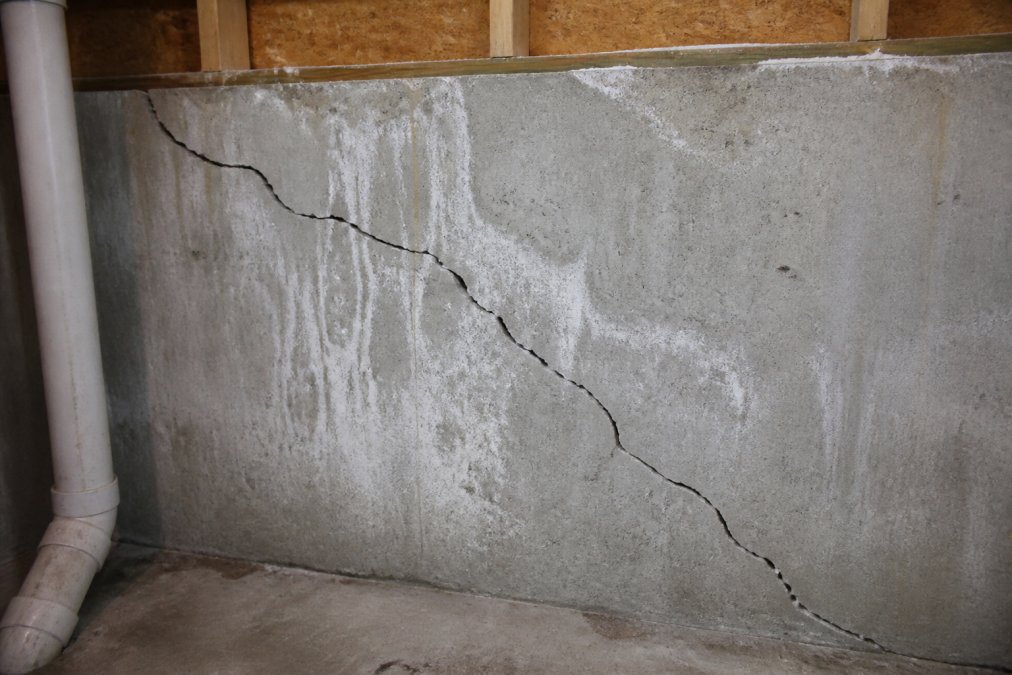
- Diagonal cracks running from the corners of windows or doors, often at 45-degree angles
- Horizontal cracks in basement walls, which signal hydrostatic pressure and are more serious than vertical ones
- Sticking doors and windows that no longer open or close smoothly
- Uneven or sloping floors, especially in older homes on pier-and-beam construction
- Gaps between walls and ceilings or between wall sections
- Efflorescence (white mineral deposits) on basement walls, indicating water intrusion
- Bowing or bulging walls in the basement or crawl space
The distinction between a minor crack and a structural crack matters enormously. Hairline cracks in poured concrete are common and often benign. A crack wider than a quarter-inch, actively leaking, or accompanied by wall movement requires professional attention.
When to Call a Structural Engineer
A structural engineer should be your first call when you see horizontal cracks, significant wall bowing, or any crack pattern that's actively growing. A structural engineer is a licensed professional who can assess load-bearing walls, evaluate foundation piering needs, and determine whether the structure is safe to occupy. For straightforward crack injection or minor concrete leveling, a qualified foundation repair contractor can assess and proceed without an engineering report.
Foundation Repair and Concrete Services in Detroit: What's Involved
Foundation repair and concrete services in Detroit cover a broader scope than most homeowners expect, ranging from targeted crack injection to full-scale underpinning with steel piers.
Foundation Crack Repair and Piering
Foundation crack repair addresses water intrusion and structural weakness at the source. For poured concrete foundations, the standard method is crack injection, where polyurethane or epoxy material is injected at full depth to seal the crack permanently. Epoxy injection bonds the concrete and restores tensile strength, while polyurethane foam injection expands to fill voids and is preferred for actively leaking cracks.
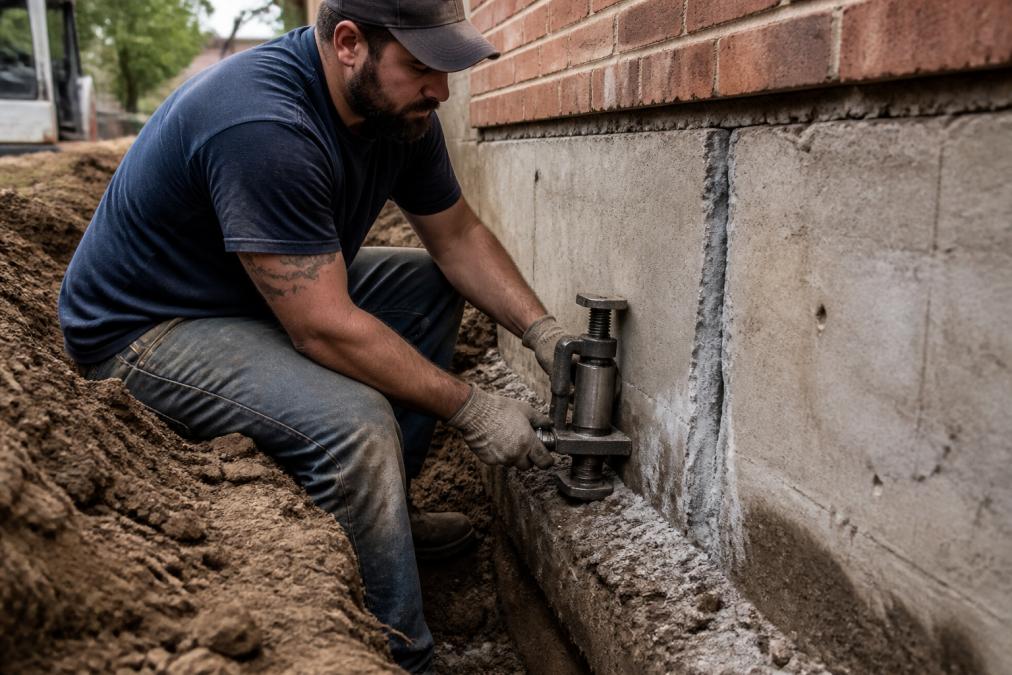
When settlement is the underlying cause, crack repair alone is insufficient. Foundation piering involves driving steel piers deep into stable load-bearing soil below the frost line. The piers transfer the structure's load past unstable soil. Underpinning with helical or push piers can also lift a settled foundation back toward its original elevation, restoring levelness to floors and closing gaps in walls.
Basement Waterproofing and Drain Tile Systems
Basement waterproofing is not a single product, it's a system. Effective waterproofing for a Detroit home typically combines interior drain tile systems, sump pump installation, and wall treatments to manage water before it becomes a problem.
Drain tile systems collect water that infiltrates the foundation and channel it to the sump pit, where a pump discharges it away from the structure. According to the U.S. Army Corps of Engineers guidance on basement moisture control, managing hydrostatic pressure through proper drainage is the most effective long-term solution for below-grade water intrusion.
Crawl Space Encapsulation and Vapor Barriers
Crawl spaces are a significant source of moisture problems in Metro Detroit homes. An unencapsulated crawl space allows ground moisture to evaporate upward, creating humidity that promotes mold growth and wood rot.
Crawl space encapsulation seals the crawl space floor and walls with a heavy-duty vapor barrier, typically paired with a dehumidifier and sometimes a sump pump. Proper encapsulation also improves energy efficiency by reducing conditioned air loss through the floor system.
Concrete Leveling and Slab Repair
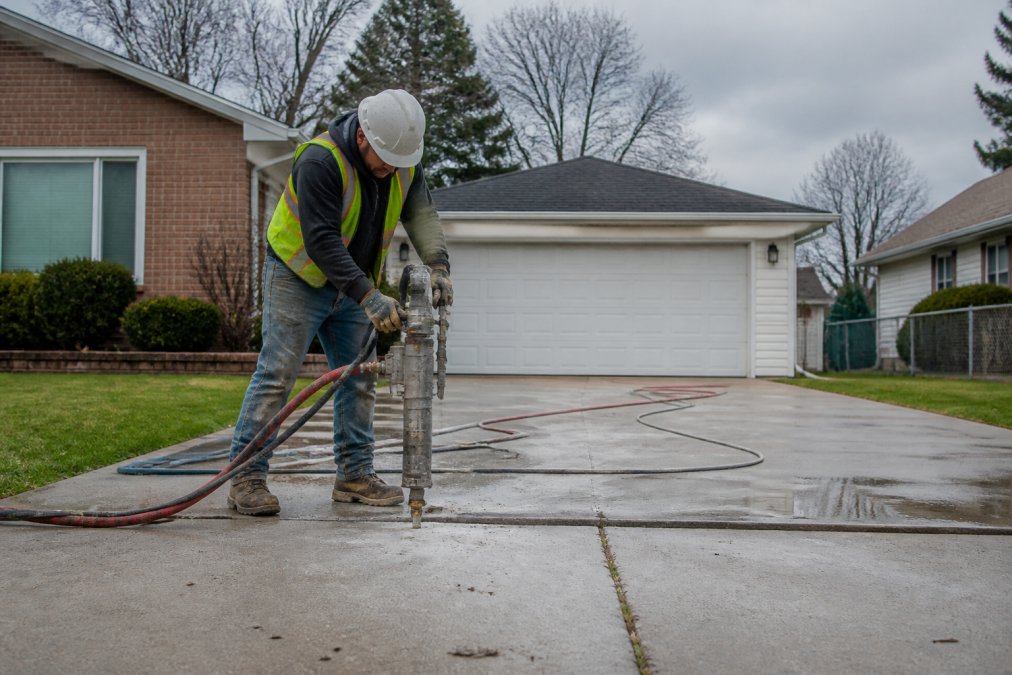
Sunken concrete slabs are both a safety hazard and a curb appeal problem. Two primary methods address concrete settlement: mudjacking and polyurethane foam injection. Mudjacking pumps a slurry beneath the slab to fill voids and lift it. Polyurethane foam injection uses expanding foam that cures quickly and is lighter, reducing the risk of future settlement. Concrete slab repair is appropriate when the slab itself is cracked or deteriorated beyond leveling.
| Method | Best For | Cure Time | Longevity |
|---|---|---|---|
| Mudjacking | Large slabs, driveways | 24-48 hours | Good |
| Polyurethane foam injection | Smaller areas, walkways | 15 minutes | Excellent |
| Full slab replacement | Severely cracked or deteriorated concrete | 7 days | Longest |
Residential vs. Commercial Concrete Services in Metro Detroit
Residential concrete covers driveways, sidewalks, patios, foundations, and footings, following Michigan Residential Code standards with smaller crews and shorter timelines. Commercial foundation work operates under stricter engineering requirements, handling significantly higher point loads and demanding specifications for compressive strength, reinforcement, and joint design. Municipal projects add prevailing wage requirements, bonding, and compliance with Michigan Department of Transportation or local municipality standards.
Many contractors handle one or the other well. Fewer handle both with equal competence. The ability to move from residential work to commercial to municipal projects without switching teams is a meaningful operational advantage.
Cost of Foundation Repair in Michigan: What Shapes the Price
The cost of foundation repair in Michigan varies based on the type of repair, severity of damage, and site-specific conditions. Minor crack injection repairs sit at one end of the cost spectrum. Full perimeter waterproofing systems with sump pump installation, or multi-pier underpinning projects, sit at the other. For an accurate picture, a foundation inspection and written estimate from a qualified contractor is the only reliable starting point.
DIY vs. Professional Repair: Where the Line Is
Some foundation-adjacent tasks are within reach for a motivated homeowner: applying hydraulic cement to hairline cracks, improving grading around the foundation, or extending downspout discharge. The line is clear on the structural side. Any repair involving load-bearing walls, foundation piering, underpinning, or drain tile installation requires professional execution.
According to the National Association of Home Inspectors on foundation issues, foundation problems left unaddressed consistently result in higher repair costs over time, as secondary damage to framing, flooring, and mechanical systems compounds the original structural issue.
Foundation Repair Detroit: How Delpres Services Approaches Every Project
Delpres Services LLC brings more than 20 years of hands-on construction experience to foundation repair and concrete services in Detroit and across Metro Detroit. One accountable team manages the project from initial assessment through completion, with no handoffs between subcontractors.
Every project starts with a detailed site assessment. From there, the scope is defined clearly, permits are handled, and work is executed with professional-grade equipment by an experienced crew. For Metro Detroit homeowners and commercial property managers, the full-scope capability eliminates coordination problems that arise when multiple trades are involved.
Requesting a Free Estimate and What to Expect
Requesting an estimate from Delpres Services LLC begins with a site visit. A qualified team member reviews visible signs of foundation distress, asks about the problem's history, and assesses site conditions. The estimate you receive is written, itemitized, and tied to a defined scope of work.
What to prepare before the visit:
- Note when you first observed the problem and whether it has changed
- Document any recent water intrusion events
- List any previous repairs to the foundation or basement
- Identify any areas where doors, windows, or floors have shifted
Annual Foundation and Concrete Maintenance Checklist for Detroit Properties
Prevention is significantly less expensive than repair. These maintenance tasks, performed annually, catch developing problems before they escalate.
Spring (post-thaw):
- Inspect basement walls and floor for new cracks or widening of existing cracks
- Check sump pump operation and discharge line for obstructions
- Examine window wells for water pooling or debris accumulation
- Walk the perimeter and check that soil grades away from the foundation at least 6 inches over 10 feet
- Inspect concrete flatwork for heaving, settling, or new cracks
Summer:
- Clean gutters and ensure downspouts discharge at least 6 feet from the foundation
- Check crawl space for moisture, standing water, or vapor barrier damage
- Inspect exposed concrete for surface scaling caused by winter deicers
Fall (pre-freeze):
- Test sump pump before the freeze season
- Seal any new hairline cracks in concrete flatwork before water infiltrates and freezes
- Clear debris from drain tile system cleanouts if accessible
- Confirm that window well covers are secure and intact
Year-round:
- Monitor any previously identified cracks for growth using a pencil mark and date
- Keep records of any water intrusion events with dates and locations
Detroit's freeze-thaw cycles, clay soils, and seasonal moisture load make foundation problems a near-certainty for properties that aren't actively maintained. Delpres Services LLC handles the full range of foundation repair and concrete services Detroit property owners need, from targeted crack injection and crawl space encapsulation to full-scale piering and basement waterproofing systems. With 20-plus years of experience, end-to-end project management, and a team that stays accountable from assessment through completion, Delpres Services LLC is built for the complexity Metro Detroit construction demands. Book a consultation and get a clear, written assessment of what your property needs.
Frequently Asked Questions
How much does foundation repair cost in Detroit, MI?
Foundation repair costs in Michigan vary significantly based on the type and severity of the problem. Minor crack injections cost far less than full underpinning or piering projects. Factors that shape the price include the repair method (mudjacking, polyurethane foam injection, or foundation piering), the depth of settlement, site access, and whether waterproofing is also needed. Because no two foundations are the same, the most reliable way to get an accurate number is to schedule a free on-site assessment with a qualified contractor.
What are the signs of foundation failure in Michigan homes?
Common signs of foundation settlement in Michigan homes include diagonal cracks at window and door corners, bowing or leaning basement walls, doors and windows that stick or no longer close squarely, uneven or sloping floors, and visible gaps between walls and ceilings. Water pooling near the foundation, efflorescence on basement walls, and a musty odor from the crawl space also point to moisture-driven foundation stress. Any of these signs warrants a professional foundation inspection before conditions worsen.
Does homeowners insurance cover foundation repair in Michigan?
Standard homeowners insurance policies in Michigan typically exclude foundation repair caused by gradual settlement, soil movement, or long-term water intrusion, since these are considered maintenance issues rather than sudden covered perils. Damage caused by a sudden, accidental event such as a burst pipe may be partially covered. Review your specific policy with your insurer, and ask your contractor to document the cause clearly during the foundation assessment, as this documentation can support any claim you do file.
What is the difference between concrete leveling and foundation underpinning?
Concrete leveling, using methods like mudjacking or polyurethane foam injection, lifts a sunken concrete slab back to its original grade by filling the void beneath it. It addresses surface settlement of driveways, patios, and sidewalks. Foundation underpinning goes deeper: it installs piers or pilings beneath the footing of a structure to transfer the load to stable soil or bedrock, permanently arresting foundation settlement. Leveling is a surface fix; underpinning is a structural solution for load-bearing walls and footings.
This article was written using GrandRanker