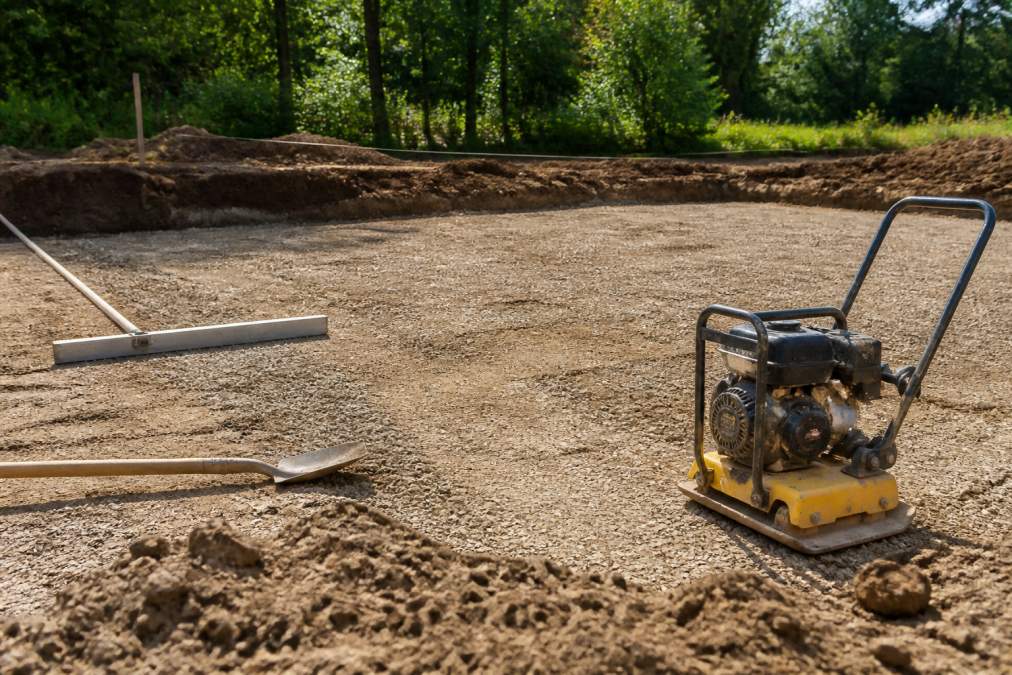
 listicle
5 Best Site Preparation Methods for Concrete Foundations
Table of Contents
- Quick Comparison: 5 Site Preparation Methods for Concrete Foundations
- Method 1: Cut and Fill Excavation and Grading
- Method 2: Soil Compaction Testing for Foundations
- Method 3: Subgrade and Subbase Preparation
- Method 4: Concrete Foundation Drainage Requirements
- Method 5: Excavation and Grading Services in Chesterfield MI
- Which Site Preparation Method Fits Your Project?
- Frequently Asked Questions
Last Updated: September 20, 2026
Quick Comparison: 5 Site Preparation Methods for Concrete Foundations
Every concrete foundation is only as good as the ground beneath it. This guide from Delpres Services LLC breaks down the five site preparation methods that matter most for residential, commercial, and municipal projects across Metro Detroit and Chesterfield, Michigan.
Site preparation methods are the excavation, grading, compaction, and drainage steps that turn raw ground into a stable, buildable surface before a concrete foundation is poured. Skip any one of them, and the slab above it will eventually tell you.
Here is the comparison table we use when scoping a job:
| Method | What It Does | Best For | Watch Out For |
|---|---|---|---|
| Cut and fill | Levels uneven ground | Sloped or irregular lots | Poor fill compaction |
| Soil compaction testing | Verifies load-bearing strength | All foundation types | Skipping density checks |
| Subgrade and subbase prep | Builds the load layer | Driveways, slabs, roads | Thin or mixed base |
| Foundation drainage | Moves water away | Wet or clay-heavy sites | Clogged drain lines |
| Hiring excavation and grading services | Brings equipment and expertise | Most projects | Unverified contractors |
The five methods below cover what each one does, when it applies, and where it falls short.
Method 1: Cut and Fill Excavation and Grading
Cut and fill excavation is the process of removing soil from high points on a site and using it to raise low points, creating a level building pad. Grading then fine-tunes that surface to the exact slope the foundation plan requires.
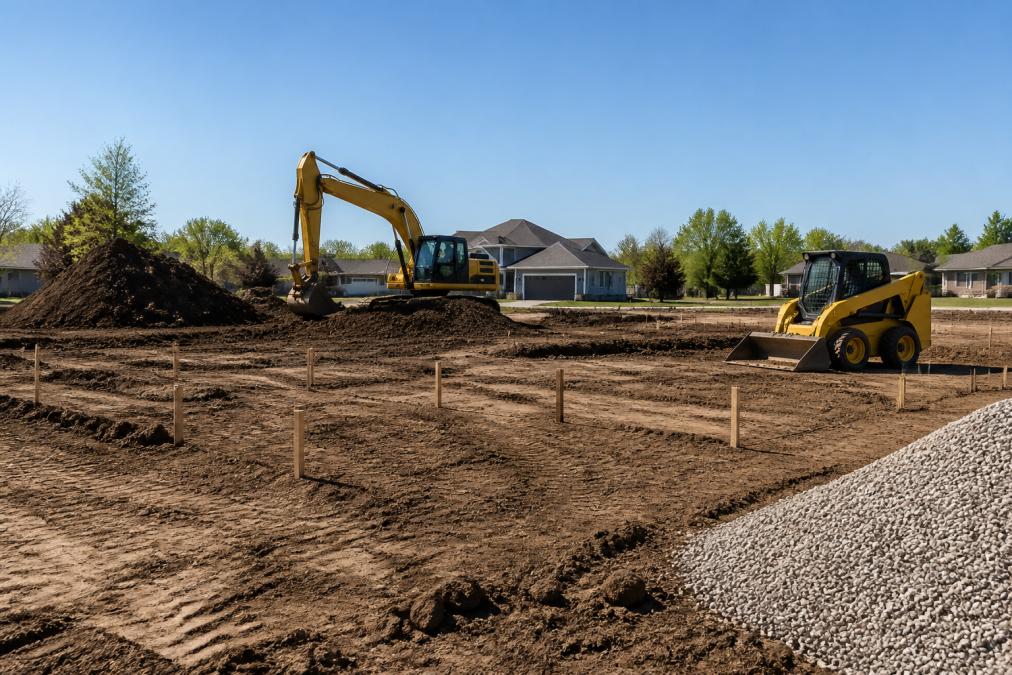
A common mistake is reusing excavated soil as fill without checking whether it drains well. Clay-heavy soil holds water and expands when it freezes, which is a real problem in Michigan winters. Fill that was never compacted in lifts will settle unevenly, and the foundation above it cracks.
Pros and Cons of Cut and Fill
Pros:
- Balances a sloped lot without hauling in extra material
- Reduces grading time when soil on site is suitable
- Creates a stable, level pad for formwork and pouring
Cons:
- Poor-quality fill soil can undermine the whole pad
- Requires accurate surveying before any dirt moves
- Wet weather can stall excavation for days
Method 2: Soil Compaction Testing for Foundations
Soil compaction testing for foundations measures how densely the soil under a building pad has been packed. It confirms the ground can carry the weight of the structure without settling.
Testing typically involves a technician checking density at set depths and comparing results to the engineer's specification. If a lift of fill fails, the crew re-compacts it before adding more. What most guides miss is that compaction is done in layers, not all at once. Piling three feet of fill and compacting the top inch does nothing for the soil below.
Pros and Cons of Compaction Testing
Pros:
- Catches weak spots before concrete is poured
- Documents compliance for permits and inspections
- Prevents costly foundation repairs down the road
Cons:
- Adds a step to the schedule
- Results depend on the technician's method and equipment
Method 3: Subgrade and Subbase Preparation
Subgrade is the native soil at the bottom of the excavation; subbase is the compacted gravel layer placed on top of it. Together they form the load-bearing platform that spreads the weight of the foundation and slab.
Preparing these layers means removing soft or organic material, proof-rolling the subgrade, and placing crushed stone in uniform lifts. For driveways and parking areas, a thicker subbase is standard because vehicle loads are heavier and repeated.
For local reference, the Michigan Department of Transportation standard specifications for construction outline how aggregate bases should be placed and compacted on state projects, and those same principles apply to private work.
Pros and Cons of Subgrade and Subbase Prep
Pros:
- Distributes weight evenly across the foundation
- Improves drainage beneath the slab
- Extends the life of concrete flatwork and pavement
Cons:
- Requires the right aggregate type and gradation
- Undersized subbase leads to cracking and settling
Method 4: Concrete Foundation Drainage Requirements
Concrete foundation drainage requirements are the systems that keep water from pooling against a foundation. They include footing drains, perimeter tile, gravel backfill, and a positive slope that carries water away from the structure.
Water is the single biggest threat to a foundation, and Michigan's freeze-thaw cycles make it worse. Water that sits against a foundation wall, freezes, and expands will find every crack. A properly installed drain system moves that water to a storm sewer, dry well, or daylight outlet before it can do damage.
The U.S. Environmental Protection Agency guidance on stormwater management explains why directing runoff away from structures and into managed systems matters for both the building and the surrounding property.
Pros and Cons of Drainage Installation
Pros:
- Prevents hydrostatic pressure against foundation walls
- Reduces basement and crawl space moisture
- Protects the investment in the concrete itself
Cons:
- Adds material and labor cost up front
- Requires maintenance to stay clear over time
Method 5: Excavation and Grading Services in Chesterfield MI
Hiring excavation and grading services in Chesterfield MI brings the equipment, operators, and site knowledge to handle all four methods above in the correct sequence. Most homeowners and many commercial developers do not own an excavator, a compactor, or a laser level, and renting them without experience rarely saves money.
For projects near Chesterfield and across Metro Detroit, Delpres Services LLC handles excavation, grading, soil preparation, drainage, and foundation work as one coordinated scope. That matters because the methods above depend on each other. If the grading crew and the foundation crew are different companies, nobody owns the transition, and problems fall between the cracks.
Pros and Cons of Hiring Excavation and Grading Services
Pros:
- Access to professional-grade equipment and operators
- One accountable team from start to finish
- Full-scope project management, including permits and compliance
Cons:
- Costs more up front than do-it-yourself rental
- Quality varies, so vetting references is essential
Which Site Preparation Method Fits Your Project?
Match the method to your site conditions and project type:
- Sloped or uneven lot: Start with cut and fill, then verify with compaction testing.
- Wet or clay-heavy soil: Prioritize drainage and a properly graded subbase.
- Standard driveway or slab: Subgrade prep and compaction testing cover the essentials.
- Large commercial or municipal site: Combine all five methods under one contractor.
- First major project: Hire excavation and grading services and let them sequence the work.
If you are unsure which combination applies, a site evaluation is the fastest way to find out. Local building departments can also clarify permit and inspection requirements for your jurisdiction before work begins.
Site preparation is where foundations are won or lost, and Metro Detroit's soil and freeze-thaw cycles do not forgive shortcuts. Delpres Services LLC brings 20+ years of hands-on expertise to excavation, grading, drainage, and foundation work, with one accountable team managing permits and compliance from the first survey stake to the finished pour. Our multidisciplinary crews handle everything from soil preparation to complete exterior property improvements, so nothing falls between trades.
Frequently Asked Questions
Why is site preparation critical for concrete foundation longevity?
A foundation carries the entire weight of the structure, so the ground beneath it has to stay stable for decades. Proper site preparation removes unsuitable soil, compacts the subgrade to a consistent density, and sets drainage that keeps water from pooling under the slab. Skip these steps and you risk settlement cracks, uneven floors, and costly repairs. The five site preparation methods above all work toward that same goal: a level, well-drained, load-bearing base.
What are the common soil compaction requirements for residential foundations in Michigan?
Michigan builders typically compact fill in 6 to 8 inch lifts, with each lift tested to a minimum of 95 to 98 percent of the soil's maximum dry density per ASTM D698 or D1557. Local building departments may require a geotechnical report or proof-roll inspection before the footing pour. Because Michigan soils range from dense clay to sandy loam, compaction testing for foundations matters more here than in regions with uniform ground.
How do you determine if the soil is ready for a concrete pour?
The subgrade should be uniform, moist but not saturated, and compacted to the density specified in the plan. A proof roll with a loaded dump truck reveals soft spots that need reworking. Verify forms are level, reinforcement is placed per the drawings, and drainage features are installed before the pour. For frost-protected foundations in colder areas, confirm the footing depth meets local frost line requirements, typically 42 inches in much of Michigan.
What role does drainage play in concrete site preparation?
Concrete foundation drainage requirements exist because water is the number one cause of foundation failure. Proper drainage slopes the finished grade away from the structure, installs footing drains and a gravel backfill, and routes roof runoff away from the foundation. Without it, hydrostatic pressure builds against the walls, leading to cracks, basement leaks, and long-term structural damage. Plan drainage during site prep, not after the pour.
Do I need a professional excavation contractor for site prep in Chesterfield?
For most residential and commercial foundations, yes. Excavation and grading services in Chesterfield handle the equipment, soil testing, and permitting that DIY crews cannot match. A professional contractor confirms the soil's load-bearing capacity, grades the site to the correct elevations, and documents compaction results for the building inspector. Delpres Services LLC has more than 20 years of experience coordinating these steps from permits through final grade.