 how-to
Site Prep Costs in Michigan: What to Expect
Table of Contents
- What Drives Site Prep Costs?
- Land Clearing Costs Michigan: What Affects the Price
- Site Grading Permit Chesterfield MI: Compliance and Cost
- Residential Site Development Checklist: What to Budget For
- Hidden Costs of Site Development
- Step-by-Step Site Prep Process
- How to Get Accurate Site Prep Cost Estimates
- Frequently Asked Questions
Last Updated: September 17, 2026
What Drives Site Prep Costs?
Site prep costs in Michigan depend on four main factors: land condition, project size, permit requirements, and utility work. Most homeowners want a single number upfront. That's not how site work pricing works, and any contractor who gives you one without seeing your land is guessing.
This guide from Delpres Services LLC breaks down what actually moves the needle on your bill. We've spent 20+ years on job sites across Metro Detroit, and the pattern is consistent: the surprises come from what's underground and what the county requires, not from the visible work.
Site prep costs vary widely based on:
- Lot size and terrain slope
- Tree count and stump diameter
- Soil type and drainage needs
- Local permit fees and inspection requirements
- Distance to utility connection points
The biggest mistake homeowners make is budgeting only for the visible work. Clearing and grading are the easy estimates. The expensive unknowns are buried.
Land Clearing Costs Michigan: What Affects the Price
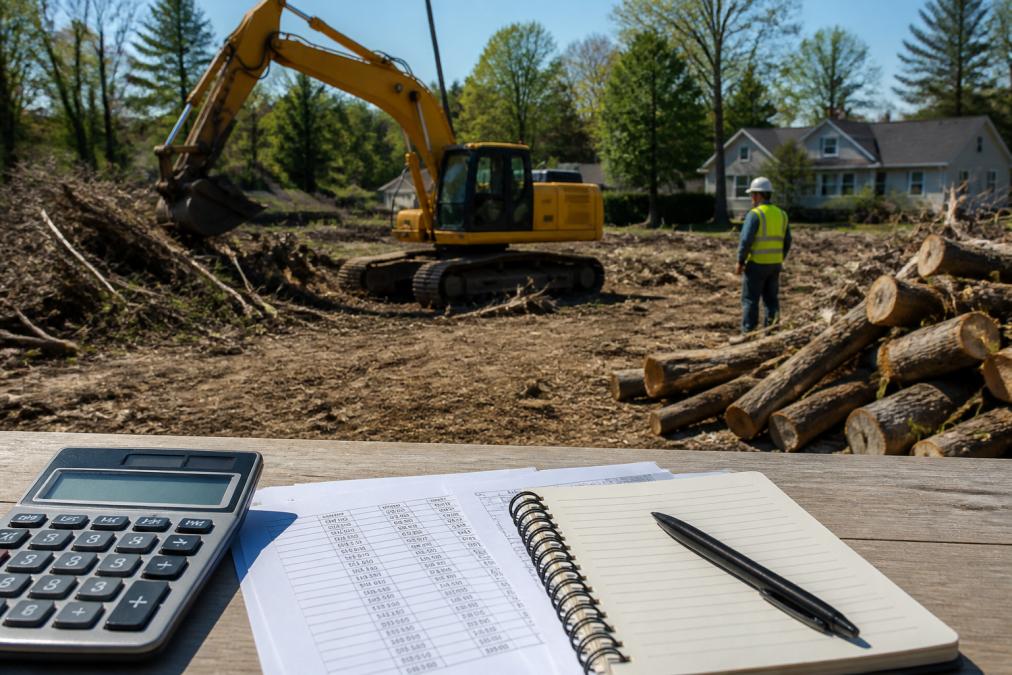
Land clearing costs in Michigan rise with tree density, brush volume, and how close the trees sit to structures or power lines. A half-acre of open field clears fast. A half-acre of mature hardwoods with stumps takes days.
Tree Density and Brush Removal
Dense stands of oak and maple cost more to clear than scattered pines. Crews need bigger equipment, more hauling trips, and sometimes a crane for trees near the house.
Brush removal adds labor hours. Thick undergrowth hides rocks and debris that slow down every pass.
Stump Grinding and Debris Hauling
Stump grinding is priced per stump, and diameter drives the number. A 30-inch oak stump takes far longer than a 10-inch pine.
Hauling adds up too. Disposal fees and truck trips are separate line items, and they depend on how much material leaves the site.
Site Grading Permit Chesterfield MI: Compliance and Cost
A site grading permit in Chesterfield MI is required before any earth-moving work that changes drainage patterns. The permit ensures your project won't push water onto neighboring properties.
Chesterfield Township reviews grading plans for stormwater runoff, erosion control, and lot drainage. Fees depend on project scope, so check with the township for current amounts before you budget.
Delpres Services handles the full permit process for clients, from plan submission to final inspection. That matters because a rejected plan costs weeks, not days.
Residential Site Development Checklist: What to Budget For
A residential site development checklist keeps your budget honest. Each line item below represents real money, and skipping any one of them creates a gap you'll pay for later.
- Boundary survey and site assessment
- Tree and brush clearing
- Stump grinding and debris hauling
- Rough and finish grading
- Storm drainage and erosion control
- Water and sewer trenching
- Utility connections and inspections
- Driveway base and approach
- Final grading and topsoil
Each item needs its own line in your budget. Bundling them into one vague "site work" number is how projects go over.
| Budget Item | What It Covers | Why It Matters |
|---|---|---|
| Survey | Boundaries and elevations | Prevents building in the wrong spot |
| Clearing | Trees, brush, debris | Frees the buildable area |
| Grading | Leveling and drainage | Stops water pooling at the foundation |
| Utilities | Water, sewer, trenching | Required before foundation work |
| Permits | Township and county fees | No permit, no legal start |
Hidden Costs of Site Development
Hidden costs of site development come from three places: bad soil, buried debris, and utility surprises. None of them show up in a walkthrough.
Poor soil needs correction. That means removal and replacement, and it's priced by the cubic yard.
Old stumps, concrete, or buried tanks from previous use add excavation time. Utility lines that aren't where the map says they are force reroutes.
Step-by-Step Site Prep Process
The site prep process follows a fixed order: assess, clear, grade, then install utilities. Skipping a step or doing them out of sequence creates rework and inspection failures.
Total Time: 2-6 weeks for a typical residential lot Difficulty: Professional crews required
Step 1: Site Assessment and Survey
A licensed surveyor marks boundaries, elevations, and utility locations. This step sets the baseline for every decision that follows.
Expected Result: A stamped survey and a clear picture of what's underground.
Step 2: Clearing and Grubbing
Crews remove trees, brush, and root systems within the build footprint. Grubbing means pulling roots, not just cutting trunks.
Expected Result: A clean, stump-free pad ready for grading.
Step 3: Grading and Drainage
The site is cut and filled to the plan's elevations. Drainage swales and erosion controls go in at the same time.
Expected Result: Water flows away from the building pad, not toward it.
Step 4: Utility Trenching and Installation
Trenches are dug for water, sewer, and electrical conduits. Inspections happen before backfill.
Expected Result: Utilities installed, inspected, and covered.
How to Get Accurate Site Prep Cost Estimates
Accurate site prep cost estimates require a site visit, a soil review, and a written scope. Phone quotes are guesses dressed up as numbers.
Ask each contractor for:
- A line-item breakdown, not a lump sum
- A clear list of what's excluded
- Permit handling spelled out
- A timeline with inspection milestones
Delpres Services provides written scopes with line-item pricing and handles permits, inspections, and utility coordination under one contract. Homeowners in Chesterfield and across Metro Detroit can book a consultation and get a real number based on their actual lot.
Site prep is where budgets quietly break, and the cause is almost always something nobody looked at before digging. Delpres Services brings 20+ years of site development experience to every project, with full-scope project management that covers permits, compliance, and utility coordination from start to finish. Our team delivers optimized structural integrity and end-to-end coordination on residential, commercial, and municipal work across Metro Detroit. Get started with Delpres Services and build on ground you can trust.
Frequently Asked Questions
What is included in site preparation for a new build?
Site preparation typically includes land clearing, grading, excavation, utility trenching, and soil compaction. In Michigan, it may also involve permits, drainage solutions, and erosion control. Each project varies based on lot conditions and local regulations. A detailed scope from your contractor ensures you understand what's covered and what's not.
How does soil quality affect site prep costs in Michigan?
Michigan's clay-heavy soils often require additional grading, drainage solutions, or soil amendments to support construction. Poor soil may need removal and replacement, increasing costs. A soil test and site assessment can identify these issues early, helping you budget accurately and avoid surprises.
Do I need a permit for site grading in Chesterfield, MI?
Yes, most grading projects in Chesterfield require a permit to ensure proper drainage and erosion control. The permit process involves submitting plans and paying fees. Requirements vary by project scope, so check with local authorities or hire a contractor familiar with Chesterfield regulations to handle compliance.
How much does land clearing cost per acre?
Land clearing costs vary based on tree density, terrain, and accessibility. In Michigan, prices can range from a few thousand to over ten thousand dollars per acre. Factors like stump removal and debris hauling add to the total. Get multiple quotes and ask for a breakdown of labor, equipment, and disposal fees.