 how-to
Residential Concrete Driveway Installation: Step-by-Step Process
Table of Contents
- Preparing Your Site for Concrete Driveway Installation
- Concrete Driveway Permit Requirements in Chesterfield
- Residential Concrete Driveway Thickness Standards
- Excavation, Grading, and Base Preparation
- Pouring and Finishing Your Concrete Driveway
- How Long to Wait Before Driving on New Concrete
- Common Installation Mistakes to Avoid
- Conclusion
Last Updated: August 26, 2026
Preparing Your Site for Concrete Driveway Installation
A poorly prepared base leads to cracking, settling, and premature failure. A solid base means your driveway performs for decades.
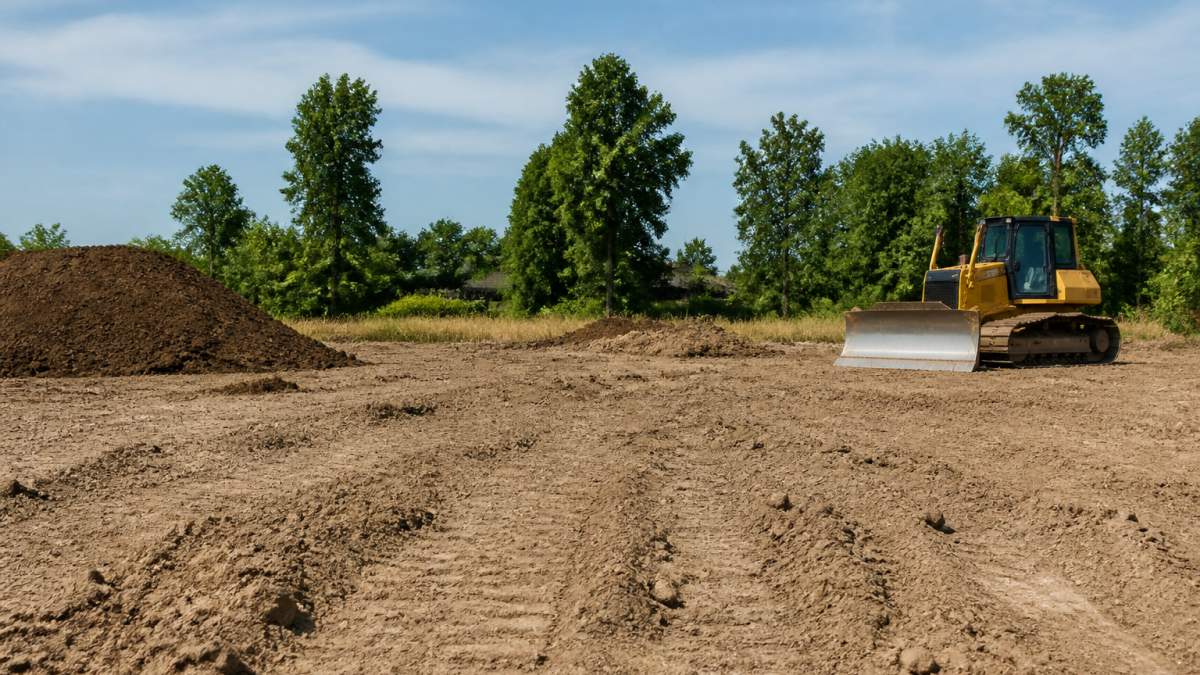
Measure your existing driveway or the space where the new one will go. Document the slope, drainage patterns, and any utilities running beneath the surface. Remove any existing asphalt, concrete, or debris from the area. Clear vegetation, roots, and organic material that will decompose over time and create settlement pockets.
Mark underground utilities before excavation begins. Call 811 or your local utility locating service. They'll mark gas lines, electrical conduits, water mains, and sewer connections. This step protects your crew, prevents service interruptions, and keeps you legally compliant. At Delpres Services LLC, we handle this coordination as part of our full-scope project management.
Check drainage patterns on your property. Where does water flow during heavy rain? If it pools near your driveway location, plan for drainage solutions before pouring concrete. Compact the existing soil to remove soft spots and voids using a walk-behind compactor for residential driveways.
Concrete Driveway Permit Requirements in Chesterfield
Chesterfield requires permits for residential concrete driveway installation. Contact the Chesterfield Building Department before beginning work. Submit your driveway plans, including dimensions, slope, and any drainage modifications. The permit review typically takes 5-10 business days.
Permit requirements include inspection at multiple stages: after base preparation, after concrete placement, and after finishing. Inspectors verify that your driveway meets local codes for slope, thickness, and drainage.
The slope requirement is non-negotiable. Your driveway must slope away from your home at a minimum grade to shed water. Chesterfield typically requires a 1-2% slope (roughly 1 inch of drop per 4-8 feet of length).
Drainage considerations factor heavily into permit approval. If your driveway will alter how water flows across your property, you may need a drainage plan. Get your permit in writing before any work begins and display it prominently at the job site.
Residential Concrete Driveway Thickness Standards
The standard thickness for residential concrete driveways is 4 inches. This thickness handles the weight of passenger vehicles and light trucks without excessive cracking or failure.
Four inches of concrete provides adequate structural capacity for typical residential use. Thinner concrete, 3 inches or less, fails prematurely under repeated loading cycles. Some high-traffic applications call for 5-inch thickness.
Concrete strength is measured in PSI (pounds per square inch). Residential driveways typically use 3,000-4,000 PSI concrete (concrete.org). Air entrainment is critical in freeze-thaw climates. Tiny air bubbles in the concrete allow water to expand without cracking during freeze cycles. Specify 5-7% air entrainment when ordering your mix.
Reinforcement adds durability. Wire mesh or rebar placed in the middle of the concrete slab prevents crack propagation and extends the lifespan significantly.
Excavation, Grading, and Base Preparation
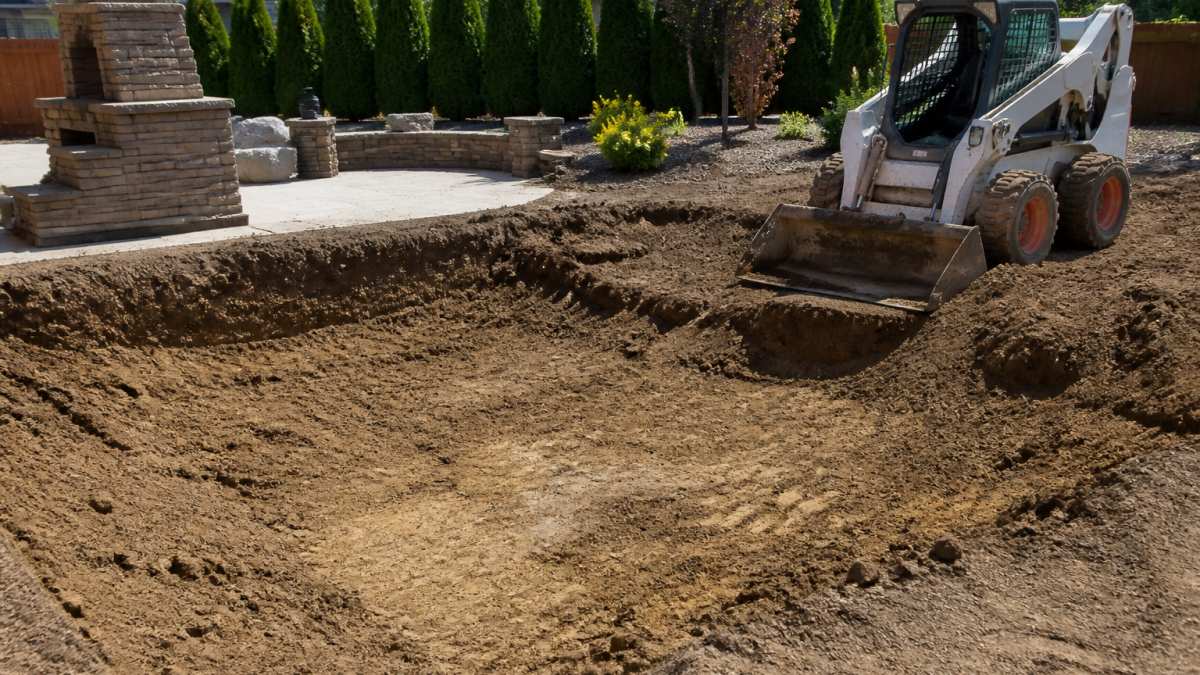
Excavation sets the stage for everything that follows. For a 4-inch concrete driveway, excavate 6-8 inches total: 4 inches for concrete and 4 inches for compacted base material.
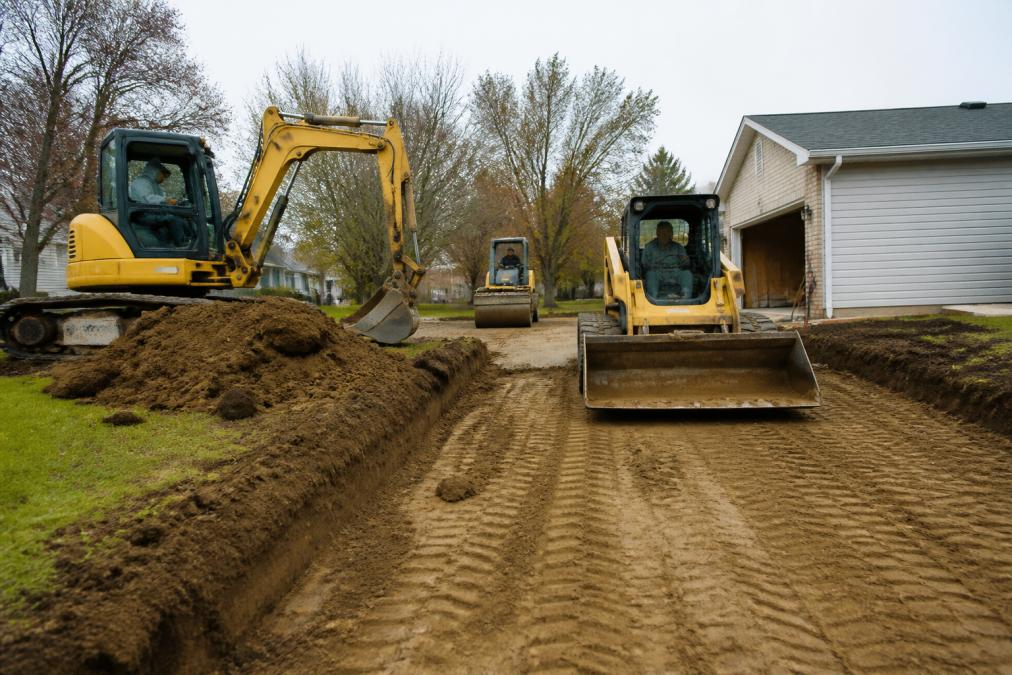
Grade the excavated area to match the slope requirements. Use a laser level or transit to ensure consistent slope away from structures. Remove all soft material, clay pockets, and organic debris. Unstable soil creates settlement voids that crack concrete.
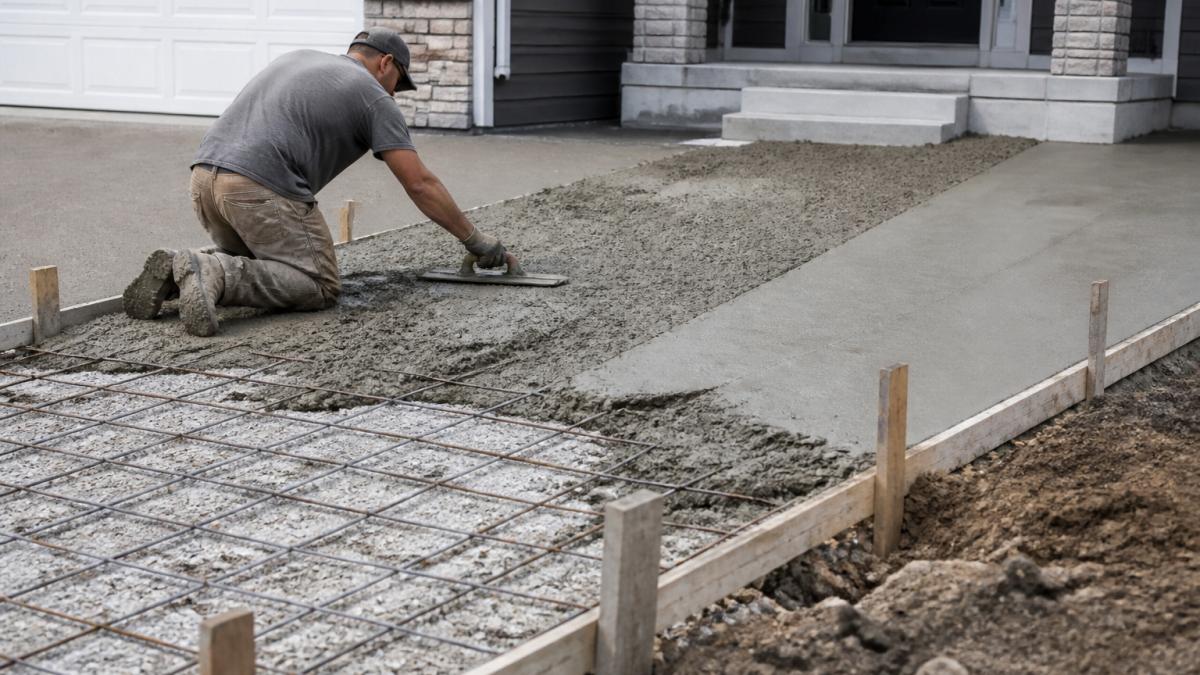
Compact the subgrade thoroughly using a walk-behind plate compactor or vibratory roller. Make multiple passes until the soil is firm and won't compress further. Install 4 inches of compacted base material, crushed stone, gravel, or recycled asphalt, spread evenly and compacted in 2-inch lifts.
Edge forms guide the concrete and ensure straight, clean edges. Use 2x4 lumber or aluminum forms, set to the finished grade height. Secure forms with stakes and check that they're level and properly sloped. Wet the base material before pouring concrete so it absorbs moisture uniformly, promoting even curing and reducing cracking.
Pouring and Finishing Your Concrete Driveway
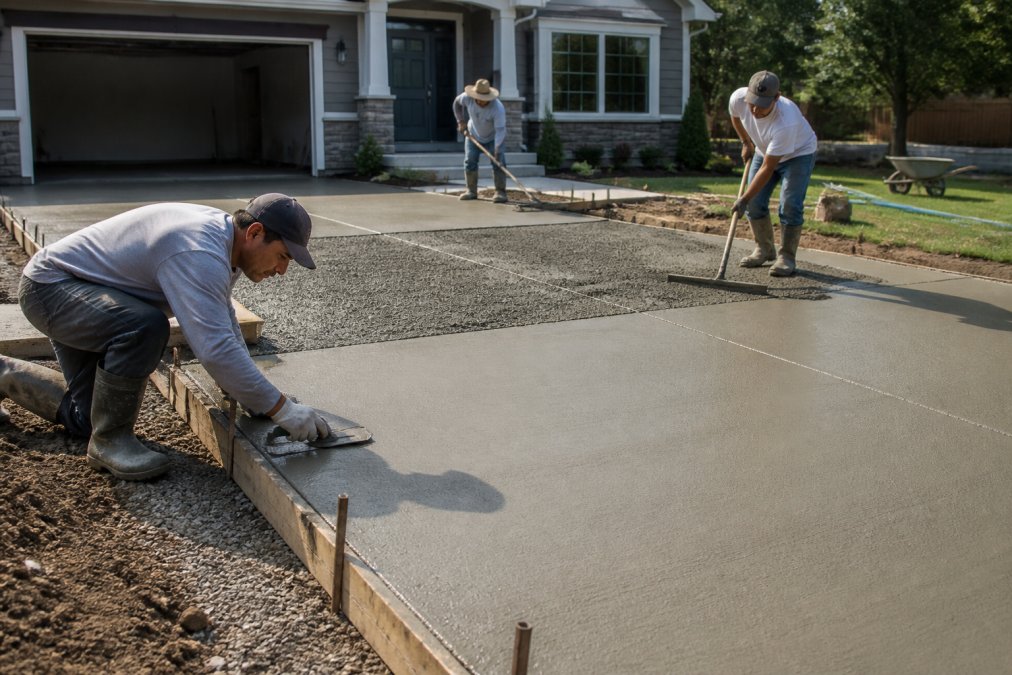
Order concrete for early morning if possible. Calculate your driveway volume and order accordingly, with a small surplus for waste. Begin pouring at the highest point and work downslope, spreading concrete evenly across the entire form.
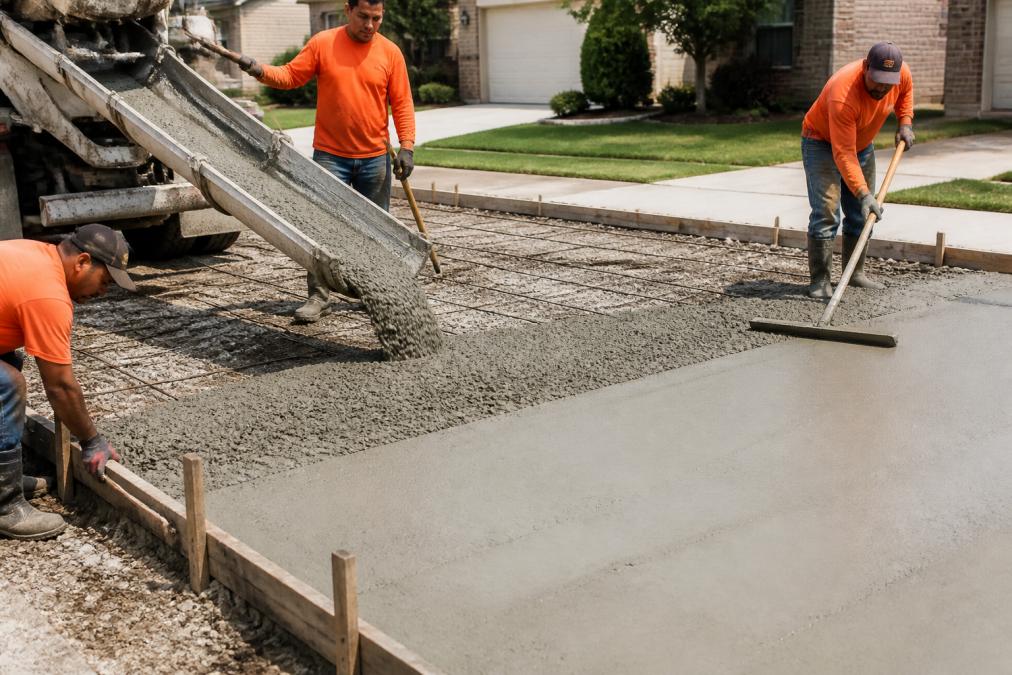
Screed the concrete level with the top of the forms using a straight 2x4 or aluminum beam. Float the surface to smooth it and fill small voids using a long-handled bull float. Broom finish prevents slipping by dragging a stiff-bristled broom across the surface in one direction after the concrete sets enough to hold an impression.
Control joints prevent random cracking. Saw-cut joints spaced every 4-6 feet along the length of the driveway allow the concrete to crack at predetermined locations. Cut joints 1/4 inch wide and 1/3 the thickness of the slab deep within 12-24 hours of pouring. Use an edging tool along the sides to round or bevel the edges.
Weather affects finishing. Hot weather accelerates curing and requires faster work. Cold weather slows curing. Check the forecast and schedule pouring accordingly.
How Long to Wait Before Driving on New Concrete
Wait at least 7 days before driving on new concrete (concrete.org). This timeline allows the concrete to reach approximately 70% of its design strength. Heavy vehicles and loaded trucks should wait 14 days minimum.
Temperature affects curing speed. Warm weather accelerates the hydration process. Cold weather slows curing significantly. In Chesterfield's winter conditions, concrete may take longer to cure.
During the curing period, protect the surface from traffic, standing water, and debris. Avoid sharp turns, hard braking, and parking in the same spot repeatedly during the first 30 days. Salt and de-icing chemicals should be avoided during the first winter. Wait until the concrete has fully cured, ideally 28 days.
Common Installation Mistakes to Avoid
Poor base preparation tops the list. A solid, compacted base is non-negotiable. Inadequate slope causes standing water and accelerates deterioration. Ensure slope is consistent and sufficient, at least 1 inch per 4-8 feet away from structures.
Thin concrete fails faster. Some contractors use 3-inch concrete to save money. In Chesterfield's freeze-thaw climate, 4 inches is the minimum. Improper finishing creates surfaces that deteriorate quickly. Missing control joints allow random cracking to appear where you don't want it.
Driving too soon damages the surface. Wait the full 7-14 days before normal use. Ignoring drainage issues creates long-term problems. Address drainage during design, not after problems appear.
Using the wrong concrete mix for the climate is a common oversight. Chesterfield's freeze-thaw cycles demand air-entrained concrete. Without proper air entrainment, concrete spalls and deteriorates rapidly. Inadequate curing time in cold weather causes weak concrete that never reaches design strength.
Installing a residential concrete driveway is a significant investment in your property. The process demands precision at every stage, from site preparation through finishing and curing. When done right, a concrete driveway provides decades of reliable service.
Delpres Services LLC brings 20+ years of hands-on expertise to every driveway project in the Chesterfield area. We handle permits, inspections, and full-scope project management so you don't have to navigate compliance alone. Our team uses professional-grade equipment and proven construction methods to deliver driveways built to last. Concrete driveway specifications from the American Concrete Institute confirm that proper thickness, slope, and finishing are essential for performance, and that's exactly how we build every project.
Book a consultation with Delpres Services LLC today. We'll assess your property, handle all permit requirements, and deliver a driveway that performs.
Frequently Asked Questions
How long does it take to install a concrete driveway?
A typical residential concrete driveway installation takes 3-5 days from excavation through finishing, depending on site conditions and driveway size. However, the concrete itself requires time to cure before use. Site preparation, permitting, and weather can extend the overall project timeline. Professional contractors like Delpres Services manage the full schedule and keep you informed at each phase.
How long should I wait before driving on my new concrete driveway?
Wait at least 7 days before driving on new concrete under normal conditions. Light foot traffic is generally safe after 48-72 hours, but full vehicle weight requires the concrete to reach sufficient strength. Cooler temperatures and higher humidity extend curing time. Your contractor will provide specific curing guidelines based on weather and concrete mix used during installation.
Do I need a permit for a new driveway in Chesterfield?
Yes, most driveway installations in Chesterfield require a permit from the local building department. Permit requirements depend on driveway size, whether utilities are affected, and local zoning rules. A professional contractor handles the permit application, inspections, and compliance documentation, ensuring your project meets all local codes and standards.
What thickness should a residential concrete driveway be?
Residential concrete driveways typically require 4-6 inches of concrete thickness, with 4 inches being the standard minimum for passenger vehicles. The base layer (gravel or crushed stone) should be 4-6 inches compacted. Proper thickness ensures durability and prevents cracking under vehicle weight. Local soil conditions and climate may require adjustments to meet residential concrete driveway thickness standards.
This article was written using GrandRanker