 ultimate-guide
Is Professional Underground Utility Installation Worth It?
Table of Contents
- The Real Risks of DIY Underground Utility Installation
- What Professional Underground Utility Installation Actually Includes
- Underground Utility Installation Cost: What You Pay For
- Chesterfield County Utility Permitting Process: What Homeowners and Developers Must Know
- Utility Line Installation Safety Standards Every Contractor Should Follow
- How Professional Installation Protects Property Value
- How to Choose the Right Underground Utility Contractor
- Frequently Asked Questions
Last Updated: September 16, 2026
The Real Risks of DIY Underground Utility Installation
Digging a trench for a water line or sewer lateral looks manageable on a Saturday morning. It isn't. Underground utility installation is the process of excavating, bedding, laying, and pressure-testing the pipes and conduits that carry water, sewage, gas, electricity, and communications beneath a property. The work sits below grade, which means every mistake is buried, expensive, and often invisible until it fails.
The risks stack up fast. Unmarked gas and electric lines get struck because the one-call locate wasn't scheduled or the tolerance zone was ignored. Trenches collapse without proper shoring. Improper bedding cracks pipe within a season. A failed inspection means re-excavation, and re-excavation means the driveway, lawn, or sidewalk you just restored gets torn out again.
At Delpres Services LLC, we've watched homeowners and developers try to save money on the dig and pay double to fix it. The savings rarely survive the first inspection. Below, we break down what professional installation actually includes, what drives cost, and how to tell a real contractor from a cheap bid.
What Professional Underground Utility Installation Actually Includes
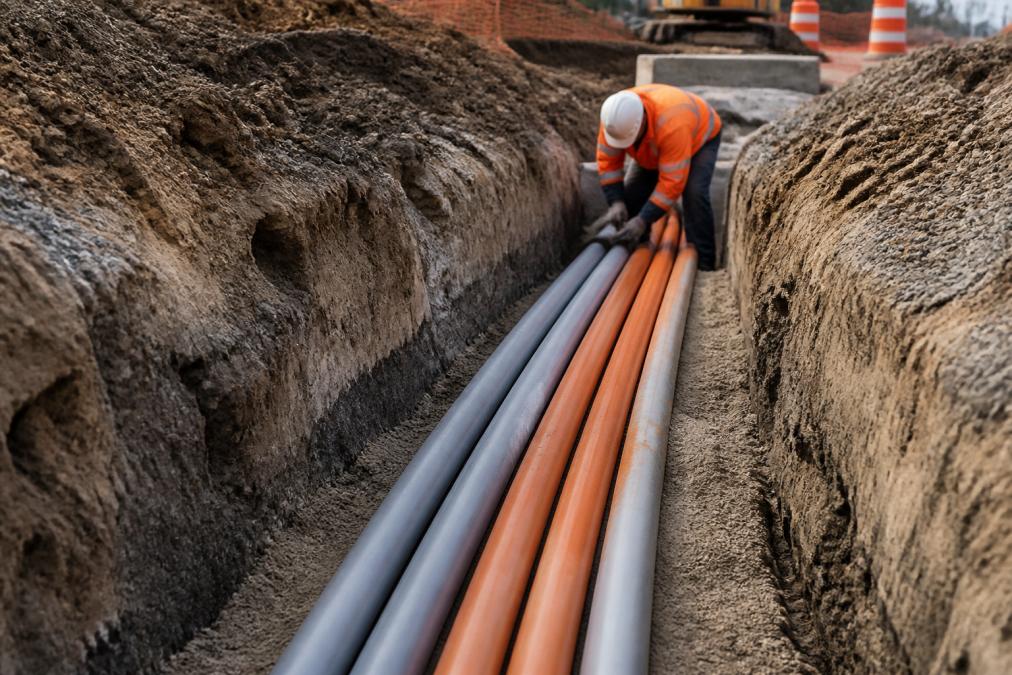
Professional underground utility installation covers far more than digging a hole and dropping pipe. A qualified contractor handles the full sequence: utility locate coordination, trench excavation to correct depth and slope, bedding material placement, pipe and conduit installation, backfill in compacted lifts, pressure and leak testing, and final restoration.
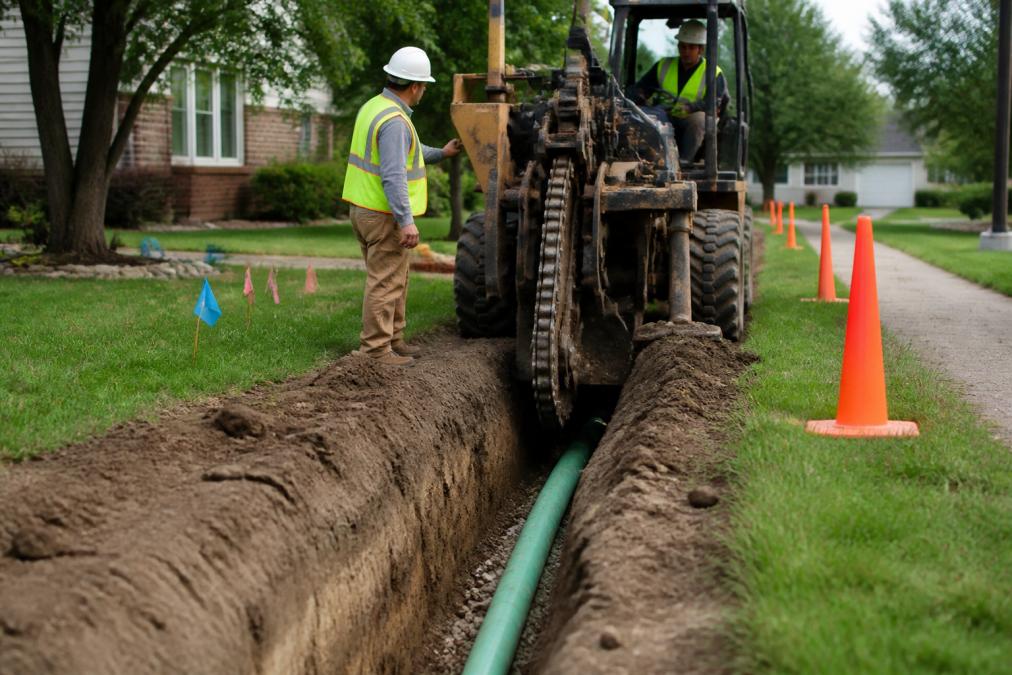
The scope also includes the paperwork. Permits, inspections, as-built drawings, and compliance documentation are part of the job, not an afterthought. Skipping any step creates a liability that follows the property, not the installer.
Underground Utility Installation Cost: What You Pay For
Underground utility installation cost depends on trench length, depth, soil conditions, pipe material, and the permitting jurisdiction. Pricing also reflects mobilization, equipment, labor, and restoration. Because these variables shift project to project, a responsible contractor quotes after a site assessment, not over the phone.
Short-Term Costs vs. Long-Term Value
A lower upfront bid usually means something was trimmed: thinner bedding, shallower trench depth, skipped compaction, or no testing. Those shortcuts don't show up on day one. They show up as settling, cracked pipe, or a failed inspection months later, and the repair bill lands on the property owner.
Long-term value comes from doing it right once. Correct depth, proper bedding, and verified compaction mean the system performs for decades without excavation.
When Cheaper Bids Cost More
A cheap bid often means the contractor plans to cut corners or walk away when the inspection fails. The real cost of a failed installation is the second excavation, the permit re-fee, the restoration, and the downtime. That total usually exceeds the original professional quote.
Chesterfield County Utility Permitting Process: What Homeowners and Developers Must Know
Requirements vary by project type and jurisdiction, so confirm current submittal checklists with the local permitting office before you dig. Contractors who work in the area regularly know the sequence and build inspection timing into the schedule.
Delpres Services LLC manages permits and compliance as part of full-scope project management, which keeps inspections from stalling the job.
Utility Line Installation Safety Standards Every Contractor Should Follow
Utility line installation safety standards exist to prevent the two most common catastrophes: struck lines and trench collapse. Contractors must call 811 before any excavation, respect the tolerance zone around marked lines, and use protective systems for trenches deeper than five feet.
The Occupational Safety and Health Administration excavation standards set the shoring, sloping, and access requirements that protect workers in the trench. A contractor who skips them is a contractor who cuts other corners too.
Beyond worker safety, proper installation protects the public: gas line strikes, water main breaks, and sewer cross-connections all trace back to sloppy excavation or unverified connections.
How Professional Installation Protects Property Value
Buried infrastructure is a permanent feature of the property. A documented, inspected installation supports resale because buyers and lenders can verify it was done to code. An undocumented DIY dig does the opposite: it creates a disclosure problem and a repair risk that shows up in negotiations.
Professional installation also protects the surface. Correct compaction prevents the settling that cracks driveways, patios, and sidewalks years later. That's why restoration quality is a signal of installation quality.
How to Choose the Right Underground Utility Contractor
Choosing the right contractor comes down to verification, not sales pitch. Use this checklist:
- Confirm active licensing and insurance for your jurisdiction
- Ask for local references on similar projects and call them
- Verify the contractor handles permits and inspections directly
- Confirm they call 811 and document the locate
- Check that testing and compaction are included in the quote, not optional add-ons
- Get a written scope with exclusions spelled out
- Confirm restoration is part of the contract
If you're searching for underground utility installation near me, prioritize contractors with a local track record and a clear compliance process. Delpres Services LLC brings 20+ years of hands-on expertise and one accountable team from start to finish.
Underground utility work is unforgiving of shortcuts, and the consequences stay buried until they fail. Delpres Services LLC handles excavation, storm and sanitary sewer installation, water main construction, and complete site preparation with full-scope project management, including permits and compliance, so the job passes inspection the first time. If you're planning a project in the Metro Detroit area, book a consultation and get a scope built around your actual site conditions.
Frequently Asked Questions
What are the risks of DIY underground utility installation?
DIY installation risks are serious: striking a gas or electrical line can cause injury or death, and hitting a water main leads to flooding and costly repairs. Without calling 811, you may also face fines and liability for damaged public infrastructure. Improper trenching causes settling, pipe shifts, and future leaks. Professional contractors carry insurance and follow safety standards that protect you from these outcomes.
How does professional utility installation impact property value in Chesterfield?
Professionally installed utilities signal a well-maintained property. For homeowners, proper septic, water, and drainage systems prevent expensive failures that scare off buyers. For developers, documented permits and inspections make properties easier to finance and sell. Verified professional installation can be a deciding factor for lenders and buyers.
Do I need a permit for underground utility work in Chesterfield County?
Yes, most underground utility work requires permits. The specific permit depends on the utility type and project scope. Always confirm requirements with the local permitting office before digging. A professional contractor handles the permitting process for you, ensuring compliance and avoiding delays.
What safety standards must utility contractors follow in Virginia?
Contractors must follow OSHA excavation standards (29 CFR 1926.650-652), which cover trench protective systems, access/egress, and atmospheric testing. They must also comply with the Underground Utility Damage Prevention Act, which requires calling 811 before digging. For electrical work, NFPA 70E and NEC apply. Reputable contractors maintain these standards and carry proper licensing and insurance.