 how-to
How to Calculate Site Clearing Costs: 2026 Guide
Table of Contents
- What You'll Need Before You Start Estimating
- Step 1: Walk the Site and Measure What's Actually There
- Factors Affecting Land Clearing Estimates
- Step 2: Choose a Clearing Method and Match It to Your Site
- Land Clearing Cost Per Acre in Michigan: How to Build Your Own Number
- Step 3: Add Disposal, Grading, and Site Restoration
- Site Preparation Permit Requirements in Chesterfield, MI
- Step 4: Build Your Estimate With a Simple Worksheet
- Frequently Asked Questions
Last Updated: September 21, 2026
What You'll Need Before You Start Estimating
Site clearing costs are the total expenses for removing trees, brush, stumps, and debris from a property before construction begins, and understanding site clearing costs starts with knowing what drives them. The final number depends on tree density, terrain, access, disposal, and local permit fees. This guide walks you through the exact steps to build an accurate estimate for your own land.
Before you put a number on paper, gather four things:
- A site map or survey showing property lines and easements
- A measuring tape and a way to mark trees (flagging tape works)
- Your local municipality's permit fee schedule
- A notebook for tracking tree count, stump sizes, and access points
Most homeowners skip the walk-through and jump straight to a phone quote. That's a common mistake. A quote built from a satellite image will miss the fallen oak behind the shed and the wet spot that swallows equipment.
Step 1: Walk the Site and Measure What's Actually There
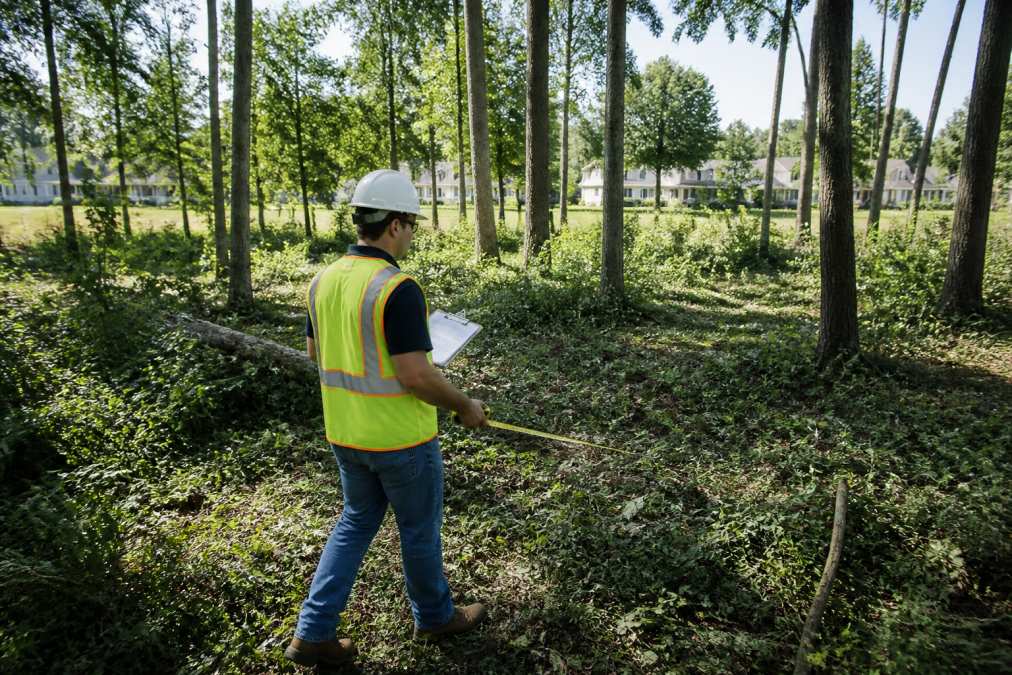
A proper site walk turns guesswork into numbers. You're counting trees, measuring trunks, and noting every obstacle that slows equipment. This step takes one to two hours on a typical residential lot.
Recording Tree Count, Diameter, and Density
Tree size drives cost more than tree count. A 12-inch trunk takes minutes to cut. A 36-inch oak takes hours, plus stump grinding and hauling.
Measure each tree at chest height (about 4.5 feet off the ground). Record the diameter in inches.
- Under 6 inches: sapling or small ornamental, low removal cost
- 6 to 18 inches: standard residential tree, moderate cost
- 18 to 30 inches: large tree, needs bigger equipment
- Over 30 inches: heavy removal, often requires a crane or sectional felling
Group your trees into density zones. A half-acre with 40 large trees costs far more to clear than a half-acre with 8.
Noting Terrain, Water, and Access Constraints
Slope, soft ground, and tight access all add cost. Walk the property edge to edge and flag:
- Wet areas, streams, or seasonal ponds
- Slopes steep enough that equipment can't climb safely
- Narrow gates or driveways that block large machines
- Utility lines, septic fields, or buried cables
Each constraint means smaller equipment, more hand work, or protective matting. All three raise the price.
Factors Affecting Land Clearing Estimates
The factors affecting land clearing estimates come down to five variables: tree density and size, terrain, access, disposal method, and site restoration needs. Change any one of them and the number moves.
Here's how each factor shifts your total:
| Factor | Low-Cost Condition | High-Cost Condition |
|---|---|---|
| Tree density | Scattered small trees | Dense mature hardwoods |
| Terrain | Flat, dry ground | Sloped, wet, or rocky |
| Access | Wide open driveway | Narrow gate, no equipment room |
| Disposal | On-site burn or mulch | Haul off-site to a landfill |
| Restoration | Rough grade only | Fine grade plus topsoil |
A flat, open lot with light brush sits at the low end. A wooded, sloped lot with no equipment access sits at the high end. Most real properties land somewhere in between.
Step 2: Choose a Clearing Method and Match It to Your Site
The clearing method you choose should match your site conditions and your end goal. There's no universal best option.
- Hand clearing: Best for small lots, sensitive areas, or tight access. Slow and labor-heavy.
- Mechanical clearing: Bulldozers and excavators push and pile debris. Fast on open, flat ground.
- Forestry mulching: A tracked machine grinds trees and brush into mulch in one pass. Good for moderate density and uneven ground.
- Selective thinning: Keeps healthy trees and removes the rest. Common for homesites that want to preserve shade.
Forestry mulching leaves mulch on site, which reduces hauling. Mechanical clearing moves more dirt and needs a burn pile or haul-off. Hand clearing protects landscaping you want to keep.
For a Chesterfield homesite with a mix of mature trees and open lawn, selective thinning plus mulching can offer a good balance of cost and finished look.
Land Clearing Cost Per Acre in Michigan: How to Build Your Own Number
Land clearing cost per acre in Michigan varies widely because the state's mix of hardwoods, wetlands, and seasonal frost changes what equipment can do and when. Instead of chasing a single statewide figure, build your number from the factors you measured in Step 1.
Use this approach:
- Count your trees by size class from your site walk
- Estimate hours per tree for cutting, stump work, and hauling
- Add machine hours for grading and piling
- Add disposal and trucking
- Add permits and restoration
Michigan's freeze-thaw cycles and wet springs can limit when heavy equipment can work without rutting the soil. That timing constraint sometimes adds cost if your project window is tight.
Step 3: Add Disposal, Grading, and Site Restoration
Disposal, grading, and restoration are the costs homeowners forget. They can add a large share to the base clearing number.
Disposal options:
- Burn on site: Cheapest, but check local burn rules first
- Grind and mulch in place: Low hauling cost, leaves material on site
- Haul to a landfill or transfer station: Highest cost, cleanest result
Grading comes next. Rough grading levels the ground after clearing. Fine grading prepares it for a driveway, foundation, or lawn. If you plan to build, fine grading is not optional.
Restoration covers topsoil, seed, and erosion control. Michigan's EGLE soil erosion and sedimentation control program requires a permit and an approved plan for many earth-changing projects, so plan for that step early.
Site Preparation Permit Requirements in Chesterfield, MI
Site preparation permit requirements in Chesterfield, MI depend on the scope of earth work and whether the project disturbs protected features. Most clearing projects that move soil or remove trees near wetlands need local review before work starts.
Expect to address:
- Local tree removal or woodland preservation rules
- Soil erosion and sedimentation control permits
- Wetland or watercourse setbacks
- Utility locate requests before any digging
The Michigan Department of Environment, Great Lakes, and Energy oversees erosion control and wetland permits statewide, while Chesterfield Township handles local site plan and tree ordinances. Confirm both before you sign a contract.
This is where a full-service contractor saves time.
Step 4: Build Your Estimate With a Simple Worksheet
A worksheet turns your site notes into a real budget. Fill in each line with your own measurements.
Site Clearing Estimate Worksheet
- Tree count by size class: small ___ / medium ___ / large ___
- Estimated hours per class: small ___ / medium ___ / large ___
- Machine hours for grading and piling: ___
- Disposal method and trucking loads: ___
- Permit fees (local + state): ___
- Restoration materials (topsoil, seed, matting): ___
- Contingency (add 15-20% for surprises): ___
Common Mistakes That Blow Up Site Clearing Budgets
The most common mistake is estimating from a satellite image instead of a site walk. You miss hidden stumps, soft ground, and access limits, and the quote is wrong before work starts.
Other budget killers:
- Forgetting disposal and trucking entirely
- Skipping the permit and erosion control line
- Ignoring seasonal timing limits in Michigan
- Leaving out restoration and topsoil
- Choosing the cheapest bid with no site visit
Frequently Asked Questions
What factors influence the cost of clearing land in Michigan?
The biggest drivers are tree density and diameter, underbrush volume, terrain slope, soil conditions, and how easily equipment can reach the site. Stump removal, root raking, disposal method, and whether you need grading afterward all add to the total. Wet ground, protected wetlands, or tight access between neighboring properties raise the number further because they slow the work and may require different equipment or additional permits.
Does site clearing include stump removal and grading?
Not always. Many quotes separate clearing (cutting and removing trees and brush) from stump grinding, root removal, and grading. If you plan to build, pour concrete, or lay asphalt, you need stumps and roots gone and the subgrade leveled. Ask any contractor to spell out exactly what is and is not included, because adding stump removal and grading later almost always costs more than bundling it upfront.
What permits are required for site clearing in Chesterfield, MI?
Requirements depend on the scope of work, lot size, and whether the property sits near wetlands or drains. Typical items include a soil erosion and sedimentation control permit, a tree removal or woodland preservation review in some jurisdictions, and a grading or site plan approval for larger projects. Confirm current requirements with the Chesterfield Township offices and Macomb County before any equipment arrives, since rules and fees change.
How do I estimate the cost of clearing a wooded lot?
Start by walking the lot and counting trees by diameter class, then estimate acreage and underbrush density. Multiply your acreage by a per-acre range you build from local quotes, then add line items for stump removal, disposal, grading, and any permits. Get at least two or three itemized bids from contractors who have worked nearby, and compare what each one includes rather than comparing a single bottom-line number.