 ultimate-guide
Commercial Flatwork Construction Services in Michigan
Table of Contents
- What Commercial Flatwork Construction Involves
- Why Michigan Weather Demands Specialized Flatwork Solutions
- Commercial Concrete Foundation Installation in Michigan
- Understanding Cost of Commercial Concrete Flatwork Per Square Foot
- Site Preparation and Planning for Flatwork Projects
- Why Full-Service Contractors Deliver Better Results
- Getting Started With Your Commercial Flatwork Project
Last Updated: August 22, 2026
What Commercial Flatwork Construction Involves
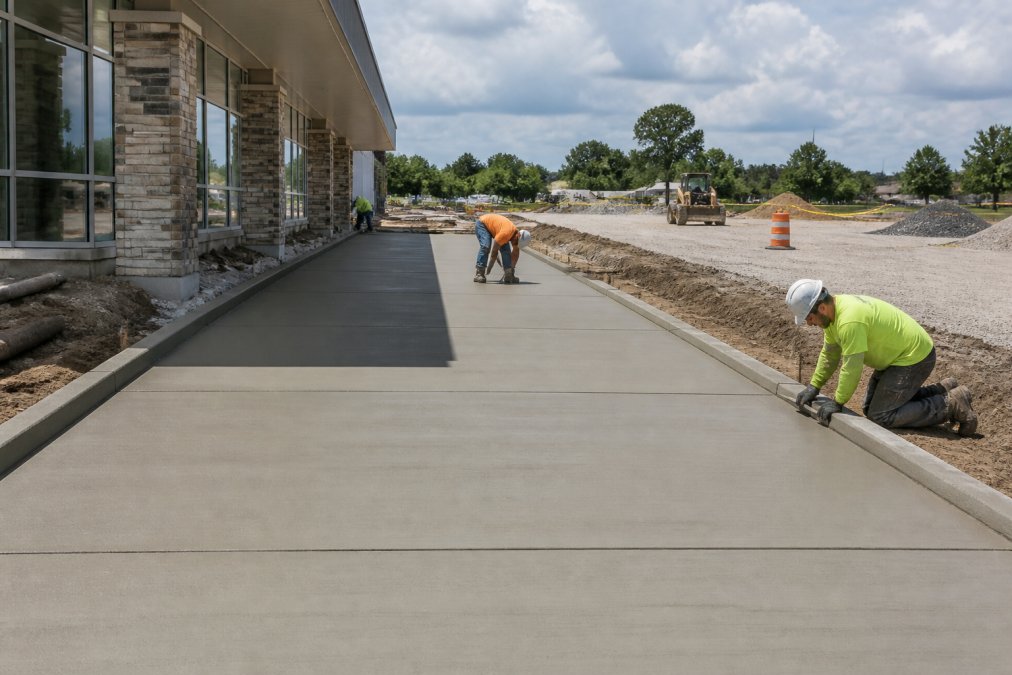
Commercial flatwork construction installs large-scale concrete surfaces for parking lots, warehouse floors, loading docks, and equipment pads in business environments. It requires site assessment, drainage design, base preparation, reinforcement installation, concrete placement, finishing, and curing protocols to meet load-bearing specifications and local building codes. Properly executed commercial flatwork lasts 20-30 years; poor execution leads to cracking and costly repairs within years (concrete.org).
What separates professional work from amateur work is attention to the invisible phases: base layer composition, compaction density, reinforcement placement, concrete mix design, finishing technique, and curing conditions. Most property owners never see these steps, but they determine whether the finished surface performs as expected.
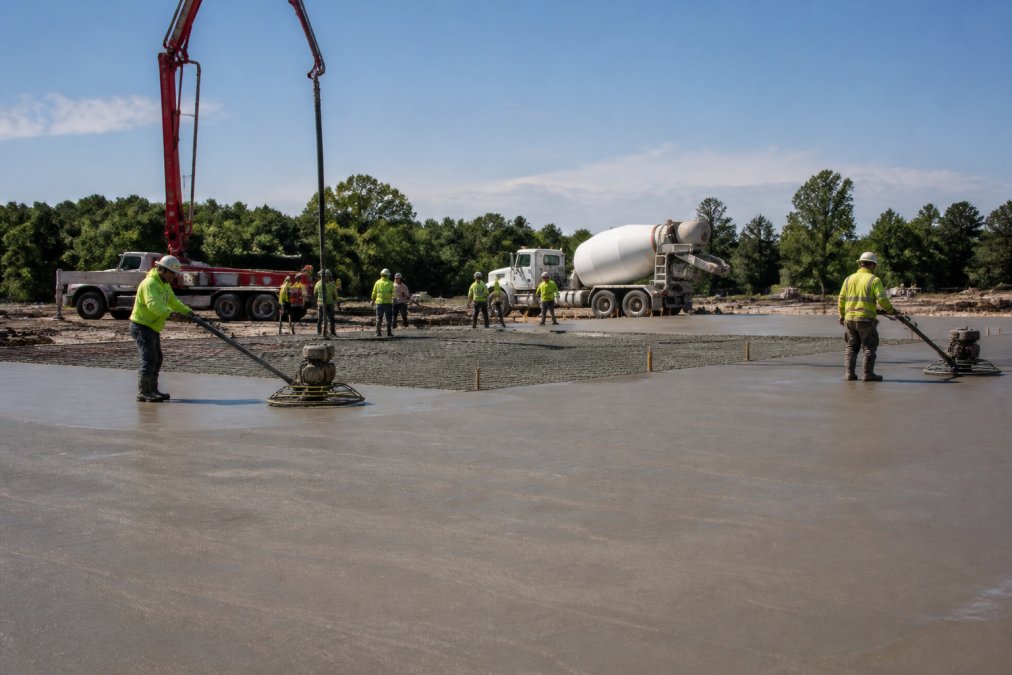
At Delpres Services LLC, each project starts with understanding your specific needs, designing a solution matching your property's use case, and executing with precision.
Why Michigan Weather Demands Specialized Flatwork Solutions
Michigan's climate is brutal on concrete. Winter temperatures drop well below freezing, and freeze-thaw cycles repeat dozens of times each season. Water penetrates concrete, freezes, expands, and fractures the surface from within. Temperature swings of 40-60 degrees Fahrenheit between seasons demand concrete engineered specifically for these conditions.
Air entrainment is the technical solution. This process intentionally introduces tiny air bubbles throughout the concrete matrix, providing space for water to expand when it freezes, preventing catastrophic cracking. Properly air-entrained concrete survives Michigan winters intact; non-air-entrained concrete deteriorates visibly within the first few seasons.
Drainage design is equally critical. Water pooling on a flatwork surface will penetrate cracks and the base layer. In winter, that water freezes, heaves the surface, and accelerates deterioration. Proper slope (typically 1-2% grade) directs water away from the flatwork into drainage systems designed to handle runoff. This step is often overlooked by contractors cutting corners, but it's essential for long-term performance.
Contractors unfamiliar with Michigan conditions sometimes miss these specifications entirely. The right contractor understands that Michigan flatwork requires different materials, different design approaches, and different installation protocols than the national standard.
Commercial Concrete Foundation Installation in Michigan
Commercial concrete foundations support entire structures and must handle ongoing equipment loads, vibration, temperature fluctuations, and sometimes chemical exposure. Foundation work determines whether a building remains level and stable for decades or develops cracks and settling issues within years.
Foundation installation begins with site investigation. Soil composition, bearing capacity, frost depth, and groundwater conditions all influence how deep the foundation must go. In Michigan, frost depth extends 3.5 to 4 feet below grade in many areas, meaning foundations must extend below this depth to avoid frost heave (the CDC). Building codes enforced through local municipal authorities specify these requirements.
Excavation must reach proper depth with a level, compacted base. Inadequate compaction leads to settling and foundation failure. The base layer typically consists of gravel or engineered fill material, compacted in lifts to achieve required density. Reinforcement placement follows, with steel rebar or wire mesh positioned according to structural engineering specifications.
Concrete placement requires coordination and skill. The concrete must be delivered at the right temperature and slump, poured continuously to avoid cold joints, and consolidated properly to remove air voids. Finishing the top surface to the correct elevation ensures the structure above sits level and stable.
Understanding Cost of Commercial Concrete Flatwork Per Square Foot
Pricing for commercial concrete flatwork varies based on project scope, site conditions, concrete specifications, and regional market conditions. A straightforward commercial parking lot with standard base preparation and air-entrained concrete costs less per square foot than a specialized warehouse floor requiring super-flat specifications or a site with poor soil conditions requiring extensive remediation.
Rather than quoting a fixed price per square foot, professional contractors evaluate each project individually. A detailed site assessment, soil testing if necessary, and clear specifications determine actual cost. This approach prevents surprises and ensures the budget reflects the real scope of work.
Delpres Services LLC provides detailed quotes based on your specific project requirements. Contact us for a consultation to discuss your project and receive a transparent quote.
Site Preparation and Planning for Flatwork Projects
Site preparation determines whether a flatwork project succeeds or fails. Rushing this phase to save time or money is the single most common mistake that leads to future problems.
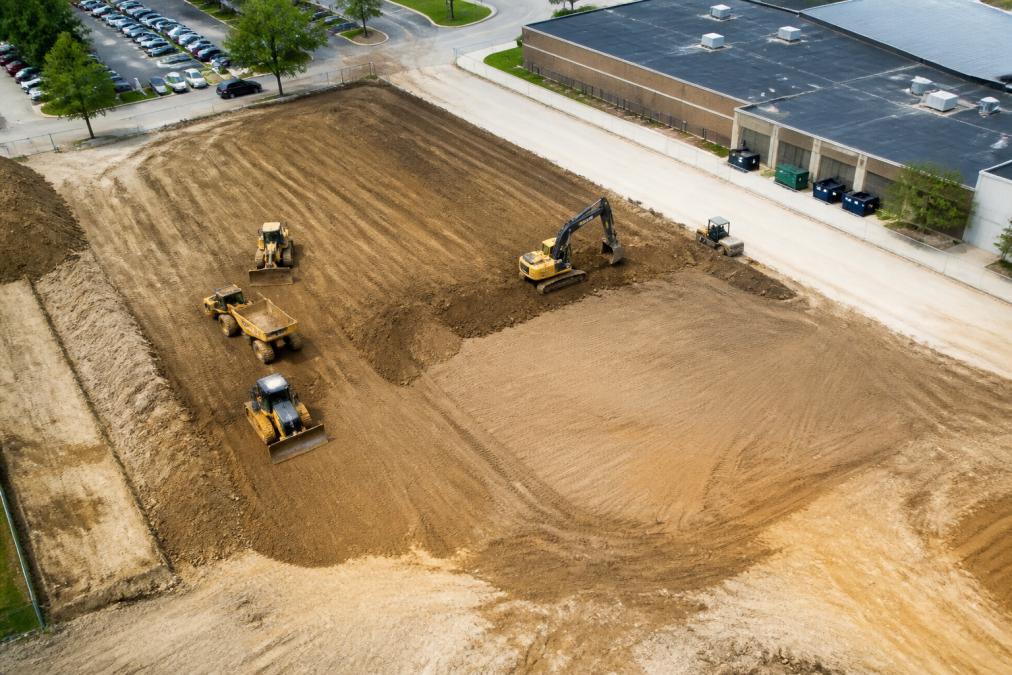
The process begins with site evaluation. Existing conditions, soil type, drainage patterns, vegetation, utilities, and surrounding structures all influence how preparation should proceed. Excavation removes unsuitable material and brings the site to proper elevation with level, compacted base. Inadequate compaction is invisible but catastrophic, causing the surface to crack and become uneven.
Drainage design prevents water from accumulating on or under the flatwork. Surface water must drain away through proper slope. Subsurface water must be managed through base layer composition and, in some cases, drainage systems. In Michigan, where water is abundant, drainage design is critical.
Utility coordination is essential. Underground utilities must be located and marked before excavation begins. Delpres Services LLC coordinates with utility locating services to ensure all underground infrastructure is identified and protected before work begins.
The timeline for site preparation depends on site conditions and project scope. Simple sites may require only a few days; complex sites with poor soil or utilities to relocate may take weeks. Planning this phase realistically prevents schedule pressure from forcing shortcuts that compromise quality.
Why Full-Service Contractors Deliver Better Results
Coordinating multiple subcontractors on a commercial flatwork project creates complexity, delays, and finger-pointing when problems arise. Full-service contractors eliminate this coordination problem. One team manages the entire project from site assessment through final completion, with clear accountability.
Full-service contractors bring integrated knowledge. The excavation crew understands how their work affects concrete placement. The concrete team understands drainage requirements. The finishing crew understands specifications that matter for long-term performance. This integration prevents misalignment that happens when separate contractors don't fully understand how their work connects to the larger project.
Equipment coordination is another advantage. A full-service contractor has access to all necessary equipment and deploys it efficiently. Communication simplifies dramatically with one point of contact, one schedule, one budget.
Delpres Services LLC's team handles excavation, site preparation, concrete work, finishing, and drainage as an integrated operation.
Getting Started With Your Commercial Flatwork Project
Starting a commercial flatwork project requires clear communication about your needs, realistic expectations about timeline and budget, and partnership with a contractor who understands your goals. The first step is a consultation where you describe the project and the contractor assesses the site.
Bring clarity to this conversation. What's the purpose of the flatwork? How will it be used? What equipment or loads will it support? What's your timeline? What's your budget range? The more specific you can be, the more accurate the contractor's assessment and quote will be.
The contractor should visit the site. A good contractor doesn't quote projects based on photographs or descriptions. They see the site, assess soil conditions, evaluate drainage patterns, and understand what's required. Once you've selected a contractor, detailed specifications are developed, a schedule is created, and permit requirements are identified and managed.
During execution, regular communication keeps the project on track. When the flatwork is complete, proper curing is essential. Concrete continues to gain strength for weeks after placement. Protecting the surface during this curing period ensures the concrete reaches its full design strength.
Delpres Services LLC has guided property owners and developers through commercial flatwork projects in Chesterfield and throughout Metro Detroit. We understand Michigan's climate, local building codes, and the specific requirements that make commercial flatwork perform reliably for decades. Whether you're planning a new parking lot, warehouse floor, or specialized industrial surface, our team brings 20+ years of hands-on expertise to every project. Learn more about commercial concrete standards from the American Concrete Institute and reach out to discuss your project. We'll assess your site, answer your questions, and provide a transparent quote that reflects the real scope of work required. Your project deserves a contractor who's accountable for results, that's Delpres Services LLC.
=== FAQ ANSWERS (audit these too, same rules) ===
[1] Q: What is included in commercial flatwork construction services? A: Commercial flatwork construction includes site preparation, excavation, grading, concrete placement, finishing, and drainage solutions. Services encompass parking lots, sidewalks, loading areas, equipment pads, and foundation slabs. The scope varies by project but typically involves concrete flatwork installation from ground preparation through final surface treatment to meet specifications and local building codes.
[2] Q: How do Michigan weather conditions affect commercial concrete flatwork? A: Michigan's freeze-thaw cycles create significant challenges for concrete durability. Winter temperatures cause water infiltration and expansion, leading to cracking and surface deterioration. Professional contractors use air-entrained concrete in the 4,000 to 5,000 psi range specifically designed for freeze-thaw resistance. Proper slope for drainage, quality materials, and expert finishing techniques prevent long-term damage. Climate-aware installation extends concrete lifespan and reduces costly repairs.
[3] Q: What factors affect the cost of commercial concrete flatwork per square foot? A: Flatwork pricing depends on site conditions, concrete specifications, finish type, accessibility, and project complexity. Factors include soil preparation requirements, reinforcement needs, decorative finishes, local labor rates, and timeline. Larger projects typically cost less per square foot than smaller ones due to equipment efficiency. For accurate pricing specific to your project, request a detailed quote that accounts for your site's unique conditions and requirements.
[4] Q: How long does commercial concrete flatwork typically last in Michigan? A: Properly installed commercial flatwork lasts 25 to 40 years in Michigan when designed for the climate and maintained regularly. Concrete strength, air entrainment, drainage, and finishing quality directly impact longevity. Regular sealing, crack repair, and snow removal extend lifespan. Poor installation or inadequate freeze-thaw protection can reduce durability to 10 to 15 years. Professional installation with Michigan-appropriate specifications ensures maximum service life and protects your investment.
Frequently Asked Questions
What is included in commercial flatwork construction services?
Commercial flatwork construction includes site preparation, excavation, grading, concrete placement, finishing, and drainage solutions. Services encompass parking lots, sidewalks, loading areas, equipment pads, and foundation slabs. The scope varies by project but typically involves concrete flatwork installation from ground preparation through final surface treatment to meet specifications and local building codes.
How do Michigan weather conditions affect commercial concrete flatwork?
Michigan's freeze-thaw cycles create significant challenges for concrete durability. Winter temperatures cause water infiltration and expansion, leading to cracking and surface deterioration. Professional contractors use air-entrained concrete in the 4,000 to 5,000 psi range specifically designed for freeze-thaw resistance. Proper slope for drainage, quality materials, and expert finishing techniques prevent long-term damage. Climate-aware installation extends concrete lifespan and reduces costly repairs.
What factors affect the cost of commercial concrete flatwork per square foot?
Flatwork pricing depends on site conditions, concrete specifications, finish type, accessibility, and project complexity. Factors include soil preparation requirements, reinforcement needs, decorative finishes, local labor rates, and timeline. Larger projects typically cost less per square foot than smaller ones due to equipment efficiency. For accurate pricing specific to your project, request a detailed quote that accounts for your site's unique conditions and requirements.
How long does commercial concrete flatwork typically last in Michigan?
Properly installed commercial flatwork lasts 25 to 40 years in Michigan when designed for the climate and maintained regularly. Concrete strength, air entrainment, drainage, and finishing quality directly impact longevity. Regular sealing, crack repair, and snow removal extend lifespan. Poor installation or inadequate freeze-thaw protection can reduce durability to 10 to 15 years. Professional installation with Michigan-appropriate specifications ensures maximum service life and protects your investment.
This article was written using GrandRanker