 how-to
Best Practices for Deep Excavation Projects
Table of Contents
- Planning and Site Assessment for Deep Excavation Projects
- OSHA Excavation Safety Standards and Compliance
- Deep Excavation Shoring Methods and Selection
- Dewatering Methods for Deep Excavations
- Excavation Risk Assessment Checklist
- Equipment, Monitoring, and Continuous Inspection
- Conclusion
Last Updated: August 20, 2026
Planning and Site Assessment for Deep Excavation Projects
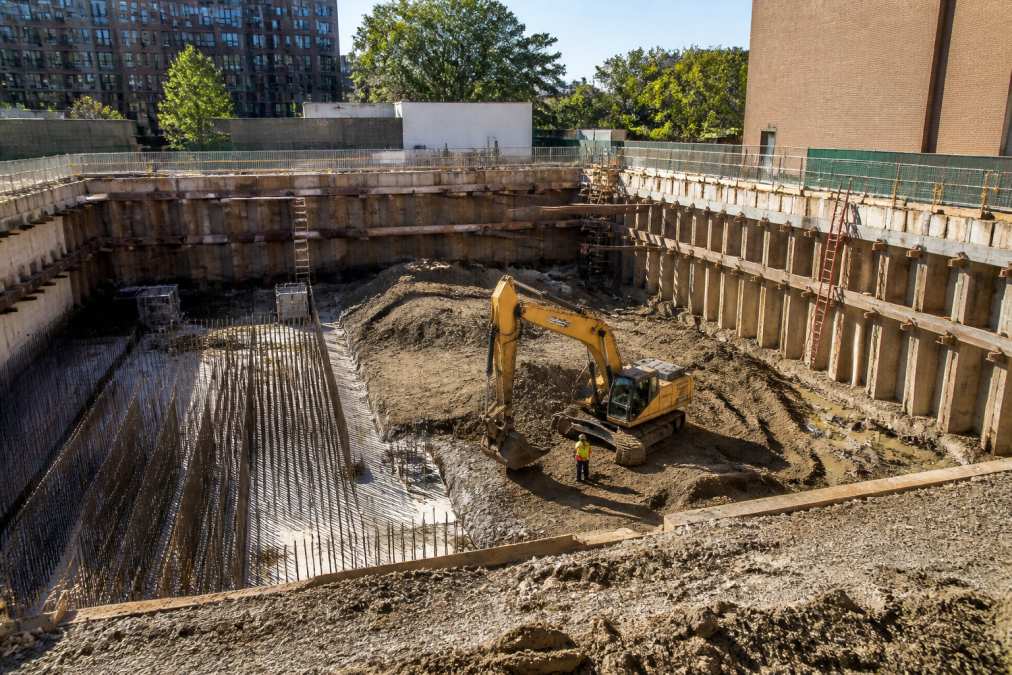
Deep excavation projects demand meticulous planning before the first shovel breaks ground. The difference between a smooth operation and a costly disaster often comes down to how thoroughly you've assessed the site and mapped out your approach. At Delpres Services LLC, we've learned that skipping or rushing this phase creates cascading problems downstream, missed utilities, unexpected groundwater, unstable soil conditions, and schedule delays that compound costs.
Start with a comprehensive geotechnical investigation. Soil borings, laboratory testing, and groundwater level surveys reveal what's actually beneath the surface. Most sites have surprises: saturated clay, bedrock at unexpected depths, or soil that won't stand without support. A geotechnical engineer analyzes these findings and produces a report that informs every subsequent decision about shoring, dewatering, and excavation sequencing.
Next, identify all existing utilities. Contact your local utility locating service, this is non-negotiable. Hitting a buried electric line, gas main, or fiber optic cable doesn't just stop work; it creates immediate safety hazards and liability. Many municipalities require utility location marks before excavation permits are approved. Document everything: locations, depths, and owner contact information.
Survey the site boundaries and establish reference points. Modern positioning systems like Trimble Siteworks for accurate site positioning help contractors maintain precise grade control and verify that excavation stays within design limits. This is especially critical for deep projects where small deviations can affect structural performance of adjacent buildings or utilities.
Review local regulations and obtain required permits. MIOSHA excavation standards, local building codes, and environmental rules all apply. The permitting process itself often reveals constraints you hadn't anticipated, setback requirements, groundwater discharge permits, or traffic control mandates. Budget time for this; it's not optional, and delays compound quickly.
OSHA Excavation Safety Standards and Compliance
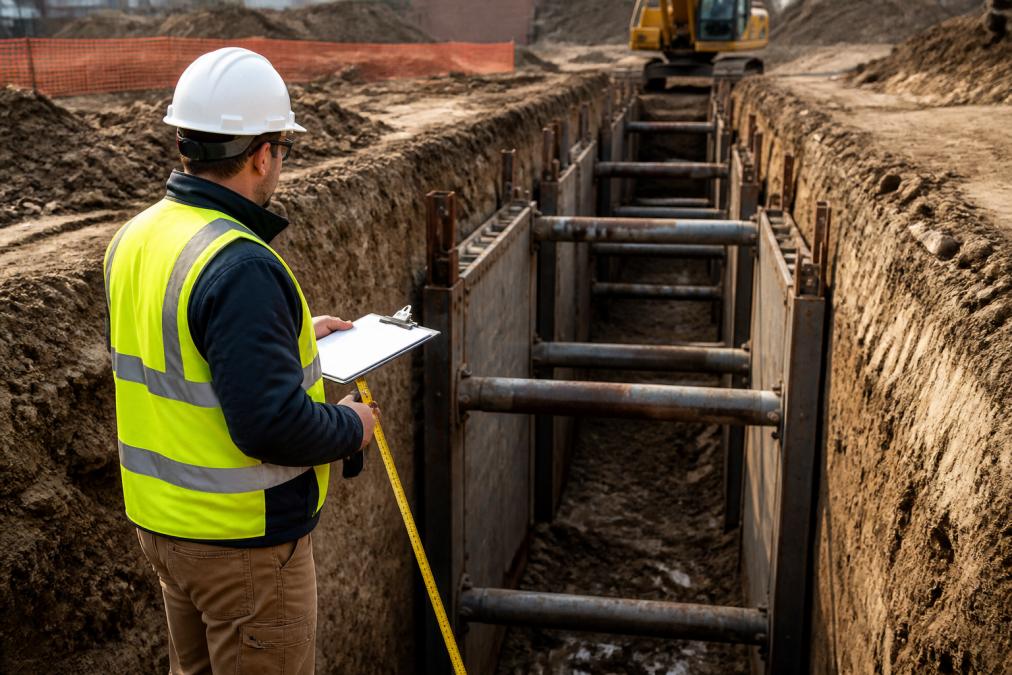
OSHA requires that all excavations deeper than five feet have protective systems in place. For deep excavations, this requirement is absolute, there are no exceptions and no shortcuts. The standard specifies that a competent person must inspect the site daily and after any changes in conditions. This isn't a checkbox; a competent person has the authority to halt work if conditions become unsafe.
Soil classification determines your protective system. OSHA defines four soil types: stable rock, Type A (cohesive soils), Type B (cohesive and granular soils), and Type C (granular soils and submerged conditions). Misclassifying soil is a common violation. Type C soil requires the most strong protection, sloping at 1.5:1 or full shoring. Type A allows steeper slopes. A geotechnical engineer or qualified professional must make this determination based on site conditions.
Protective systems fall into three categories: sloping, shoring, and shielding. Sloping removes material at an angle to prevent collapse, the simplest but most space-intensive method. Shoring uses timber, steel, or hydraulic systems to support trench walls. Shielding uses trench boxes or shields that protect workers if collapse occurs. For deep excavations, shoring or shielding is almost always required because sloping consumes too much real estate.
Training requirements are specific. Anyone working in or around an excavation must understand the hazards. Competent persons need deeper training covering soil classification, inspection protocols, and corrective actions. The Michigan Rural Water Association excavation safety training covering MIOSHA Part 9 standards details these requirements and provides certification-level instruction. This training is not optional for projects in Michigan, MIOSHA inspectors verify it.
Document everything. Daily inspection reports, soil classification records, competent person certifications, and equipment maintenance logs create the paper trail that proves compliance. If an accident occurs, these records are the first thing investigators examine. Incomplete documentation often results in citations even when the actual work was done safely.
Deep Excavation Shoring Methods and Selection
Shoring method selection depends on soil type, excavation depth, groundwater conditions, and site constraints. The wrong choice wastes money; the unsafe choice risks lives. Your shoring system must support lateral soil pressure, which increases dramatically with depth. At 20 feet deep, the pressure is roughly four times what it is at 10 feet.
Soldier pile and lagging systems use vertical steel H-beams driven into the ground with horizontal timber or steel lagging behind them. This method works well for Type A and B soils and allows relatively open working areas. Lagging can be installed as excavation progresses, which is efficient for phased projects. The downside: soldier piles require heavy equipment to drive, and lagging installation is labor-intensive.
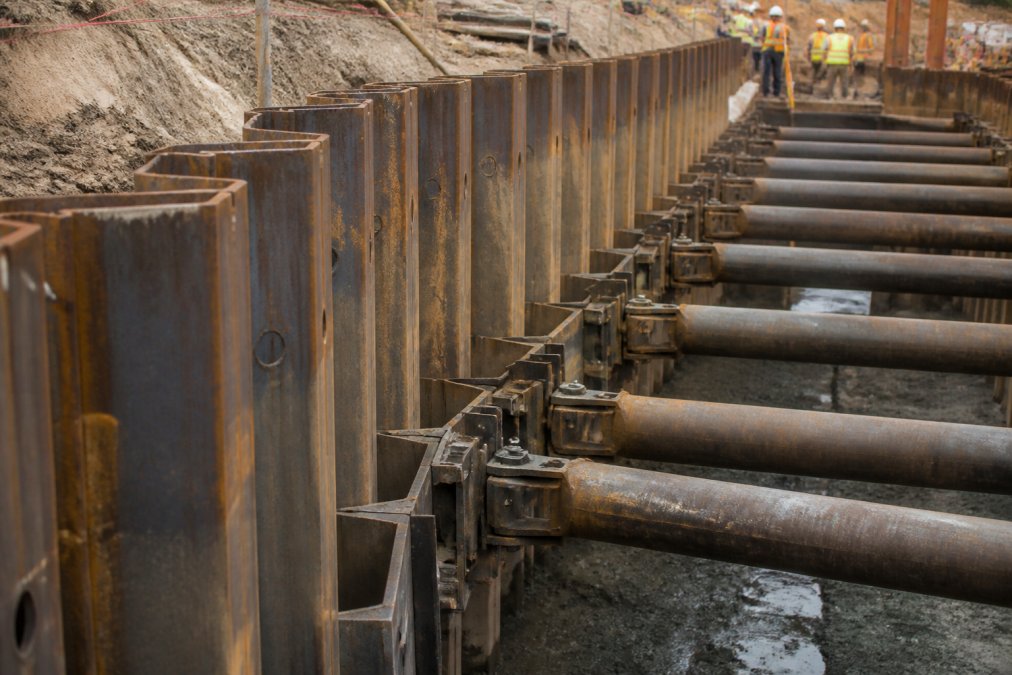
Sheet pile walls use interlocking steel sheets driven into the ground to form a continuous wall. This method is ideal for deep excavations in granular soils, especially where groundwater is present. Sheet piles can be extracted and reused on future projects, making them economical for temporary installations. Driving vibration can be a concern in dense urban areas, and the continuous wall limits dewatering flexibility.
Diaphragm walls are cast-in-place concrete walls constructed before excavation begins. This method provides excellent strength and can be several feet thick. It's the most expensive option and requires specialized equipment, but it's the standard for very deep excavations in urban areas where space and adjacent structure protection are critical. Diaphragm walls can incorporate water stops and are often used in contaminated sites where wall integrity prevents groundwater contamination spread.
Hydraulic shoring systems use adjustable steel or aluminum props to support precast concrete panels or steel plates. These systems are quick to install and adjust, making them popular for contractors who value flexibility. Props can be moved as excavation proceeds, and the modular design allows partial removal for utility installation. The trade-off is that hydraulic systems require more frequent inspection and maintenance than permanent shoring.
For deep excavations in Chesterfield and the surrounding Metro Detroit region, soil conditions typically favor soldier pile or sheet pile systems. The local glacial soils, often clay over sand, respond well to these methods. Deep well dewatering is almost always necessary because the water table in this region is relatively shallow.
| Shoring Method | Best For | Installation Time | Cost Level | Reusability |
|---|---|---|---|---|
| Soldier Pile & Lagging | Type A/B soils, moderate depth | 3-5 days | Medium | High |
| Sheet Pile Walls | Granular soils, deep excavations | 2-4 days | Medium-High | High |
| Diaphragm Walls | Very deep urban excavations | 7-14 days | High | Low |
| Hydraulic Shoring | Variable conditions, phased work | 1-2 days | Medium | High |
Dewatering Methods for Deep Excavations
Groundwater is the silent killer of deep excavation projects. Even modest water inflow destabilizes soil, undermines shoring, and creates hazardous working conditions. Dewatering removes groundwater from the excavation, lowering the water table below the excavation floor. Without it, deep excavations in permeable soils become impossible.
Dewatering method selection depends on soil permeability and required drawdown depth. Sandy soils drain quickly and need continuous pumping. Clay-rich soils drain slowly and may require deeper wells or longer lead times. Shallow water tables need only shallow dewatering; deep water tables require deep well systems.
Shallow well systems use vertical pipes installed around the excavation perimeter. These wells are typically 15-30 feet deep and work best in sandy or silty soils. Submersible pumps lower the water table by 5-10 feet. This method is quick to install and affordable, making it the first choice for most projects. The limitation: it can't handle very deep excavations or low-permeability soils.
Deep well systems use larger diameter wells, often 20-40 feet deep, with high-capacity pumps. These systems lower the water table 15-30 feet or more and work in less permeable soils. Deep wells are more expensive to install but essential for deep excavations. Kelley Dewatering's deep well systems for large excavations in Michigan provides engineered solutions where groundwater control is the critical limiting factor.
Wellpoint systems use closely spaced small-diameter wells connected to a header pipe and vacuum pump. This method creates maximum drawdown over a wide area and works in fine sands and silts. Wellpoints are temporary, quick to install, and often used for short-duration projects. The downside: they require continuous operation and careful maintenance.
Dewatering discharge requires permitting. Water removed from the excavation can't simply be dumped into the street or adjacent property. Most municipalities require discharge to a storm sewer, treatment system, or approved location. Sediment in dewatering discharge must be controlled, typically through settling tanks or filtration. Failure to manage discharge properly results in fines and project shutdowns.
Excavation Risk Assessment Checklist
Risk assessment isn't a one-time event; it's an ongoing process. Conditions change, weather, soil exposure, groundwater fluctuations, and equipment wear all affect hazard levels. A competent person must reassess daily and after any incident or significant change.
Start with soil stability. After excavation, exposed soil faces are under stress. Tension cracks indicate failure is imminent. If you see cracks, stop work immediately and investigate. Sloughing (soil crumbling from the face) means the protective system is failing. Weather matters: heavy rain saturates soil and increases lateral pressure; freezing and thawing cycles destabilize slopes.
Check shoring and shielding condition daily. Look for bent or cracked members, loose connections, and signs of movement. Hydraulic props should maintain consistent pressure; dropping pressure means leakage or system failure. Sheet piles should show no visible bending or separation. Soldier pile lagging should be tight against the beam with no gaps that expose soil.
Groundwater control requires constant attention. Pumps must run continuously and reliably. Clogged intake screens reduce flow and increase drawdown time. Monitor water levels in observation wells to verify that dewatering is working as designed. If water level rises unexpectedly, investigate the cause immediately, it could indicate pump failure, increased inflow, or a breach in the dewatering system.
Adjacent structure protection is critical in developed areas. Monitor buildings, utilities, and pavements near the excavation. Settlement monitoring systems detect movement before damage occurs. If a structure shows signs of distress, new cracks, doors that jam, or visible tilting, halt work and bring in a structural engineer. Prevention is far cheaper than remediation.
Equipment inspection prevents failures. Cranes, excavators, and dewatering pumps must be maintained and inspected regularly. Worn hydraulic hoses fail suddenly and can injure workers. Frayed sling straps break under load. A few minutes of daily inspection prevents catastrophic failures.
Worker competency matters. Everyone on site should understand excavation hazards. Competent persons need formal training and regular updates. When new equipment or methods are introduced, training must precede use. Fatigue increases errors, enforce adequate rest periods on long projects.
Equipment, Monitoring, and Continuous Inspection
Modern deep excavation projects rely on specialized equipment and monitoring systems. The right tools reduce risk and improve efficiency. Delpres Services LLC uses professional-grade equipment selected specifically for the project's demands.
Excavation equipment must match soil conditions and depth. Small excavators work in confined spaces but can't handle dense soils efficiently. Large excavators move material quickly but require space and stable platforms. For deep excavations, the excavator must reach the full depth without tipping or overloading. Operator skill is critical, poor technique damages shoring and creates safety hazards.
Dewatering equipment runs continuously. Submersible pumps must be sized for expected inflow rates. Undersized pumps can't keep up with water influx, and water levels rise. Oversized pumps waste energy but provide a safety margin. Pump maintenance is essential: clogged intake screens, worn impellers, and failing seals all reduce performance.
Monitoring systems provide real-time data on excavation performance. Inclinometers measure lateral movement of shoring and adjacent soil. Piezometers track groundwater levels and dewatering effectiveness. Settlement plates detect ground movement. Tilt meters monitor building movement. This instrumentation, available from GeoSonics-Vibra-Tech geotechnical monitoring instruments, provides early warning of problems.
Positioning and surveying equipment maintains grade control. Total stations and GPS systems verify that excavation stays within design limits. For deep projects, small deviations can affect structural performance. Continuous surveying catches errors before they become expensive problems.
Project management software tracks equipment, labor, and costs. HCSS HeavyJob software for deep excavation contractors integrates equipment tracking, job costing, and safety management. Knowing where equipment is, what it costs to operate, and whether it's performing to specification keeps projects on schedule and within budget.
Daily inspection is non-negotiable. A competent person walks the excavation before work begins, during shifts, and after weather events. They document conditions, identify hazards, and take corrective action. This discipline prevents most serious incidents. When problems are caught early, solutions are simple. When they're ignored, they become disasters.
Deep excavation projects succeed because of meticulous planning, rigorous safety compliance, and continuous monitoring. The practices outlined here aren't optional, they're the foundation of safe, efficient work. Whether you're planning a municipal infrastructure project, commercial development, or residential pool installation in Chesterfield, these principles apply. Delpres Services LLC brings 20+ years of hands-on expertise in executing deep excavation work safely and on schedule. We handle everything from initial site assessment through final inspection, managing permits, coordinating with utilities, and maintaining the highest safety standards throughout. If you're planning a deep excavation project, get started with a consultation to discuss your specific site conditions and project requirements.
Frequently Asked Questions
What are the main OSHA requirements for deep excavation safety?
OSHA requires competent person inspections before work begins and daily thereafter, proper soil classification, appropriate trench protective systems (shoring, shielding, or sloping), and safe access/egress methods. Deep excavations must have atmospheric monitoring if hazardous gases are present. All workers must receive training on hazards, and equipment must be inspected regularly. These standards prevent collapses, which are the leading cause of excavation fatalities.
How do dewatering methods for deep excavations affect project timeline and cost?
Dewatering systems like deep wells, sump pumps, or wellpoints control groundwater and prevent instability. In sandy or permeable soils common in Michigan, inadequate dewatering causes delays, equipment damage, and safety hazards. Professional dewatering systems designed for your soil conditions and water table depth ensure stable working conditions, faster excavation, and fewer costly rework situations.
What's the difference between shoring, shielding, and sloping for deep excavations?
Sloping angles the trench wall at a safe angle based on soil type; it's cost-effective but requires more space. Shoring uses systems like soldier piles or hydraulic shores to support walls vertically, saving space on tight sites. Shielding uses trench boxes or shields that protect workers without supporting the wall itself. Deep excavations typically require shoring or shielding because sloping alone isn't safe at significant depths.
How often should a competent person inspect a deep excavation site?
OSHA requires inspection before work begins each day and after any event that could affect safety (heavy rain, vibration from nearby equipment, material removal). For active deep excavations, continuous or frequent inspections throughout the workday are best practice. A competent person must identify hazards like water accumulation, wall movement, or equipment damage and halt work immediately if conditions become unsafe.
This article was written using GrandRanker