 ultimate-guide
Benefits of Proper Drainage Solutions for Yards
Table of Contents
- Why Yard Drainage Quietly Decides What Your Property Is Worth
- Signs of Poor Yard Drainage You Should Not Ignore
- How to Fix Backyard Flooding Before It Reaches Your Foundation
- The Importance of Site Grading for Foundations
- Drainage Systems That Earn Their Keep: French Drains, Catch Basins, and More
- The Long-Term Benefits of Proper Drainage Solutions for Yards
- Conclusion
- Frequently Asked Questions
Last Updated: September 14, 2026
Why Yard Drainage Quietly Decides What Your Property Is Worth
Water always finds the lowest point on your property, and that point is rarely where you want it. Poor drainage is one of the most common and most expensive problems homeowners in Chesterfield face, because the damage happens slowly, invisibly, and mostly underground. At Delpres Services LLC, we have spent more than 20 years watching how water shapes properties across Metro Detroit, and the pattern is consistent: the yards that drain well hold their value, and the ones that don't quietly lose it.
The benefits of proper drainage solutions for yards extend far beyond a dry lawn. They protect your foundation, preserve your landscaping investment, prevent basement flooding, and reduce long-term repair costs that can run into the thousands. This guide breaks down what to look for, how to fix backyard flooding, and which systems actually earn their keep.
Here is what most homeowners get wrong: they treat standing water as a cosmetic annoyance rather than a structural warning sign. By the time the foundation cracks, the problem has been developing for years.
Signs of Poor Yard Drainage You Should Not Ignore
The clearest sign of poor yard drainage is standing water that lingers more than 24 hours after rain (the EPA). That single symptom tells you the soil is saturated and the water has nowhere to go.
Other warning signs homeowners in Chesterfield report:
- Soggy patches that never fully dry, even days after a storm
- Water stains or dampness on basement walls and floors
- Cracks in the foundation or in concrete flatwork
- Eroded soil around downspouts and along slopes
- A musty smell in crawl spaces or lower levels
- Mosquitoes and mold thriving near the house
A common mistake is sealing a wet basement before fixing the water outside. That treats the symptom, not the cause, and the moisture returns.
How to Fix Backyard Flooding Before It Reaches Your Foundation
Fixing backyard flooding starts with redirecting water away from the structure, not just moving it around the yard. The order matters: address the source, then the path, then the destination.
A practical sequence that works for most residential properties:
- Extend downspouts at least 4 to 6 feet from the foundation using rigid or flexible extensions.
- Identify the low spots where water pools and mark them for a catch basin or surface drain.
- Check the slope near the foundation and correct any grade that tilts toward the house.
- Install a collection system such as a French drain or catch basin to move water to a safe discharge point.
- Verify the discharge empties to a storm sewer, dry well, or approved area, never onto a neighbor's property.
The order is not arbitrary. Installing a French drain before fixing the slope often means you are draining water into a yard that still slopes the wrong way.
The Importance of Site Grading for Foundations
Site grading is the practice of shaping the ground so that water flows away from structures by design rather than by chance. It is the single most important and most overlooked element of foundation protection.
The industry standard is a slope of roughly 6 inches of fall over the first 10 feet from the foundation (hud.gov). When that slope is flat, reversed, or disrupted by settlement, water sits against the foundation wall and finds every crack. Professional grading services correct this by contouring the soil, which addresses the root cause instead of channeling water after the fact.
For new construction in Chesterfield and across Metro Detroit, grading is not optional. It is the foundation of every other drainage decision you make.
Drainage Systems That Earn Their Keep: French Drains, Catch Basins, and More
The right drainage system depends on where the water comes from and where it needs to go. There is no single best option, only the one matched to your property's specific problem.
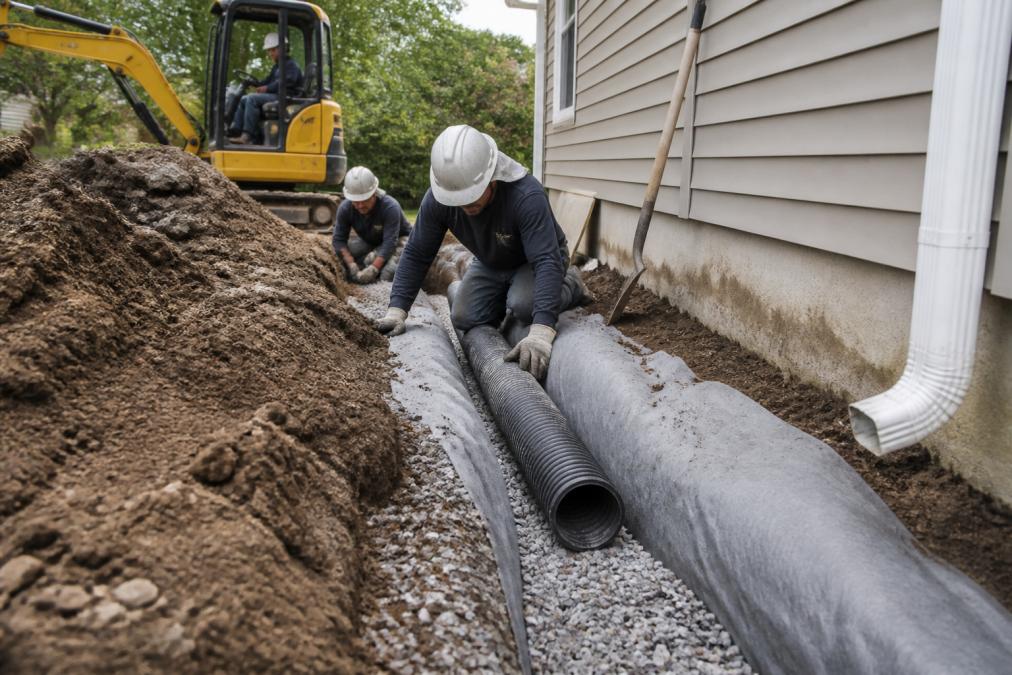
French drains use a perforated pipe buried in a gravel-filled trench to collect and redirect subsurface water. They are highly cost-effective compared to interior basement waterproofing, though they require significant excavation.
Catch basins act as a collection point for surface water, using a grate to filter debris before water enters underground pipes. They are best for areas prone to heavy pooling, but the grates need periodic cleaning.
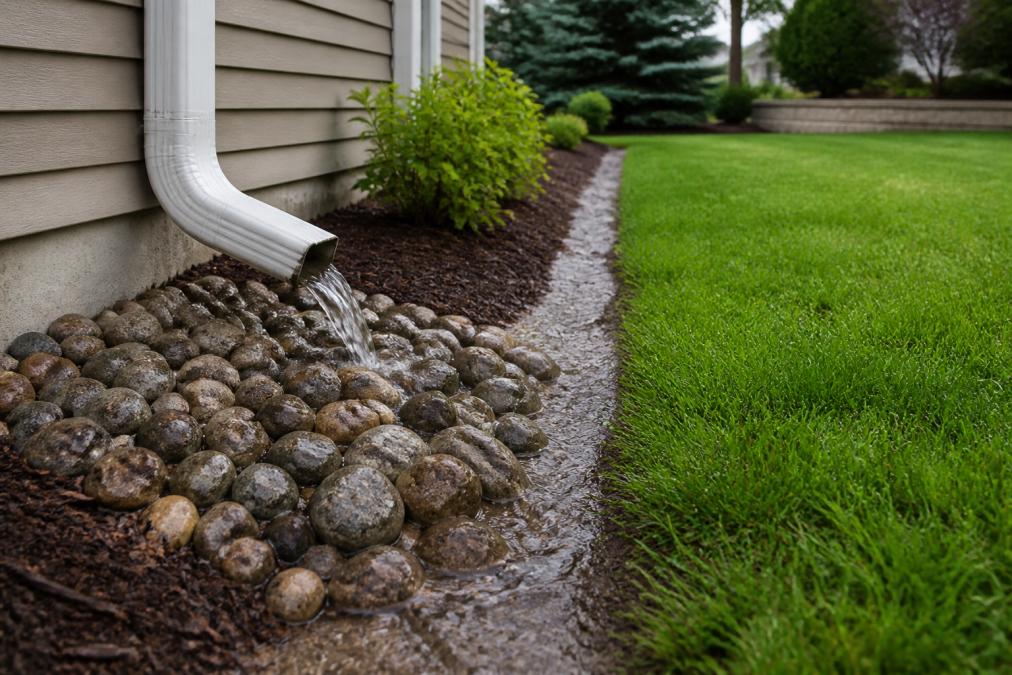
Downspout extensions are the simplest and cheapest fix, moving roof runoff away from walls. They cost little and install easily, but can become a tripping hazard if not buried.
Slot drains replace traditional grates with a slim, aesthetic slot, ideal for patios and walkways where appearance matters. Installation is more complex than standard surface drains.
Surface drains sit at the lowest point of a yard to capture runoff. They eliminate standing water effectively but can look intrusive without landscaping around them.
Here is a quick comparison of how these systems stack up:
| System | Best For | Maintenance | Relative Cost |
|---|---|---|---|
| French drain | Subsurface water, foundation protection | Low | Moderate |
| Catch basin | Heavy surface pooling | Grates need cleaning | Project-based |
| Downspout extension | Roof runoff near walls | Low | Low |
| Slot drain | Patios and hardscapes | Low | Higher |
| Surface drain | Low spots in the yard | Occasional clearing | Project-based |
What most guides miss is that these systems work best in combination. A French drain paired with corrected grading and extended downspouts outperforms any single solution used alone.
The Long-Term Benefits of Proper Drainage Solutions for Yards
The long-term payoff of proper drainage is measured in avoided costs, not just a drier yard. Foundation repair, basement waterproofing, and landscape replacement are far more expensive than installing drainage correctly the first time.
The benefits of proper drainage solutions for yards compound over the years:
- Protected foundation and structural integrity
- Lower risk of basement flooding and mold
- Preserved landscaping and hardscape surfaces
- Fewer mosquito and pest problems
- Higher resale value and stronger curb appeal
For commercial and industrial properties, drainage also protects parking lots, loading areas, and heavy concrete from water damage and frost heave, which is a real concern in Michigan's freeze-thaw cycles. Delpres Services LLC handles storm and sanitary sewer installation, grading, and full-scope drainage for residential, commercial, and municipal projects, coordinating permits and compliance through one accountable team.
Conclusion
Water damage rarely announces itself. It shows up as a cracked foundation, a damp basement, or a yard that never quite dries, and by then the repair bill has grown. Getting drainage right early is the cheapest insurance you can buy for your property.
If you are searching for drainage solutions near me in Chesterfield, Delpres Services LLC brings 20+ years of hands-on expertise, full-scope project management including permits and compliance, and one accountable team from start to finish. From grading and French drains to catch basins and complete site development, we deliver durable results built to last.
Book a consultation with Delpres Services LLC and get a drainage plan matched to your property.
Frequently Asked Questions
How do I know if my yard has poor drainage?
Watch for water pooling in the same spots more than 24 hours after rain, a spongy lawn, soil pulling away from the foundation, or a damp basement after storms. Efflorescence, the white chalky residue on basement walls, points to repeated moisture exposure. If downspouts dump water within a few feet of the house, that is another clear sign. A contractor can confirm the cause with a site evaluation before recommending fixes.
Does poor yard drainage affect my home's foundation?
Yes. Water that sits against a foundation finds its way into cracks, joints, and the porous concrete itself. In cold climates, that moisture freezes and expands, widening existing cracks and shifting soil under footings. Over years, this leads to bowing walls, uneven floors, and costly structural repairs. Proper yard drainage and correct site grading move water away from the structure before it can do that damage.
What are the most effective drainage solutions for clay soil?
Clay absorbs water slowly, so surface water tends to pool rather than soak in. French drains with perforated pipe and washed gravel work well because they collect and redirect water below the surface. Catch basins at low points capture runoff quickly. Combining either system with regrading so the yard slopes away from the house gives the best results. A site assessment will show which combination fits your lot.
Can proper grading prevent basement flooding?
Grading is the first line of defense. When soil slopes away from the foundation at a consistent pitch, roof runoff and surface water flow past the house instead of collecting against it. Grading alone will not fix an existing foundation crack or a failed interior drain, but it removes the most common cause of basement moisture. Pairing grading with downspout extensions and a French drain handles most residential flooding cases.