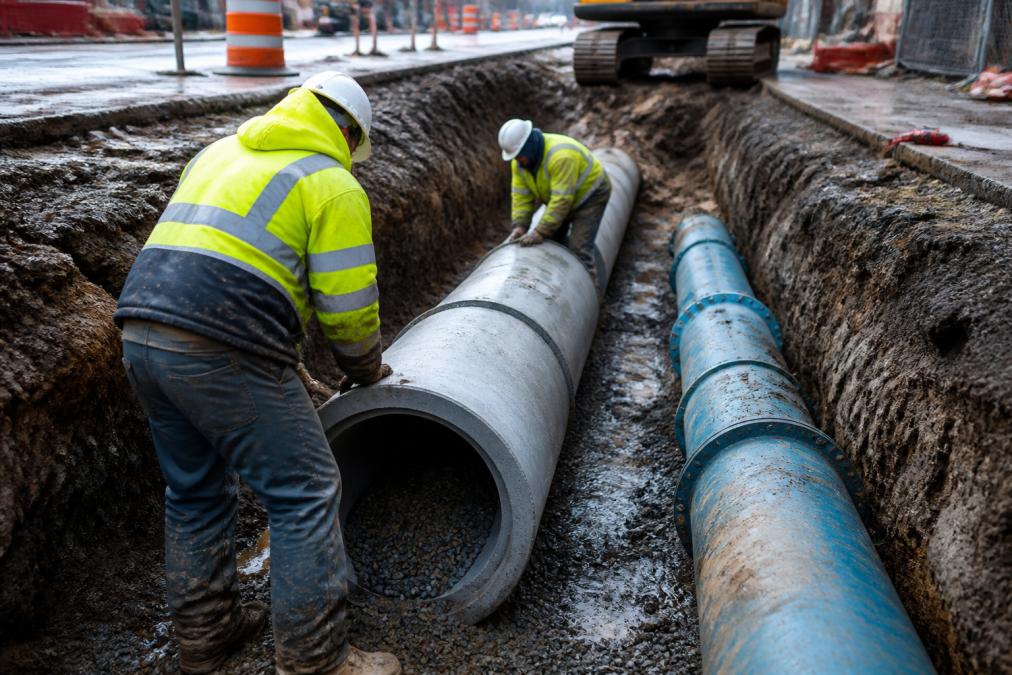
 listicle
Top Storm Sewer & Water Main Contractors in Michigan
Table of Contents
- Why Storm Sewer and Water Main Installation Matters in Michigan
- What to Look for in Municipal Utility Contractor Requirements Michigan
- Top Storm Sewer and Water Main Contractors Serving Michigan
- 1. Delpres Services LLC: Full-Scope Underground Infrastructure
- 2. Ellingson Companies: Trenchless Solutions and Design-Build Expertise
- 3. Georgetown Construction Co.: Municipal Infrastructure Specialists Since 1969
- 4. Springline Excavating: Commercial Underground Utility Experts
- 5. Rhino Earthwork: Comprehensive Sitework and Storm Water Management
- 6. Verdeterre Contracting: Trenchless Installation and Directional Drilling
- 7. Clark Contracting Services: Large-Scale Municipal Infrastructure Projects
- 8. Danboise Mechanical Inc.: Storm Water Piping Specialists
- 9. Aaron's Excavating, Inc.: Oakland County Water and Sewer Services
- 10. Underground Contractors, Inc. (UCI): Utility Construction and Aerial Services
- Understanding Cost of Water Main Installation Per Linear Foot
- Stormwater Management Compliance Michigan: What Contractors Must Know
- How to Select the Right Contractor for Your Municipal Project
- Conclusion
Last Updated: August 10, 2026
Why Storm Sewer and Water Main Installation Matters in Michigan
Michigan's aging infrastructure demands attention. Many municipalities face aging water mains and outdated storm sewer systems that struggle with heavy rainfall and seasonal flooding. When these systems fail, emergency repairs, water contamination risks, and service disruptions affect entire communities.
Storm sewer and water main installation represents critical public infrastructure handling wastewater distribution, stormwater runoff management, and clean water delivery. In Michigan, where winter freezing and spring thaw cycles are severe, proper installation ensures long-term reliability and regulatory compliance.
At Delpres Services LLC, we understand that municipal infrastructure projects require precision planning, adherence to local permitting requirements, and expertise in wet weather management systems. This guide covers what to evaluate when selecting municipal utility contractors, and critical factors influencing project success.
What to Look for in Municipal Utility Contractor Requirements Michigan
Selecting a municipal utility contractor requires evaluating far more than price quotes.
Experience with municipal engineering standards matters significantly. Contractors must understand Michigan's permitting processes, local codes, and compliance standards for underground utilities. According to Michigan Department of Environment, Great Lakes, and Energy guidance on water infrastructure, water main installation projects must meet specific depth requirements, material specifications, and testing protocols.
Equipment and technical capability determine execution quality. Storm sewer installation and water main replacement require specialized excavation equipment and precision placement. Look for contractors offering trenchless solutions like horizontal directional drilling (HDD) or cured-in-place pipe (CIPP) lining when appropriate.
Project management and permitting expertise separate reliable contractors from those creating delays. Municipal projects involve multiple agencies, environmental reviews, and utility coordination. Experienced contractors navigate these requirements, obtain necessary approvals, and coordinate work schedules to minimize disruption.
Safety record and insurance are non-negotiable. Underground utility work carries inherent risks including struck utility lines and cave-ins. Verify comprehensive general liability insurance, workers' compensation coverage, and documented safety programs.
References and past municipal projects provide concrete evidence of capability. Ask potential contractors for references from recent similar projects and speak directly with municipal project managers about timeline adherence, budget management, and how they handled unexpected conditions.
Top Storm Sewer and Water Main Contractors Serving Michigan
1. Delpres Services LLC: Full-Scope Underground Infrastructure
Delpres Services LLC stands as the comprehensive choice for Michigan municipalities seeking single-source accountability on storm sewer and water main projects. With over 20 years of expertise in underground utilities, the team delivers complete project management from initial permitting through final inspection.
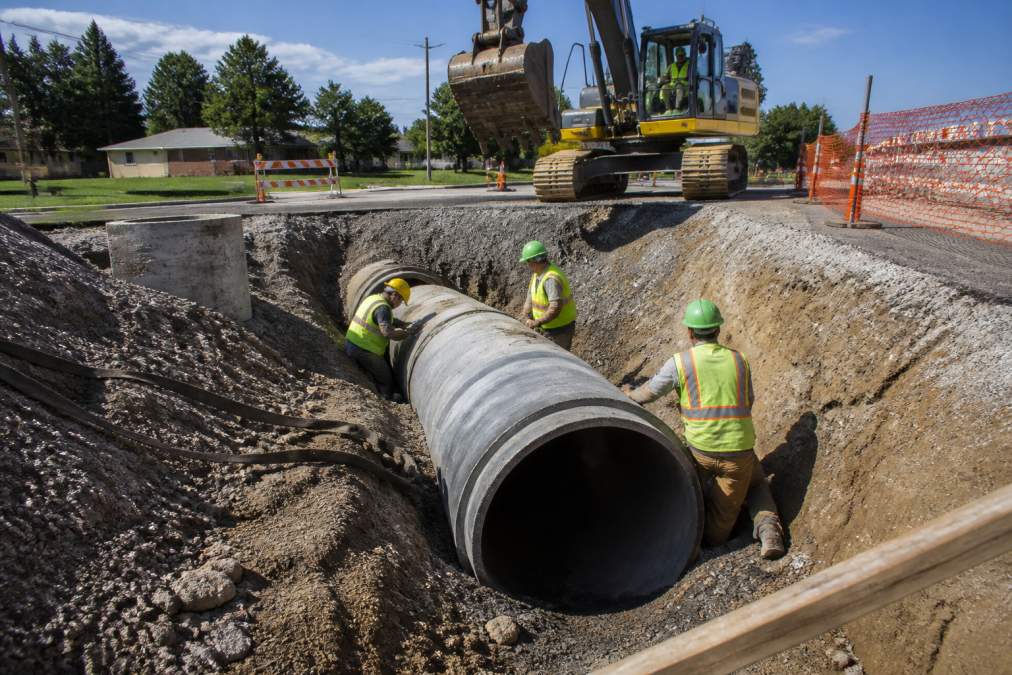
The company specializes in storm and sanitary sewer installation, water main construction, and complete site utilities management. What distinguishes Delpres is their commitment to end-to-end project coordination, they handle permits, compliance documentation, and regulatory requirements rather than pushing those responsibilities to the municipality.
2. Ellingson Companies: Trenchless Solutions and Design-Build Expertise
Ellingson Companies brings over 50 years of Michigan experience in underground infrastructure with particular expertise in trenchless technologies. Their horizontal directional drilling (HDD) and cured-in-place pipe (CIPP) lining capabilities make them ideal for projects where traditional open excavation creates unacceptable disruption.
Their design-build approach means they can evaluate existing conditions, recommend optimal solutions, and execute the work under one contract, reducing coordination complexity for municipal project managers.
3. Georgetown Construction Co.: Municipal Infrastructure Specialists Since 1969
Georgetown Construction Co. represents the established choice for municipalities valuing long-term reliability and family-owned accountability. Since 1969, they've built reputation specifically in municipal infrastructure for water, sewer, and storm systems across Michigan and the Midwest.
Their focus on municipal work means they understand rigid timelines, regulatory compliance, coordination with multiple agencies, and documentation requirements.
4. Springline Excavating: Commercial Underground Utility Experts
Springline Excavating brings decades of experience specifically in commercial and municipal underground utilities across the Detroit area. Their core expertise covers sanitary sewer and water line installation and repair, storm drain systems, and underground electrical and telecommunications infrastructure.
Their fire hydrant installation and drain services demonstrate comprehensive understanding of complete water distribution systems. Their experience in the Detroit area means familiarity with local soil conditions, frost depths, and seasonal challenges specific to Michigan.
5. Rhino Earthwork: Comprehensive Sitework and Storm Water Management
Rhino Earthwork has emerged as a leader in Michigan sitework with particular strength in storm water management, sanitary sewer installation, and watermain construction. Their comprehensive site solutions approach means they handle complete site development rather than isolated utility tasks.
Over a decade of sitework experience positions Rhino well for complex projects where storm sewer, water main, and site grading must coordinate seamlessly.
6. Verdeterre Contracting: Trenchless Installation and Directional Drilling
Verdeterre Contracting specializes in trenchless utility installation methods for commercial, municipal, and industrial projects throughout Michigan. Their horizontal directional drilling (HDD) expertise enables utility crossings beneath roads, drives, sidewalks, and developed areas with minimal surface disruption.
For municipalities facing constraints in active traffic areas or existing development, Verdeterre's trenchless approach offers solutions where traditional excavation creates unacceptable problems.
7. Clark Contracting Services: Large-Scale Municipal Infrastructure Projects
Clark Contracting Services specializes specifically in energy, water, and wastewater infrastructure projects serving municipalities across Southeast, Northern, and West Michigan. Their involvement in over 300 million dollars in recent municipal infrastructure projects demonstrates capability at significant scale.
The company brings technical expertise to overcome distinct project challenges, unusual site conditions, and complex coordination requirements.
8. Danboise Mechanical Inc.: Storm Water Piping Specialists
Danboise Mechanical Inc. brings nearly a century of mechanical contracting experience with specialized focus on storm water piping installation and replacement. Their expertise spans excavation, trenching, backfill services, and complete storm drainage system installation.
Their storm water specialization, catch basins, manholes, sump pits, and pipe material selection, demonstrates deep focus on this specific infrastructure.
9. Aaron's Excavating, Inc.: Oakland County Water and Sewer Services
Aaron's Excavating, Inc. serves Oakland County with family-owned reliability in water and sewer line installation, repair, and emergency services. Their focus on city water and sewer hookups and water line installation demonstrates comprehensive understanding of complete water and wastewater systems.
10. Underground Contractors, Inc. (UCI): Utility Construction and Aerial Services
Underground Contractors, Inc. (UCI) brings over 50 years of experience in utility contracting across Michigan and Indiana with comprehensive aerial and underground construction capabilities. UCI's emphasis on cost-efficiency and customer satisfaction appeals to municipalities managing budget constraints.
Understanding Cost of Water Main Installation Per Linear Foot
Water main installation costs in Michigan vary significantly based on multiple factors. Rather than quoting specific figures that may not reflect current market conditions, municipal project managers should understand the cost drivers that influence total project expense.
Excavation depth and soil conditions represent primary cost factors. Michigan's frost line typically reaches 36-48 inches depending on location, requiring water mains to be installed below this depth for freeze protection. Rocky soil, clay, or saturated conditions increase excavation difficulty and cost compared to sandy soil.
Pipe material selection affects both installation cost and long-term performance. PVC pipe costs less initially but may not suit all applications. Ductile iron pipe costs more but offers superior durability in high-pressure applications.
Existing utility coordination adds complexity and cost when new water mains must cross or parallel existing electric, gas, telecommunications, or sewer infrastructure.
Trenchless versus open excavation creates substantial cost differences. Traditional open trenching costs less in simple conditions but requires extensive surface restoration. Trenchless methods cost more initially but reduce restoration expenses and minimize disruption.
For accurate cost estimation, municipalities should request detailed proposals from qualified contractors that itemize excavation, material, labor, restoration, and contingency costs.
Stormwater Management Compliance Michigan: What Contractors Must Know
Michigan's stormwater management requirements have evolved significantly, reflecting federal Clean Water Act mandates and state environmental protection standards. Contractors installing storm sewer systems must understand these compliance requirements or risk creating infrastructure that fails regulatory inspection.
According to Michigan Department of Environment, Great Lakes, and Energy stormwater guidance, municipalities must manage stormwater runoff to prevent water quality degradation and flooding impacts. New storm sewer installations must incorporate stormwater best management practices (BMPs) that treat runoff before it enters receiving waters.
Wet weather management systems represent the core compliance challenge. Storm sewers must handle not just average rainfall, but significant precipitation events. Michigan's climate includes intense spring and summer storms that generate substantial runoff volumes.
Green infrastructure integration increasingly influences compliance. Modern systems incorporate infiltration, retention, and treatment features. Rain gardens, permeable pavement, retention ponds, and constructed wetlands reduce runoff volume and improve water quality.
Erosion and sediment control during construction directly impacts compliance. Contractors must implement erosion control measures, stabilize disturbed areas, and prevent sediment discharge into storm drains or receiving waters.
Municipalities should verify that their selected contractor understands current stormwater compliance requirements and can design systems meeting these standards.
How to Select the Right Contractor for Your Municipal Project
Selecting the right contractor for storm sewer or water main installation determines whether your project succeeds on schedule and budget. This decision deserves systematic evaluation rather than simply accepting the lowest bid.
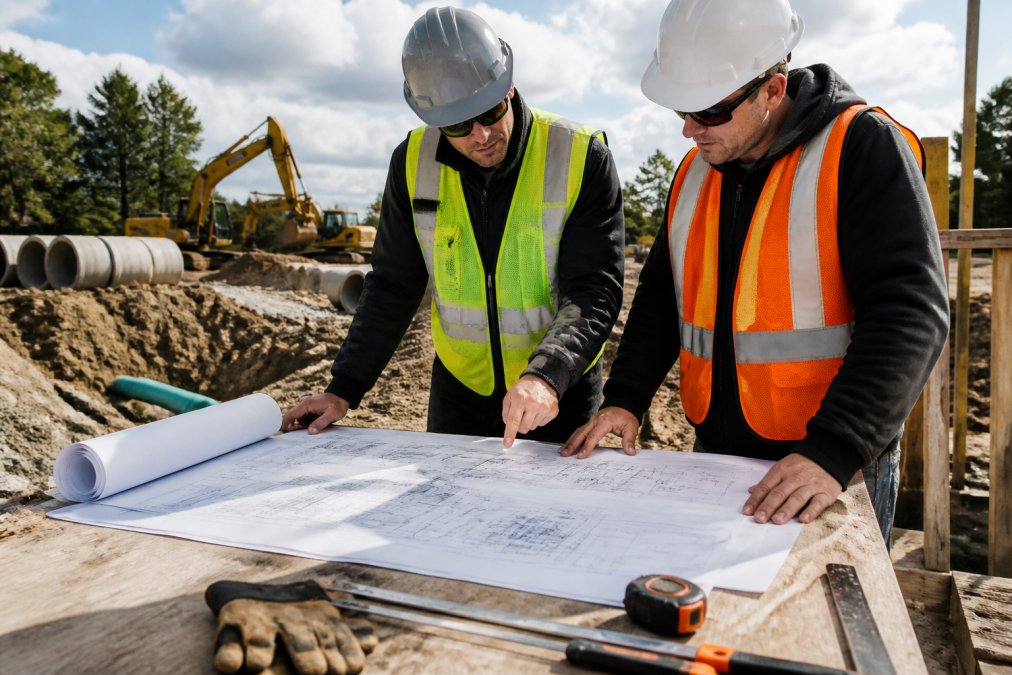
Define your project scope clearly before soliciting bids. Detailed plans, specifications, and performance requirements allow contractors to provide accurate quotes and reduce change order disputes.
Verify contractor licensing and insurance. Michigan requires contractors to hold appropriate licenses for their work scope. Verify current licensing status through the Michigan Department of Licensing and Regulatory Affairs. Confirm that contractors maintain comprehensive general liability insurance and workers' compensation coverage.
Review safety records and safety plans. Underground utility work carries serious hazards. Request contractors' safety records and review their approach to utility locating before excavation.
Evaluate experience with similar projects. Ask contractors about their experience with projects similar in scope, complexity, and site conditions to yours. Request specific references from recent municipal projects.
Assess project management capability. Ask how the contractor manages schedules, coordinates with utilities and agencies, handles changes, and maintains communication with the municipality.
Compare total value, not just price. The lowest bid often creates problems through corners cut, schedule delays, and quality issues. Evaluate each bid against experience, capability, safety record, and references.
Selecting the right storm sewer and water main contractor determines whether your Michigan municipality receives infrastructure that performs reliably for decades. Delpres Services LLC brings 20+ years of hands-on expertise in underground utilities, storm and sanitary sewer installation, and complete project management including permits and compliance, delivering the end-to-end accountability that municipal projects demand. Contact Delpres Services LLC for municipal infrastructure consultation to discuss your specific project requirements and receive a detailed proposal that outlines timeline, scope, and cost structure for your storm sewer or water main installation.
Frequently Asked Questions
What qualifications should I look for in a municipal utility contractor?
Look for contractors with documented experience in storm sewer installation, sanitary sewer work, and water main construction. Verify they hold appropriate Michigan licensing, carry liability insurance, and understand local permitting requirements. Ask about their track record with similar-scale municipal projects, crew training certifications, and safety protocols. Contractors should demonstrate familiarity with EGLE compliance standards and have references from completed public infrastructure projects in Michigan.
How much does water main installation typically cost per linear foot in Michigan?
Water main installation costs depend on multiple factors including soil conditions, trench depth, pipe material, site accessibility, and local labor rates. Factors like rock excavation, utility crossings, and surface restoration significantly impact pricing. Rather than relying on generic estimates, obtain quotes from multiple qualified contractors who can assess your specific site conditions. Contact local contractors for detailed project estimates based on your actual scope of work and location.
What are the current Michigan stormwater management compliance standards?
Michigan stormwater management is governed by EGLE (Department of Environment, Great Lakes, and Energy) standards and local municipal codes. Projects must manage stormwater runoff to prevent flooding, erosion, and water quality degradation. Requirements vary by municipality and project size. Contractors must design systems that handle peak flow rates, incorporate best management practices, and meet detention or retention specifications. Work with contractors experienced in Michigan's specific regulatory environment to ensure compliance with both state and local requirements.
What's the difference between a residential and municipal sewer contractor?
Municipal sewer contractors handle large-scale infrastructure projects serving entire communities, managing higher volumes, deeper installations, and complex coordination with public works departments. They work with stricter regulatory oversight, longer timelines, and larger crews. Residential contractors typically handle individual property connections and smaller repairs. Municipal contractors need extensive experience with public bidding processes, compliance documentation, and project management at scale. For municipal storm sewer and water main work, choose contractors with proven municipal project experience, not just residential expertise.
How do Michigan municipalities typically select utility installation contractors?
Most Michigan municipalities use competitive bidding processes for infrastructure projects, requiring contractors to submit detailed proposals, safety plans, and references. Selection criteria usually include contractor qualifications, bid price, project timeline, crew experience, and financial stability. Municipalities verify licensing, insurance, and past performance on similar projects. Many require pre-qualification before bidding. Successful contractors demonstrate understanding of local permit requirements, environmental regulations, and project coordination. Building relationships with municipal project managers and maintaining an excellent safety record significantly improves selection chances.
This article was written using GrandRanker