 listicle
Top 5 Residential Driveway Replacement Tips
Table of Contents
- Top 5 Residential Driveway Replacement Tips
- 1. Assess Your Current Driveway Condition and Damage
- 2. Choose Between Asphalt vs Concrete Driveway Pros and Cons
- 3. Plan for Proper Drainage and Site Preparation
- 4. Understand Driveway Permit Requirements in Chesterfield
- 5. Budget Wisely Using a Driveway Replacement Cost Estimator
- 6. Hire an Experienced Contractor for Quality Results
- Frequently Asked Questions
Last Updated: September 1, 2026
Top 5 Residential Driveway Replacement Tips
Your driveway is one of the first things visitors see when they pull up to your home, and often the first to show wear. Whether you're dealing with cracks, potholes, or surface deterioration, the time comes when patching no longer works. A residential driveway replacement is a significant investment, but it's also an opportunity to get it right.
At Delpres Services LLC, we've managed many driveway replacement projects across the Metro Detroit area. We've learned that the difference between a driveway lasting 15 years versus five comes down to planning, preparation, and execution, not just material choice.
Below are the five most critical decisions you'll make when replacing your driveway, helping you avoid expensive mistakes and ensure your new surface performs as intended.
1. Assess Your Current Driveway Condition and Damage
Before committing to full replacement, understand what went wrong with the old one. This diagnostic step determines what to avoid next time.
Identify the dominant failure pattern. Cracks radiating from a central point typically indicate inadequate base preparation or poor compaction. Parallel cracks suggest freeze-thaw cycling, where water enters fissures, freezes, expands, and pushes the material apart. Potholes or surface spalling indicate water penetration and inadequate drainage. Each failure mode points to a different solution, a crack pattern tells you whether your next driveway needs better subsurface preparation, improved drainage, or both.
Check the edges of your current driveway. Crumbling or separating edges signal poor edge support and water intrusion, especially common in the Chesterfield area where freeze-thaw cycles are aggressive.
Document what you see with photos. When speaking with contractors, these images help them understand underlying issues and recommend solutions that address them rather than just replacing the surface.
2. Choose Between Asphalt vs Concrete Driveway Pros and Cons
This decision defines your entire project. Asphalt and concrete are the two dominant residential materials, each with genuine strengths and real limitations.
Concrete driveways offer durability and clean appearance. Once installed, they require minimal maintenance for years and handle Michigan's freeze-thaw cycles well if installed correctly with proper reinforcement and air entrainment. Concrete holds up under heavy vehicles and doesn't soften in summer heat like asphalt (cement.org). The downside: concrete costs more upfront, and repairs are often more complicated and costly than asphalt repairs.
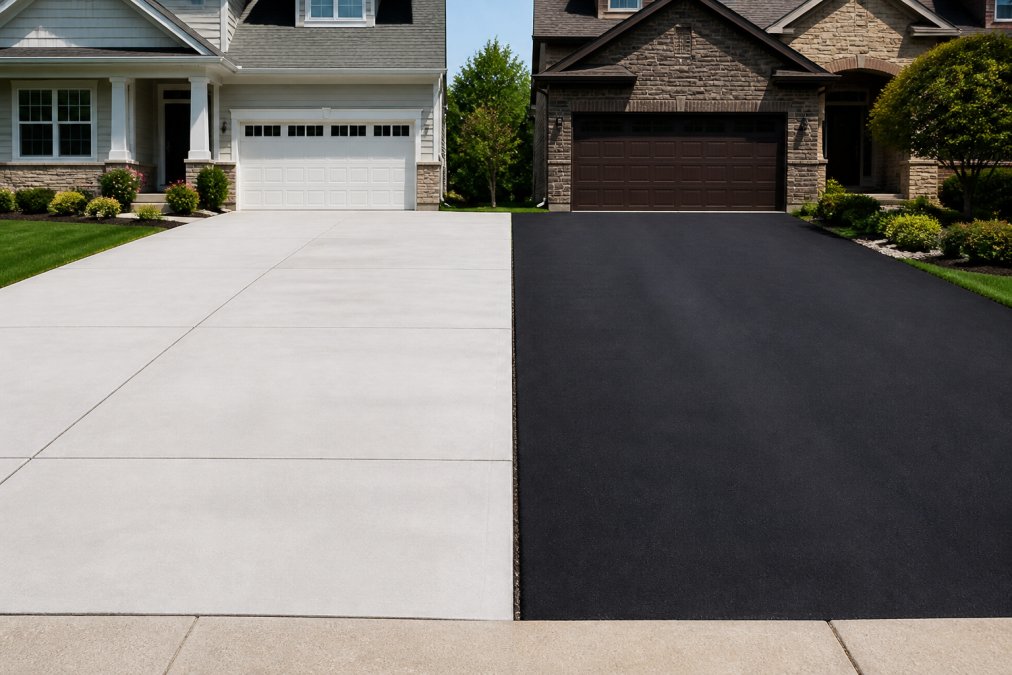
Asphalt driveways cost less to install and complete faster. Repairs are easier, potholes or cracks can be patched without replacing entire sections. In Chesterfield's climate, asphalt flexes with temperature changes, forgiving minor installation imperfections. The trade-off: asphalt requires regular maintenance. Sealcoating every 2-3 years protects against oxidation and water penetration. Without it, asphalt deteriorates faster. Asphalt also softens in extreme heat and can develop ruts under heavy vehicles.
Your choice depends on three questions: Are you staying 15+ years or selling sooner? (Concrete favors long-term ownership.) Will you maintain regularly or prefer minimal upkeep? (Concrete requires less maintenance.) What's your upfront budget? (Asphalt costs less initially.)
3. Plan for Proper Drainage and Site Preparation
This is where most driveway failures originate. Water is the enemy of any driveway. When water sits on or beneath your driveway, it weakens the base, accelerates freeze-thaw damage, and shortens lifespan by years.
Your new driveway should slope gently away from your home toward the street or drainage area. A slope of 1-2% is standard, for every 100 feet of length, the surface drops 1-2 feet (fhwa.dot.gov). This ensures water moves rather than pools. If your current driveway slopes toward your home or a low point where water collects, that design flaw needs correction.
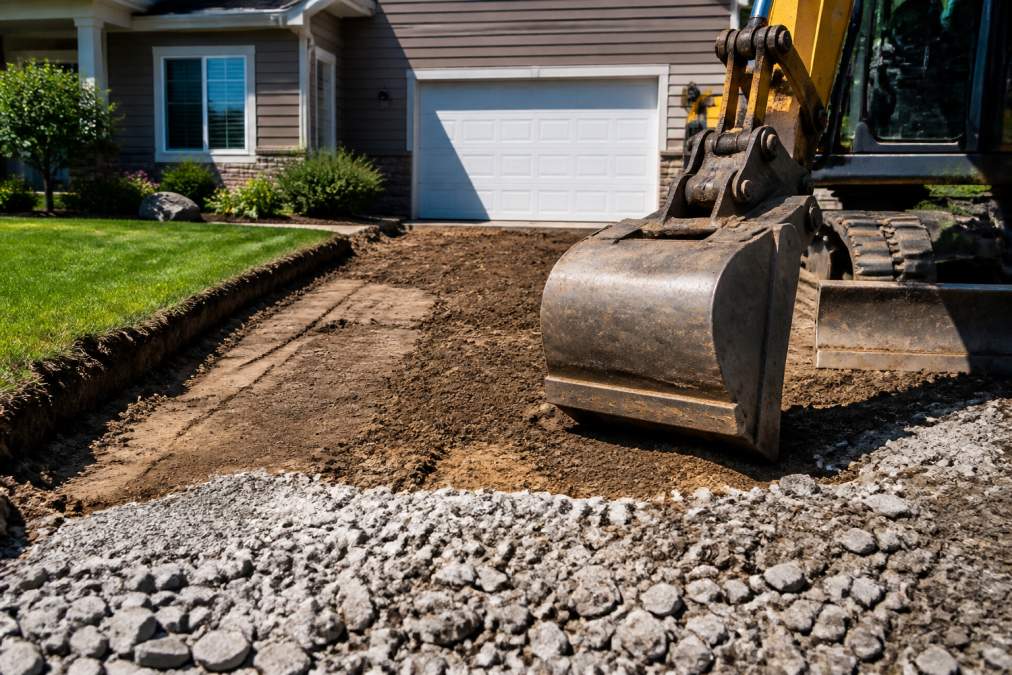
A proper driveway sits on a compacted base layer, typically 4-6 inches of gravel or crushed stone (asphaltpavement.org). This allows water to drain downward and sideways, preventing pooling beneath the surface. If your existing driveway was installed over poor or uncompacted soil, water has been trapped there for years, weakening the foundation.
For properties in Chesterfield with groundwater or drainage concerns, consider installing a perimeter drain or French drain system around the driveway edges. This intercepts water before it reaches the driveway and directs it away. It's an upfront expense but adds years to your driveway's life.
4. Understand Driveway Permit Requirements in Chesterfield
Permit requirements vary by location. Chesterfield has specific rules about what requires approval before work begins.
Driveway replacement projects typically require a Chesterfield Township permit if the work affects drainage, disturbs a certain area, or involves changes to property grading. The permit process ensures your replacement doesn't create drainage problems for neighbors or violate local codes.
You'll submit plans showing the new driveway layout, materials, dimensions, and grading. The Township reviews these to confirm compliance with local standards. The process usually takes 1-2 weeks, though revisions may extend this.
Permit requirements also cover setbacks (distance from property lines), maximum slope, and drainage standards. If your new driveway will be wider or positioned differently, or if it changes how water drains from your property, these changes may require approval.
Working with an experienced contractor who knows the Chesterfield permitting process saves time and prevents costly delays. Delpres Services LLC manages the full permitting process, including site inspections, documentation, and compliance verification.
Attempting to skip permits is a false economy. Unpermitted work creates legal liability, complicates future home sales, and exposes you to fines if discovered.
5. Budget Wisely Using a Driveway Replacement Cost Estimator
Understanding driveway replacement costs requires knowing what factors into the price.
A cost estimator should account for several variables: driveway size in square feet (the primary cost driver), material choice (asphalt vs. concrete), site conditions (poor conditions require extensive base preparation), drainage work, and removal/disposal of the old driveway. Labor represents a substantial portion, proper site preparation, drainage, and careful finishing require skilled work and time.
When getting estimates, ensure you understand what's included. A low bid excluding base preparation or drainage isn't a bargain; it's a recipe for problems. A higher bid including comprehensive site work, proper drainage, and quality finishing is better value.
Request a detailed written estimate itemizing labor, materials, site preparation, and additional work. This makes comparing estimates easy and shows where your money goes.
6. Hire an Experienced Contractor for Quality Results
Your contractor choice impacts the final outcome more than almost any other decision. The difference between a contractor cutting corners and one doing the work right is the difference between a driveway failing in 5 years versus lasting 15.
Look for a contractor with a track record of driveway work in your area. Local experience matters because contractors familiar with Chesterfield's climate, soil conditions, and permitting requirements understand your project's specific challenges.
Ask for references from homeowners in your area who've had similar work done. Speaking directly with recent clients reveals the contractor's communication, timeline adherence, cleanup, and how the driveway has held up since completion.
Verify the contractor is licensed and insured. In Michigan, general contractors performing work over a certain value must hold a license. Insurance protects you if someone is injured on your property. A contractor unable to provide proof of both is a red flag.
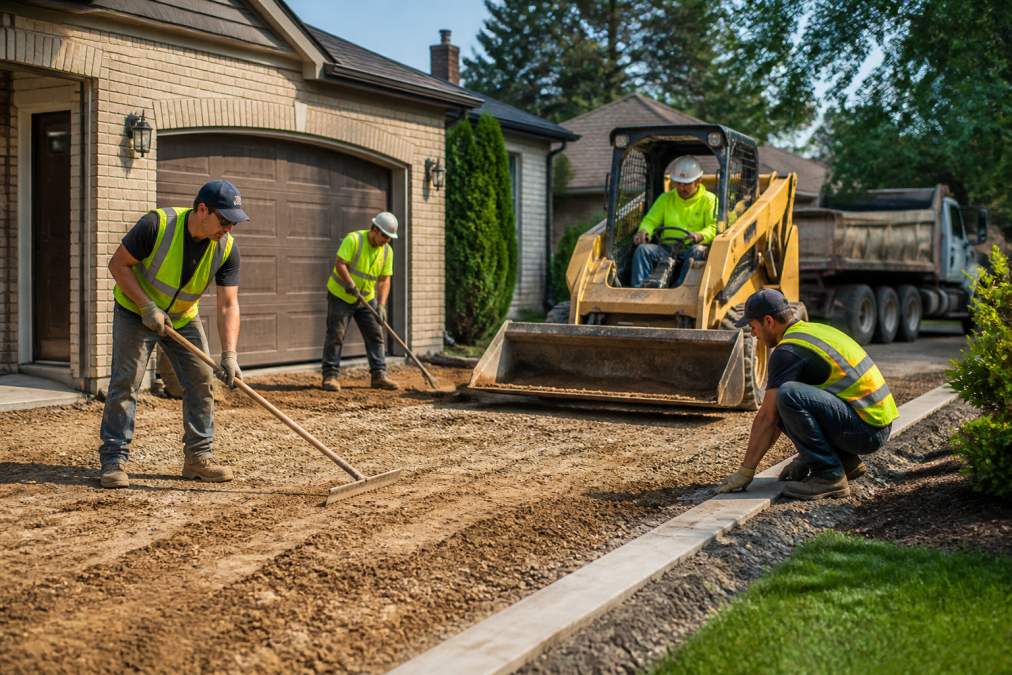
Delpres Services LLC has completed many driveway replacement projects across Metro Detroit over more than 20 years. We manage the entire process from site assessment through permitting, base preparation, drainage, material selection, and final finishing.
The most important quality to seek is accountability. You want someone present from start to finish, communicating clearly about timelines and costs, and standing behind the work afterward.
Driveway replacement requires attention to details most homeowners never consider. Proper assessment of your current driveway, a material choice matching your needs, careful planning for drainage and site preparation, compliance with local permits, realistic budgeting, and hiring an experienced contractor, these five factors determine whether your new driveway is a 15-year asset or a 5-year regret.
Delpres Services LLC has helped many homeowners in Chesterfield and across Metro Detroit navigate driveway replacement projects successfully. We handle site assessment, permitting, drainage design, material selection, and installation with attention to detail. Book a consultation with our team to discuss your driveway replacement needs and get a detailed assessment of what your project will require.
Frequently Asked Questions
When should I replace my residential driveway instead of repairing it?
Replace your driveway when damage covers more than 30% of the surface, cracks exceed 1/4 inch wide, or alligator cracking (interconnected pattern cracking) appears. If your driveway is over 15-20 years old and requires frequent repairs, replacement is more cost-effective than ongoing fixes. Severe settling, drainage problems, or multiple potholes also signal replacement time rather than repair.
What material lasts longer: asphalt or concrete for residential driveways?
Concrete typically lasts 25-40 years with minimal maintenance, while asphalt lasts 15-20 years and requires regular sealcoating every 2-3 years. In Michigan's freeze-thaw climate, concrete's longevity advantage is significant, though both materials need proper installation and drainage. Concrete requires less frequent maintenance but higher upfront costs; asphalt offers lower initial investment but demands ongoing care.
Do I need a permit for driveway replacement in Chesterfield?
Yes, most driveway replacement projects in Chesterfield require a permit from the township. The specific requirements depend on the scope of work, materials used, and whether site preparation or drainage modifications are involved. An experienced contractor familiar with local codes will handle permit applications and ensure compliance with township regulations, protecting your project from fines or required redoing of work.
How do I estimate the cost for my driveway replacement project?
Driveway replacement costs depend on size (measured in square feet), material choice (asphalt or concrete), site condition, drainage needs, and local labor rates. Get multiple quotes from contractors to establish a realistic driveway replacement cost estimator baseline. Most contractors offer free estimates. Budget for site prep, removal of old material, proper grading, and finishing. Request detailed breakdowns to understand where your investment goes.
This article was written using GrandRanker
Frequently Asked Questions
When should I replace my residential driveway instead of repairing it?
Replace your driveway when damage covers more than 30% of the surface, cracks exceed 1/4 inch wide, or alligator cracking (interconnected pattern cracking) appears. If your driveway is over 15-20 years old and requires frequent repairs, replacement is more cost-effective than ongoing fixes. Severe settling, drainage problems, or multiple potholes also signal replacement time rather than repair.
What material lasts longer: asphalt or concrete for residential driveways?
Concrete typically lasts 25-40 years with minimal maintenance, while asphalt lasts 15-20 years and requires regular sealcoating every 2-3 years. In Michigan's freeze-thaw climate, concrete's longevity advantage is significant, though both materials need proper installation and drainage. Concrete requires less frequent maintenance but higher upfront costs; asphalt offers lower initial investment but demands ongoing care.
Do I need a permit for driveway replacement in Chesterfield?
Yes, most driveway replacement projects in Chesterfield require a permit from the township. The specific requirements depend on the scope of work, materials used, and whether site preparation or drainage modifications are involved. An experienced contractor familiar with local codes will handle permit applications and ensure compliance with township regulations, protecting your project from fines or required redoing of work.
How do I estimate the cost for my driveway replacement project?
Driveway replacement costs depend on size (measured in square feet), material choice (asphalt or concrete), site condition, drainage needs, and local labor rates. Get multiple quotes from contractors to establish a realistic driveway replacement cost estimator baseline. Most contractors offer free estimates. Budget for site prep, removal of old material, proper grading, and finishing. Request detailed breakdowns to understand where your investment goes.