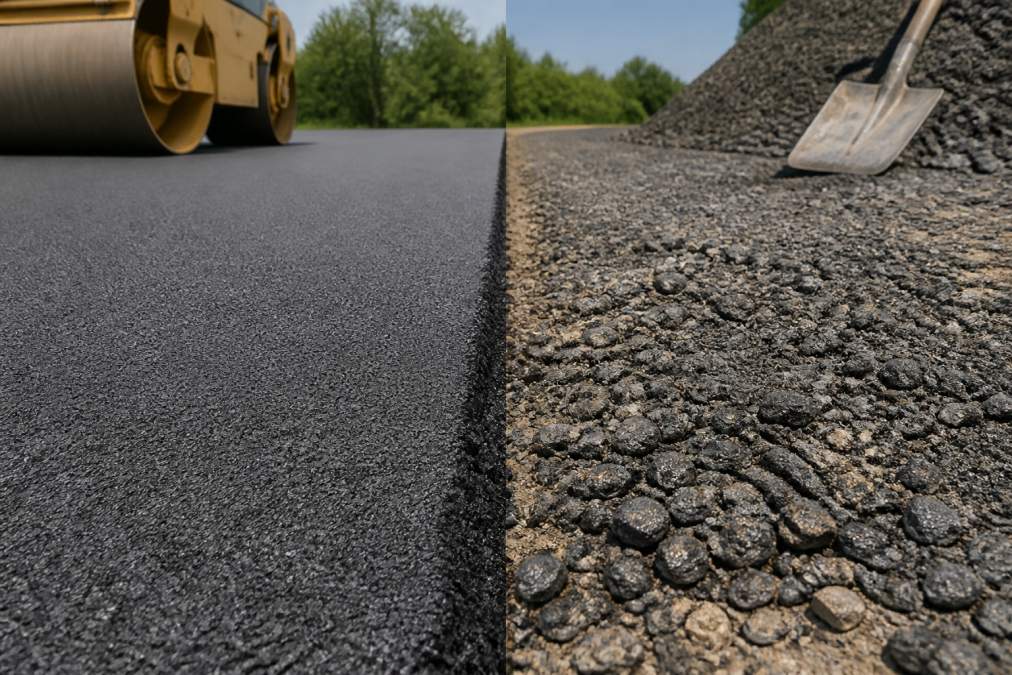
 comparison
Hardtop Paving vs Local Contractors: 2026 Guide
Table of Contents
- Hardtop Paving vs Local Contractors: Key Differences
- Questions to Ask Paving Contractors Before Hiring
- Asphalt Paving Contractor Red Flags to Avoid
- How to Verify Contractor Credentials and Insurance
- Average Cost of Asphalt Driveway Paving and Budget Planning
- Residential vs Commercial Paving Requirements
- Warranty, Maintenance, and Long-Term Support
- Making Your Final Decision
Last Updated: August 13, 2026
Hardtop Paving vs Local Contractors: Key Differences
When planning an asphalt driveway or parking lot project in Chesterfield, you'll face a critical choice: work with a national paving company like Hardtop Paving or hire a local contractor. This decision affects your immediate costs, long-term durability, problem resolution, and overall project experience.
National chains operate on volume and standardized processes, while local contractors offer hands-on expertise, accountability, and knowledge of regional climate conditions. Local contractors typically provide direct relationships with decision-makers, flexible scheduling, and familiarity with local soil conditions, drainage patterns, and permit requirements. National paving companies like Hardtop Paving bring standardized equipment, established workflows, and sometimes lower per-unit costs through economies of scale, but may route your project through multiple management layers with rotating crews.
The real question isn't which model is universally better, but which fits your project type, timeline, and risk tolerance.
Questions to Ask Paving Contractors Before Hiring
Before signing any contract, ask specific questions that reveal whether a contractor understands your project and operates professionally.
Ask about sub-base preparation and site inspection. Most paving failures originate here. A contractor should explain how they'll assess soil conditions, determine proper grading, and handle drainage. Ask: "Walk me through your site inspection process. How do you determine the correct sub-base thickness for my soil type?" Vague answers are red flags.
Request their warranty in writing. Don't accept verbal promises. Ask: "What does your warranty cover? How long does it last? What's excluded?" Most reputable contractors offer 2-5 year warranties on materials and workmanship, but details matter enormously.
Inquire about bonding and insurance. Ask for proof of general liability insurance, workers' compensation coverage, and bonding. Request their contractor licensing number and verify it with your state's licensing board. This protects you if someone is injured on your property or the contractor abandons the project.
Ask about project timeline and crew consistency. Will the same crew handle your entire project, or will different teams rotate through? Ask: "How long will this project take? Will the same crew start and finish?" Consistent crews take ownership of quality.
Clarify communication and escalation. Ask: "If I have a concern mid-project, who do I contact? How quickly will you respond?" With national companies, you might reach a call center first. With local contractors, you often get direct access to decision-makers.
Request references from similar projects. Ask for at least three references from customers with similar scope and timeline. Call them and ask: "Did the project finish on schedule? Were there cost overruns? Would you hire them again?"
Asphalt Paving Contractor Red Flags to Avoid
Door-to-door solicitation without an established business presence. If a contractor knocks on your door offering "special pricing today only," be skeptical. Legitimate contractors build their business through referrals, online reviews, and established reputation. Door-to-door paving sales often target elderly homeowners unfamiliar with fair pricing.
Refusal to provide written estimates. A professional contractor provides a detailed written estimate itemizing costs: materials, labor, equipment, permits, and overhead. Verbal or vague quotes leave you with no recourse if costs balloon mid-project.
Pressure to pay in full upfront. Standard practice is a deposit (typically 25-50%) to secure the project, with the balance due upon completion. Full upfront payment is a major warning sign.
Unclear about asphalt thickness and material specifications. Professional contractors specify asphalt thickness (typically 2-3 inches for residential driveways), binder type, and aggregate size. If they can't explain this, they're not engineering your pavement.
No mention of permits or compliance. A contractor who doesn't mention permits or says "we'll skip them to save money" is exposing you to liability and fines. Professional contractors handle permit requirements transparently.
Unwillingness to provide bonding and insurance documentation. A contractor should provide proof without hesitation. If they deflect, that's a disqualifier.
Vague timeline or "we'll fit you in whenever." Professional contractors schedule projects and provide realistic timelines. Evasiveness indicates they're juggling too many projects.
Negative online reviews mentioning incomplete work or cost overruns. Check Google reviews, the Better Business Bureau, and local contractor directories. Multiple complaints about abandoned projects, surprise charges, or poor quality indicate a pattern.
How to Verify Contractor Credentials and Insurance
Verify licensing through your state. Each state maintains a licensing database for contractors. In Michigan, check the Department of Licensing and Regulatory Affairs (LARA) database. Search the contractor's name and license number to confirm it's active and in good standing.
Request proof of bonding. A surety bond guarantees the contractor will complete the work as agreed. Ask for a copy of their performance bond and payment bond. You can contact the bonding company directly to verify. Bonding signals the contractor is established and creditworthy.
Verify general liability and workers' compensation insurance. Ask for a Certificate of Insurance (COI) naming you as an additional insured. Call the insurance company listed on the COI to verify it's active. This protects you if someone is injured on your property or property damage occurs.
Check references carefully. Call references and ask: Did the project finish on time? Were there cost overruns? How was the final product quality? Did the contractor respond quickly to concerns? Would you hire them again? References willing to speak positively are gold.
Search online reviews across multiple platforms. Google Reviews, the Better Business Bureau, Yelp, and Angie's List provide insight. Look for patterns: Do reviews consistently praise quality and communication, or do complaints recur about delays and hidden charges? A contractor with 4.5+ stars across multiple platforms has earned credibility.
Confirm they understand local zoning and permit requirements. Ask: "What permits does this project require in Chesterfield? How do you handle the permitting process?" A knowledgeable contractor can walk you through local requirements.
Average Cost of Asphalt Driveway Paving and Budget Planning
Understanding asphalt paving costs helps you evaluate whether a quote is fair and whether Hardtop Paving vs local contractors offers genuine savings.
Several factors drive costs: project size (square footage), existing surface condition, site accessibility, required drainage solutions, asphalt quality and thickness, and local labor rates. Site preparation and sub-base work often represents 30-40% of total project cost. If your existing driveway just needs resurfacing, costs are lower. If the sub-base is compromised or drainage is poor, contractors must invest in grading, compaction, and drainage solutions, non-negotiable for long-term durability.
Material quality matters. Standard asphalt is less expensive than premium mixes with higher binder content. Thicker asphalt (3 inches vs. 2 inches) costs more but lasts longer. Seal coating, applied 6-12 months after installation, extends pavement life by years.
Request detailed written estimates that break down: site preparation and grading, sub-base material and compaction, asphalt material (type, thickness, quantity), labor, equipment rental, permits and compliance, seal coating, and warranty. Compare estimates line by line, not just total price. A lower total might reflect cheaper materials or thinner asphalt. If a quote seems suspiciously low, ask detailed questions about materials and methods.
Residential vs Commercial Paving Requirements
Residential and commercial asphalt paving projects differ significantly in scope, durability standards, and regulatory requirements.
Residential paving (driveways, residential parking areas) typically requires 2-3 inches of asphalt over a 4-6 inch compacted sub-base, accommodating passenger vehicles and occasional light trucks. Warranty expectations are typically 5-10 years with proper maintenance.
Commercial paving (parking lots, loading areas, access roads) must handle heavier loads: delivery trucks and forklifts. Commercial asphalt is typically 3-4 inches thick over a 6-8 inch sub-base. Specifications are often mandated by municipal codes or lease agreements. Commercial projects require detailed engineering, drainage design, ADA compliance, and striping. Warranty expectations are often 7-15 years.
Drainage is critical for both but more complex for commercial projects. Residential driveways need adequate slope (typically 1-2% grade) to shed water. Commercial parking lots require sophisticated drainage systems: catch basins, underdrain systems, and grading plans that direct water away from structures.
Zoning and permit requirements differ. Residential driveway work in Chesterfield may require a simple permit or none at all. Commercial parking lots require site plan approval, drainage calculations, ADA compliance documentation, and environmental review.
Maintenance expectations differ. Residential driveways benefit from seal coating every 2-3 years and crack filling as needed. Commercial parking lots require more frequent maintenance: seal coating every 1-2 years, regular crack sealing, and line striping renewal.
When evaluating Hardtop Paving vs local contractors, confirm they have experience with your project type.
Warranty, Maintenance, and Long-Term Support
Warranty coverage and post-installation support distinguish professional contractors from those cutting corners.
Material warranty typically covers defects in the asphalt itself: premature cracking, raveling, or binder failure. Most contractors offer 2-5 year material warranties. Workmanship warranty covers installation quality: improper compaction, inadequate slope, poor edge work. A 1-2 year workmanship warranty is standard. Some contractors offer extended warranties (5-10 years) if you follow their maintenance recommendations.
Seal coating is essential maintenance that extends asphalt life. Most contractors recommend seal coating 6-12 months after installation, then every 2-3 years. Ask whether your contractor offers seal coating services and what warranty they provide.
Crack filling and pothole repair are inevitable. Ask: "If cracks appear within the warranty period, do you fill them at no charge? What's your process for handling repairs?" Professional contractors stand behind their work.
Long-term support and accessibility matter significantly. If your driveway fails in year 3, can you reach the contractor who installed it? National chains may have moved on; local contractors remain in the community. Delpres Services LLC prioritizes long-term relationships and supports projects through their lifecycle.
Maintenance recommendations should be provided in writing. A professional contractor explains when to seal coat, how to handle cracks, what to avoid, and realistic lifespan expectations. A well-maintained asphalt driveway lasts 15-20 years; neglected pavement fails in 7-10 years.
| Warranty Type | Typical Duration | What It Covers | What It Doesn't Cover |
|---|---|---|---|
| Material Warranty | 2-5 years | Asphalt defects, binder failure | Normal wear, traffic damage |
| Workmanship Warranty | 1-2 years | Installation quality, compaction | Maintenance neglect, heavy overloading |
| Extended Warranty | 5-10 years | Conditional on maintenance | Deferred maintenance, environmental damage |
| Seal Coating Warranty | 1-2 years | Seal coat material | UV damage, chemical spills |
Making Your Final Decision
Choosing between Hardtop Paving vs local contractors requires weighing multiple factors: project scope, timeline, budget, accountability, and long-term support.
Choose a national paving company if: You have a large, straightforward project; you prioritize competitive pricing over relationship continuity; you're comfortable with standardized processes and rotating crews; and you value established equipment and logistics.
Choose a local contractor if: You value direct communication with decision-makers; you want crew consistency and local expertise; your project involves complex site conditions (poor drainage, unstable soil, zoning complications); you're in Chesterfield and want someone accountable within your community; and you prioritize long-term support over lowest-price quotes.
Red flags that should eliminate any contractor:
- Unwillingness to provide written estimates
- Pressure to pay in full upfront
- No proof of bonding or insurance
- Door-to-door solicitation without established business presence
- Evasiveness about permits, licensing, or specifications
- Negative patterns in online reviews
Questions that reveal contractor quality:
- Can they explain sub-base preparation and site inspection process?
- Do they provide detailed written estimates with line-item breakdowns?
- Can they provide references from similar projects in your area?
- Do they explain warranty coverage clearly?
- Are they responsive and professional in initial communication?
At Delpres Services LLC, we've built our reputation on delivering durable asphalt paving with transparent project management, proper permitting, and long-term support. Whether you choose a national company or a local contractor, demand professionalism, verify credentials, and insist on written documentation. Your driveway is an investment; treat the selection process accordingly.
Frequently Asked Questions
What are the main differences between Hardtop Paving and local asphalt paving contractors?
Hardtop Paving operates as a regional or national service, while local contractors typically serve specific geographic areas. Local contractors often provide personalized attention and knowledge of area-specific permit requirements and climate conditions. Hardtop Paving may offer standardized processes and potentially lower pricing through scale. The choice depends on whether you prioritize local relationships and customization or prefer established brand consistency and potentially competitive rates.
What questions should I ask a paving contractor before hiring?
Ask about licensing and insurance coverage, years of experience with similar projects, warranty terms, timeline and project schedule, whether they handle permits and compliance, references from recent residential projects, their sub-base preparation process, equipment used, and payment schedule. Request a detailed written estimate that breaks down labor, materials, compaction, seal coating, and any drainage work. Ask how they handle unexpected site conditions and what happens if the project runs over budget.
What red flags should I watch for when hiring an asphalt paving contractor?
Avoid contractors who solicit door-to-door without a business address or website, pressure you to decide immediately, offer prices significantly below competing estimates, lack verifiable references or licensing, cannot explain their sub-base preparation process, demand full payment upfront, avoid providing written contracts, or claim they can start 'this week' with no site inspection. Legitimate contractors conduct site inspections, provide itemized estimates, and carry bonding and insurance.
How much does asphalt driveway paving typically cost?
Asphalt driveway paving costs depend on driveway size, existing site conditions, sub-base preparation needs, local labor rates, and regional material prices. Factors affecting pricing include whether the site requires grading, drainage solutions, or removal of old pavement. Get multiple written estimates from licensed contractors in your area. Request a breakdown of costs for sub-base preparation, asphalt thickness, compaction, and seal coating so you understand where your investment goes.
Why should I hire a full-service contractor instead of managing separate paving and excavation crews?
A full-service contractor provides one accountable team responsible for the entire project, reducing coordination headaches and liability gaps. They manage permits, compliance, and site inspections as a unified scope. You have a single point of contact for budget oversight and timeline management. Separate contractors can create disputes over responsibility if issues arise, and you assume the risk of poor coordination. Full-service contractors also understand how excavation, grading, and drainage integrate with paving durability.
The most expensive paving decision you can make is choosing the lowest bidder without verifying credentials, materials, and warranty coverage. A quality asphalt installation in Chesterfield protects your property investment and provides years of reliable service. Book a consultation with Delpres Services LLC to discuss your project requirements and receive a detailed estimate backed by 20+ years of proven expertise.
This article was written using GrandRanker