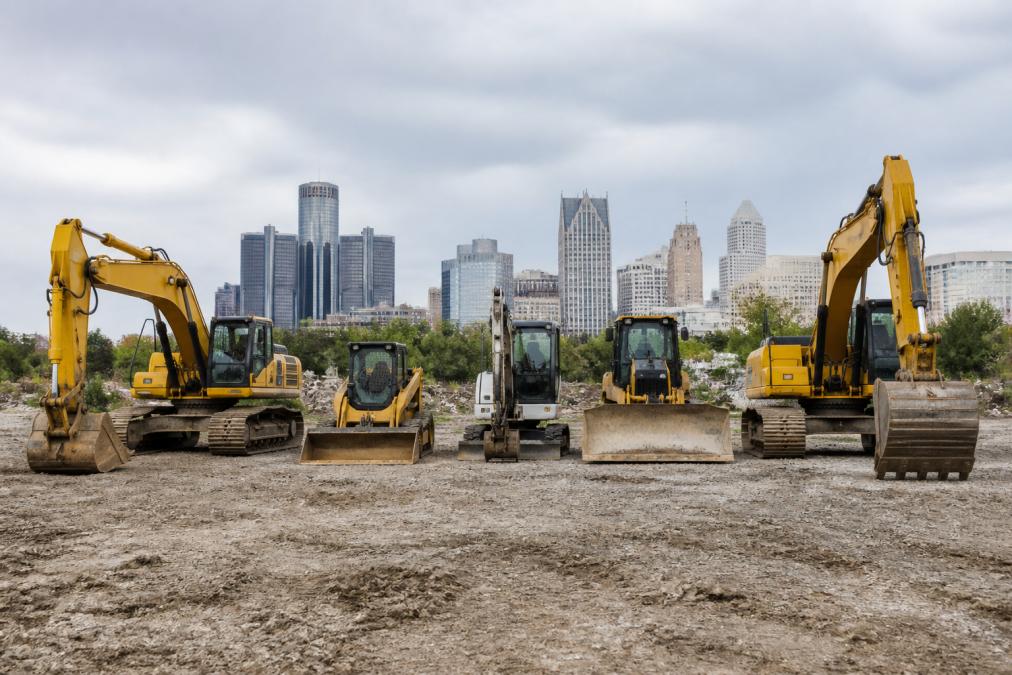
 comparison
Site Excavation Companies in Detroit: A Comparison
Table of Contents
- How Excavation Companies in Detroit Handle Complex Soil and Bedrock
- Delpres Services: Full-Service Site Development and Excavation
- Angelo Iafrate Construction: Large-Scale Heavy Civil Expertise
- Specialized Contractors for Bedrock Removal Services Michigan
- Geotechnical Site Analysis Detroit: Understanding Your Project Needs
- Key Factors in Choosing an Excavation Contractor
- Conclusion
Last Updated: August 10, 2026
How Excavation Companies in Detroit Handle Complex Soil and Bedrock
Complex soil and bedrock excavation separates experienced contractors from those still learning the trade. The Detroit area presents unique geological challenges that demand precision, specialized equipment, and deep knowledge of ground conditions. Professional excavation companies begin by assessing soil composition, identifying bedrock depth, and evaluating ground stability before equipment touches the site. This geotechnical analysis determines everything from equipment selection to timeline and budget.
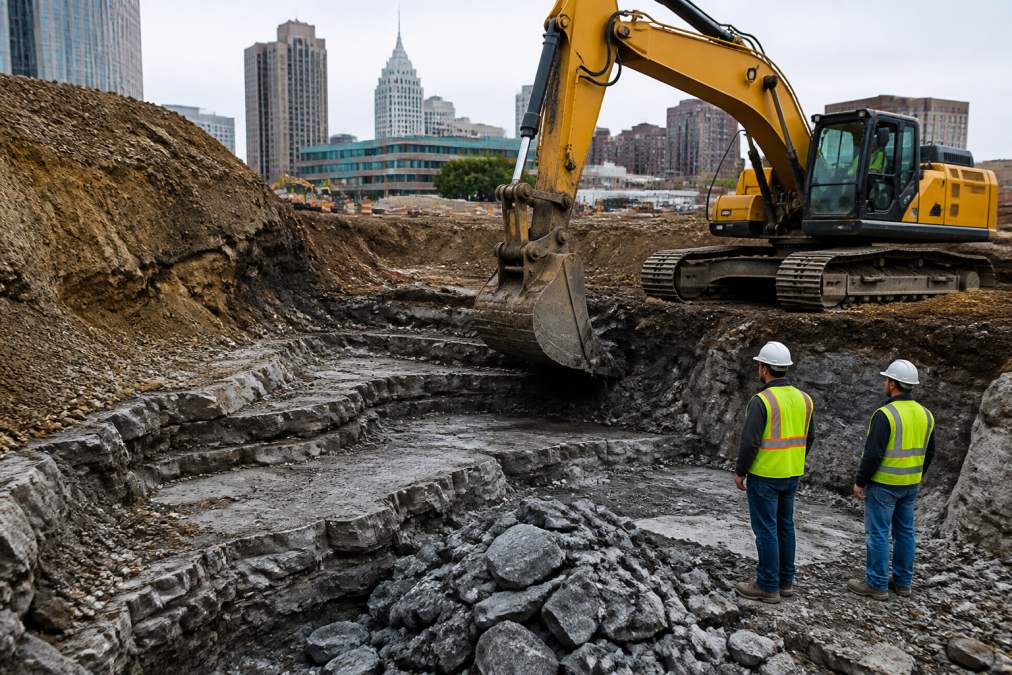
Heavy machinery requirements vary dramatically depending on ground conditions. Some projects need standard excavators and grading equipment. Others demand specialized bedrock removal services, including hydraulic breakers, rock hammering equipment, and advanced dewatering systems. Safety protocols separate professional operations from risky ones, proper site preparation, trench safety measures, and equipment operation standards are legal requirements, not afterthoughts.
Delpres Services: Full-Service Site Development and Excavation
Delpres Services stands out as the comprehensive choice for Metro Detroit excavation projects. With 20+ years of hands-on expertise, the company handles everything from initial site grading to complex underground infrastructure installation. What distinguishes Delpres Services is the integration of multiple disciplines under one team, excavation, utilities, drainage, and grading, eliminating finger-pointing and ensuring consistent quality standards.
The company's service scope covers excavation and site grading, underground utilities installation, storm and sanitary sewer construction, water main work, and foundation excavation with backfilling. For residential projects, they provide decorative concrete, pool construction, and custom outdoor living spaces. For commercial and municipal clients, they deliver parking lot construction, drainage solutions, and infrastructure projects demanding precision and reliability.
Delpres Services utilizes professional-grade machinery and proven construction methods specifically selected for Detroit-area soil conditions. The team's experience with local ground conditions, clay soil characteristics, bedrock depths, and seasonal water table fluctuations translates directly into better planning and fewer surprises. They handle permitting and regulatory compliance comprehensively, managing permits and navigating local requirements so clients focus on their core business.
Geotechnical Site Analysis Detroit: Understanding Your Project Needs
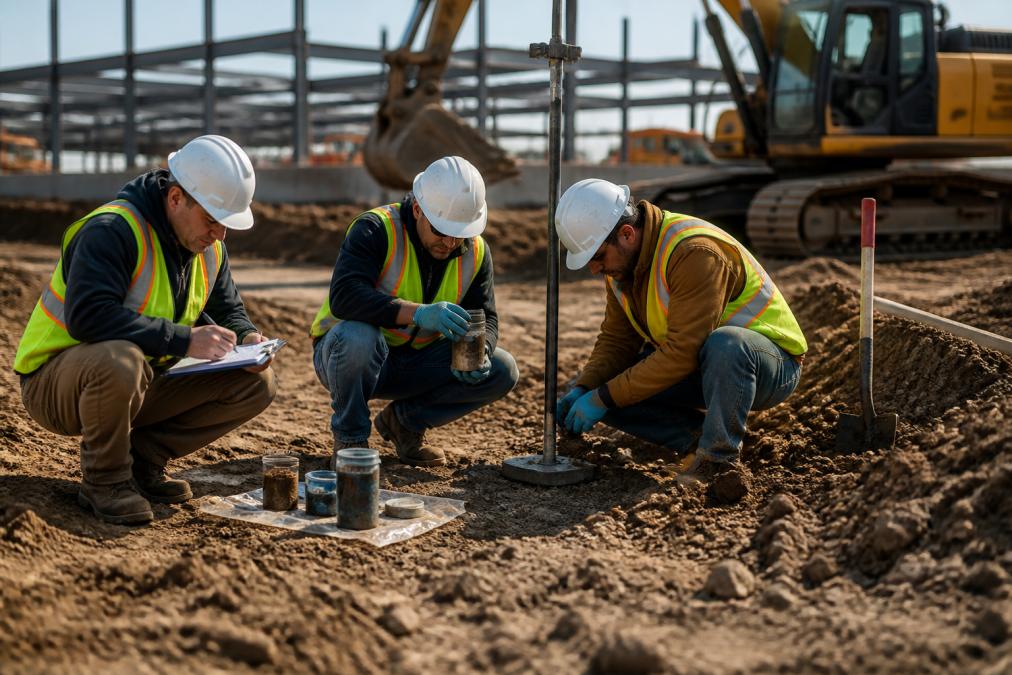
Before any excavation begins, understanding subsurface conditions determines project success. Geotechnical site analysis involves soil boring, laboratory testing, and professional interpretation of ground conditions to identify soil type, bearing capacity, water table elevation, and bedrock depth.
Detroit-Specific Geological Challenges
The Detroit area presents distinct subsurface conditions that differ markedly from other regions.
Clay-Dominant Soil Profile: Much of the Detroit metropolitan area sits atop glacial clay deposits. This dense, low-permeability material presents specific challenges during excavation. Clay soils compact poorly when wet, requiring careful moisture management during grading and backfill operations. The clay layer typically extends 15 to 40 feet below surface grade in many Detroit locations, meaning shallow excavations may not reach stable bearing layers.
Limestone Bedrock Depths: Beneath the clay layer, limestone bedrock becomes increasingly common as depth increases. In Wayne County, limestone typically appears between 40 and 80 feet below surface grade, though this varies significantly by location. Some areas encounter limestone at shallower depths (25-35 feet), while others may not reach bedrock within typical foundation depths. When bedrock is encountered unexpectedly during excavation, the cost and timeline impact can be substantial, rock removal requires specialized equipment not needed for soil-only projects.
Seasonal Water Table Fluctuations: The Detroit area experiences significant seasonal groundwater variation. Spring snowmelt and heavy rainfall (typically March through May) raise the water table substantially in many locations. A site that appears dry during summer boring may encounter significant water infiltration during winter or spring excavation. This seasonal pattern directly affects dewatering requirements, equipment selection, and project scheduling.
Glacial Deposits and Variable Soil Layers: The Detroit region's glacial history created complex, layered soil deposits. Excavation may encounter sand lenses within clay, silt layers, or pockets of gravel, conditions that change bearing capacity and drainage characteristics unpredictably. Detailed geotechnical investigation with closely-spaced borings (typically 10-foot intervals for complex sites) provides the subsurface clarity necessary for confident planning.
Geotechnical Investigation Standards for Detroit Projects
Professional geotechnical investigation follows established protocols:
- Soil Boring and Sampling: Drilling at multiple locations across the site to depths sufficient to characterize all soil layers and identify bedrock, typically 10-15 feet below the lowest planned excavation depth.
- Laboratory Testing: Soil samples analyzed for grain-size distribution, Atterberg limits, bearing capacity, and compaction properties. For clay-heavy soils, Atterberg limit testing determines whether the clay will compact properly and how it behaves under load.
- Groundwater Assessment: Monitoring water levels during boring and follow-up visits to establish seasonal patterns.
- Professional Interpretation: A licensed geotechnical engineer reviews all data and provides written recommendations for foundation design, excavation methods, and site preparation procedures.
Load-Bearing Capacity and Foundation Design
Load-bearing capacity, the amount of weight a soil layer can safely support, determines what structures the prepared site can accommodate. In Detroit clay soils, typical bearing capacities range from 2,000 to 4,000 pounds per square foot (psf), depending on clay density and moisture content. Limestone bedrock typically supports 5,000+ psf. These differences directly affect foundation depth, footing size, and construction cost. Thorough geotechnical analysis prevents expensive corrections or compromised structural integrity later.
Managing Unexpected Conditions During Excavation
Even thorough geotechnical investigation cannot predict every subsurface surprise. Buried utilities, unexpected rock outcrops, or soil conditions that differ from boring predictions occur regularly. Professional contractors anticipate this reality and establish contingency procedures. When conditions diverge from the geotechnical report, they reference the baseline documentation to manage scope changes professionally.
Key Factors in Choosing an Excavation Contractor
Selecting the right excavation contractor requires evaluating multiple dimensions beyond price. The lowest bid frequently masks hidden problems that emerge during project execution.
Handling Unpredictable Ground Conditions
Ground conditions rarely match initial expectations perfectly. The contractor's approach to managing surprises reveals their professionalism. Do they have established procedures for addressing unexpected bedrock, water infiltration, or soil instability? Experience with Detroit-area geology matters significantly, contractors familiar with local soil characteristics, seasonal water table fluctuations, and typical bedrock depths make better decisions when conditions diverge from predictions.
Equipment and Safety Protocols
Professional excavation requires appropriate machinery for the job. Standard excavators work fine for routine grading; bedrock removal demands rock hammering equipment and specialized techniques. Trench work requires proper shoring systems and confined space protocols. Site safety transcends regulatory compliance, proper trench safety, underground infrastructure protection, and personnel protection represent non-negotiable standards.
Permits and Regulatory Compliance: Detroit-Specific Requirements
Permits and regulatory compliance exist for legitimate reasons, and Detroit-area excavation projects face specific municipal and utility requirements that vary by jurisdiction.
Municipal Permit Types and Timelines: Site grading and fill permits are required by most Detroit-area municipalities for projects involving earth movement. Storm sewer and sanitary sewer work require separate permits from the local water authority or Detroit Water and Sewerage Department (DWSD). Foundation excavation permits are typically required for new construction. Utility work requires permits from both the municipality and the utility company. Processing timelines vary: a simple grading permit may be issued within 5-10 business days, while complex utility permits can take 4-6 weeks or longer.
Utility Notification and Clearance: Before any excavation begins, utility companies must be notified and locate their underground lines. In Michigan, the statewide utility locating service is Dig Safe (1-800-482-7171) or online at digsafe.com. This notification is legally required and must occur at least 2 business days before excavation begins. Utility companies (DTE Energy for gas and electric, Detroit Water and Sewerage Department for water and sewer, and telecommunications providers) then mark their lines on the property.
Failure to call Dig Safe before excavation can result in utility line damage (creating safety hazards and service interruptions), fines from the utility company (typically $500-$5,000 per incident), project delays, and potential liability for injuries or property damage. Contractors who handle utility notification systematically, documenting the Dig Safe request, photographing marked lines, and maintaining clearance from marked utilities, protect both the project and the property owner.
Environmental and Wetland Considerations: Some Detroit-area sites fall within wetland jurisdictions or environmental protection zones. The U.S. Army Corps of Engineers regulates wetlands under Section 404 of the Clean Water Act. Michigan Department of Environment, Great Lakes, and Energy (EGLE) enforces state wetland rules. If a project involves filling, draining, or disturbing wetlands, a permit from the Corps and/or EGLE is required. This process can take 30-90 days or longer if environmental review is needed.
Stormwater Management Permits: Projects disturbing more than 1 acre of land typically require a stormwater pollution prevention plan (SWPPP) and a permit under the Michigan Construction Stormwater General Permit. This permit requires specific erosion control measures, sediment barriers, and post-construction stormwater management. Contractors who understand stormwater requirements build these costs and timelines into estimates.
Local Variance and Zoning Considerations: Zoning regulations in different Detroit-area municipalities affect excavation and site preparation. Some jurisdictions restrict fill material sources, require specific compaction standards, or mandate environmental testing of imported soil. A contractor operating across multiple jurisdictions must understand these local variations.
Documentation and Compliance Verification: Professional contractors maintain comprehensive permitting documentation: copies of all permits issued, utility locate requests and marked-line photographs, inspection reports from municipal inspectors, and compliance certifications. This documentation protects the property owner and contractor if questions arise later.
Contractor Selection Criteria Summary
| Factor | What Matters | Red Flags |
|---|---|---|
| Local Experience | Familiarity with Detroit-area soil, bedrock, seasonal conditions, and municipal requirements | Contractor unfamiliar with local geology or permitting |
| Equipment | Appropriate machinery for project complexity and ground conditions | Standard equipment only, no specialized tools |
| Safety Record | Documented safety procedures and incident history | Vague safety practices or poor references |
| Permitting Knowledge | Understanding of local requirements, utility notification procedures, and regulatory timelines | Assumes one-size-fits-all approach; unfamiliar with Dig Safe or municipal permit types |
| Utility Coordination | Systematic approach to Dig Safe notification and utility clearance | No mention of utility locating or clearance procedures |
| Communication | Clear explanation of approach, realistic timeline, and contingency planning | Vague answers or overly optimistic estimates; no discussion of permit timelines |
| References | Verifiable past projects with similar complexity in Detroit-area municipalities | Reluctant to provide references or evasive responses |
| Documentation | Maintains permit copies, inspection records, and compliance certifications | Cannot provide evidence of proper permitting and compliance |
Many property owners underestimate the complexity of permitting and regulatory compliance. A contractor experienced with local requirements handles these details systematically rather than discovering problems mid-project.
Conclusion
Excavation projects in the Detroit area demand contractors who understand local geology, possess appropriate equipment, and maintain rigorous safety and quality standards. Delpres Services combines comprehensive service scope with 20+ years of hands-on expertise serving Metro Detroit communities. Their integrated approach to site preparation, excavation, underground utilities, and project management eliminates coordination problems while ensuring consistent quality.
For homeowners planning major outdoor improvements, commercial developers requiring site preparation, or municipal agencies managing infrastructure projects, evaluating contractors based on local experience, equipment capability, and safety practices produces better outcomes than price shopping alone.
Frequently Asked Questions
What are the common soil challenges for construction in Detroit?
Detroit's Metro area sits on glacial deposits with clay-heavy soil, inconsistent soil density, and unpredictable bedrock depth. Clay soil compacts unevenly, affecting load-bearing capacity and drainage. Bedrock can appear at 10 feet in some areas and 40+ feet in others. Water saturation and subsurface utilities complicate excavation. Professional geotechnical site analysis Detroit helps contractors anticipate these conditions before breaking ground, reducing delays and cost overruns.
How do excavation contractors handle bedrock removal in Michigan?
Bedrock removal services Michigan employ multiple techniques depending on rock type and project scope. Traditional rock hammering and drilling work for shallow bedrock. For deeper or complex sites, contractors use controlled blasting or hydro excavation to minimize disruption. Specialized firms like Jay Dee Contractors apply Sequential Excavation Method for precise removal. Site survey and geotechnical analysis determine the best approach. Delpres Services manages the full process, from assessment through safe removal and debris management.
What is the difference between standard excavation and rock excavation?
Standard excavation removes soil and clay using bucket excavators and grading equipment. Rock excavation requires specialized equipment, drilling, and sometimes blasting to break bedrock. Rock work demands higher safety protocols, additional permitting, and expertise in structural integrity of surrounding areas. Rock hammering and controlled detonation are common techniques. The cost and timeline differ significantly; rock excavation typically takes longer and requires geotechnical specialists familiar with Detroit's specific bedrock composition.
How do I verify if a Detroit excavation contractor is licensed and insured?
Request proof of Michigan contractor license and current liability insurance before hiring. Check the Michigan Department of Licensing and Regulatory Affairs (LARA) database for active licenses. Verify bonding for public projects. Ask for references from recent Detroit-area clients and confirm they completed projects on time and within budget. Established firms like Delpres Services provide full transparency on permits, compliance, and project management from start to finish, reducing risk for homeowners and commercial developers.
What equipment is required for deep excavation in clay-heavy soil?
Deep excavation in clay requires heavy machinery: large bucket excavators, grading equipment, dewatering systems, and earth retention structures. GPS and laser-guided machine control ensure precision grading and proper soil density. Shoring systems prevent collapse in unstable clay. Hydro excavation may be used for utility location and precise removal near underground infrastructure. Contractors with experience in Detroit's clay-dominant geology, like Hoffman Bros. and Delpres Services, have the specialized equipment and expertise to handle these conditions safely and efficiently.
Ready to start your excavation project? Book a consultation with Delpres Services to discuss your site preparation needs. Our team will assess your ground conditions, explain the approach we'd recommend, and provide transparent guidance on timeline and execution. With 20+ years serving Chesterfield and Metro Detroit, we deliver the expertise and accountability your project deserves.
This article was written using GrandRanker